


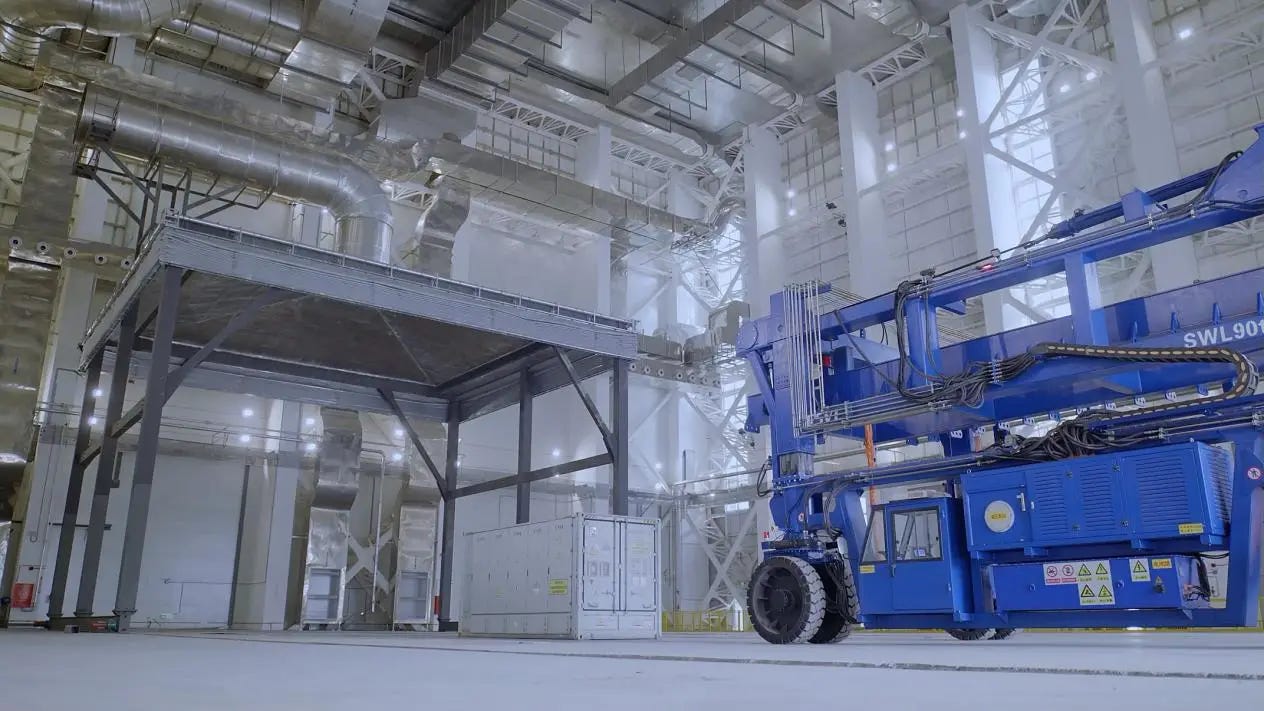
It was 38°C in Xiamen, a subtropical port on China’s southeast coast, known for Gulangyu (鼓浪屿), the car-free island of colonial villas and piano museums that UNESCO made a World Heritage site in 2017. The sun was white-hot as I walked past a hall the size of a small aircraft hangar. Inside stood what looked like a room raised on stilts, its lower walls cut open on all four sides, a broad extraction duct running off the top. Underneath sat a burned out shipping container. The expanse of the scene, the hard light, and the emptiness, reminded me of the cinematography of Dune.
It was here that CATL had built a lab to burn, freeze, overload and electrocute batteries, then document exactly how they die.
A Surge in Demand
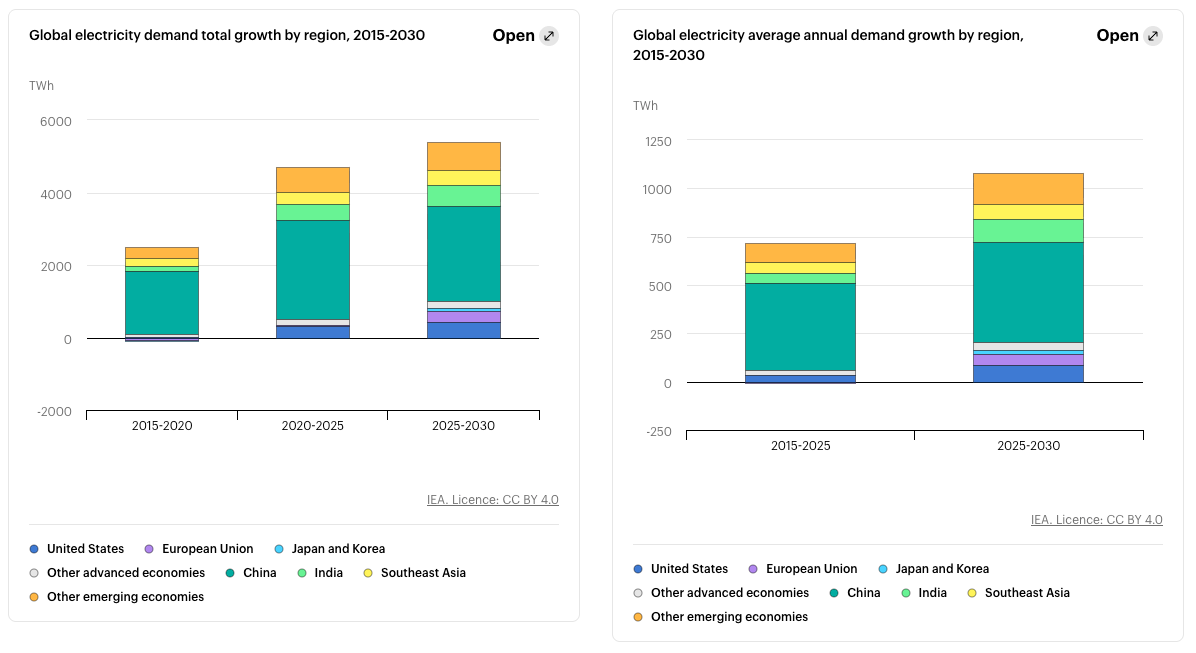
The world adds more than a Japan’s worth of electricity demand every year. Global use is rising by about 1,100 TWh annually, up from ~700 a year over the previous decade, the fastest sustained growth in more than 10 years. The cause is the electrification of almost everything: industry, air conditioning, electric vehicles and computing.
One of the fastest-growing drivers is the AI data center.
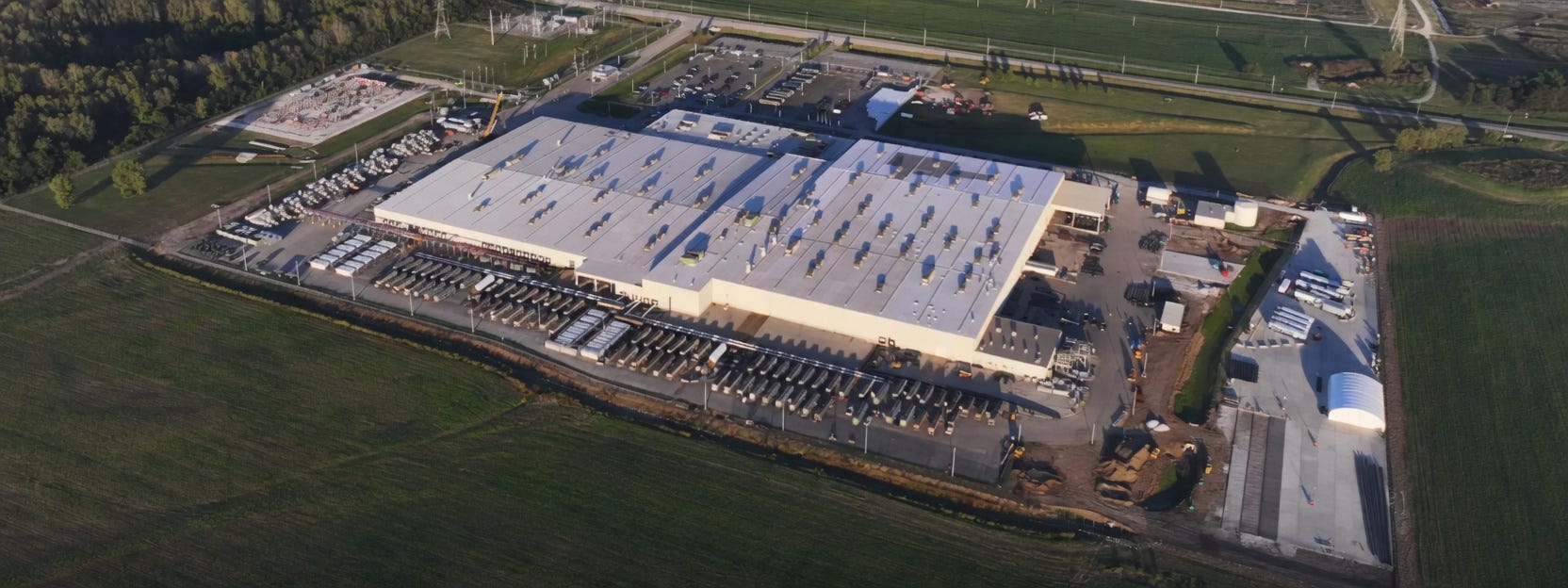
A decade ago, a large data center drew about 50 MW. Today a single AI campus is designed for 10-20x that, and the biggest are planned for 1 GW or more, the output of a nuclear reactor, on one site. A single rack of Nvidia’s latest AI chips draws up to 140 kW, against 10-15 kW for a rack of conventional servers. A 500 MW facility running flat out uses about as much electricity in a year as 360,000 American homes, roughly the number of households in San Francisco.
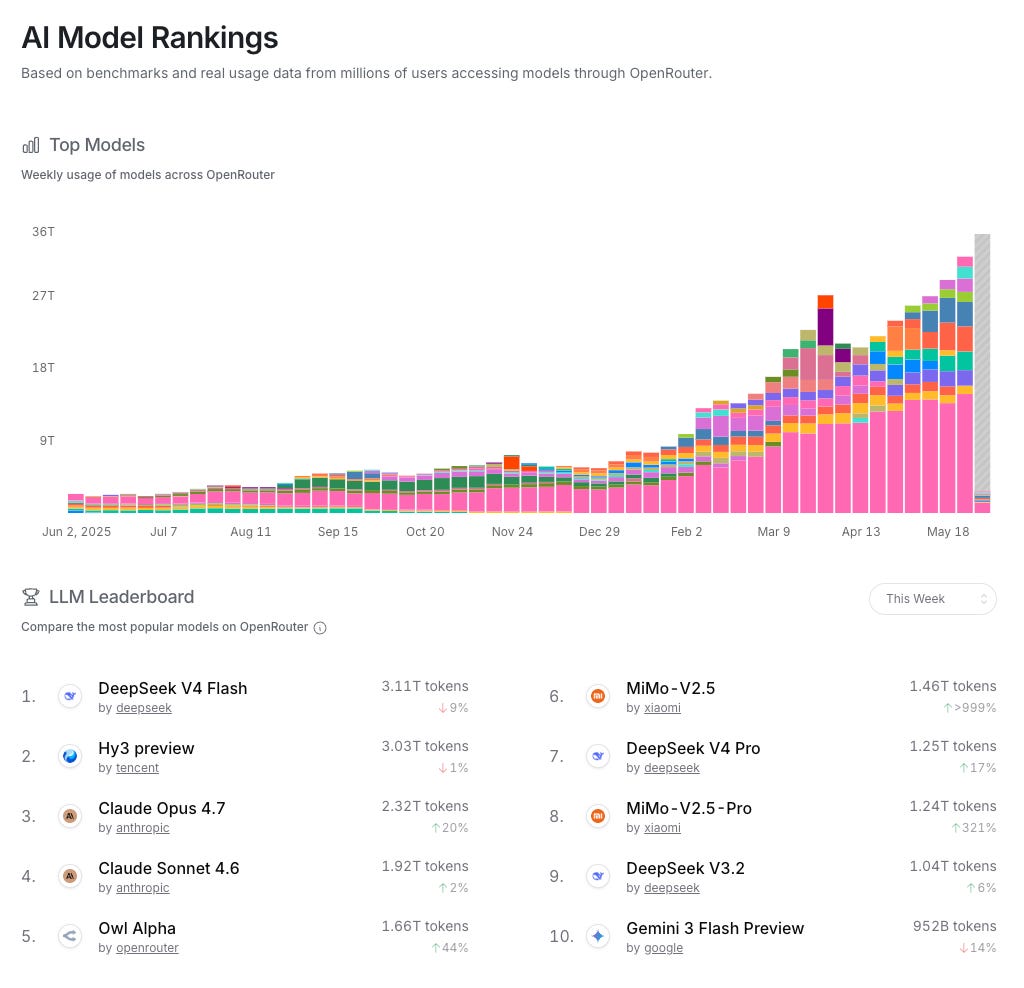
OpenRouter, a marketplace that routes requests across most of the major AI models, now processes more than a quadrillion tokens a year, the units of text and data a model reads and generates, roughly 15x the volume of a year earlier. Goldman Sachs expects token consumption to rise another 24x by 2030.
The obvious counterargument is efficiency: each new generation of chips and models does more per watt. But usage is growing far faster than efficiency, so total power demand climbs rather than falls. The International Energy Agency expects data centers worldwide to roughly double their electricity use by 2030, to about 945 TWh, growing four times faster than demand from everything else.
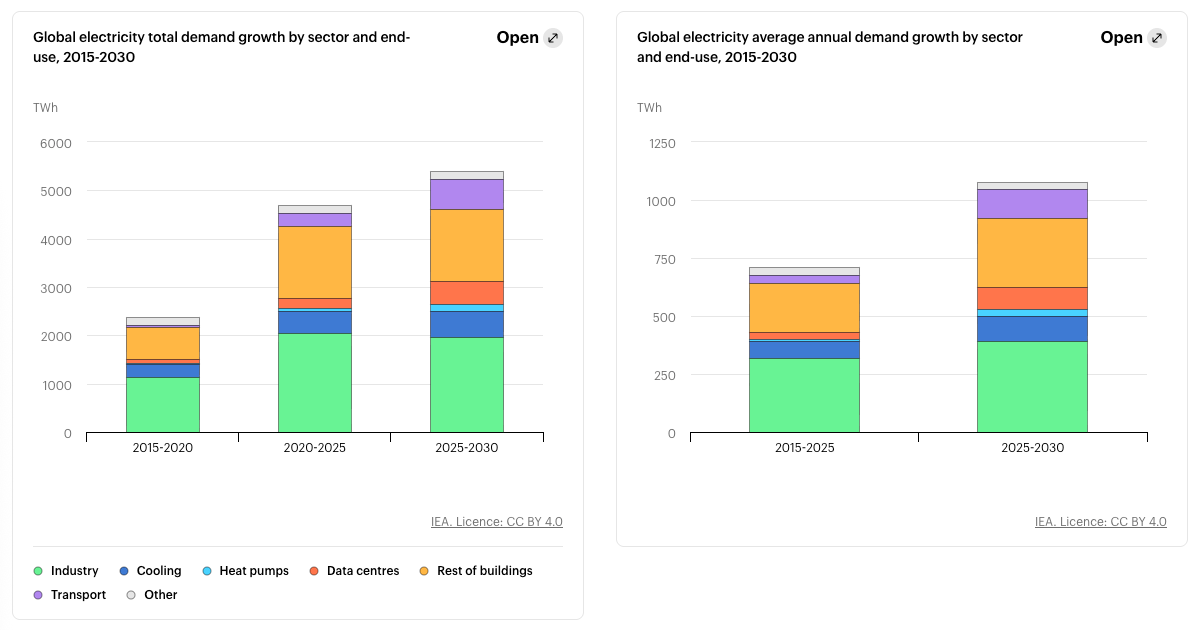
Even so, data centers at that scale would still account for less than 3% of the world’s electricity. The total energy is not the problem. The problem is concentration: hundreds of megawatts of demand arriving at a single point on the grid, with load profiles that swing by the second, faster than any grid was designed for.
That power still has to reach the chips.
Power Struggle
Between the data center and the power it needs sit three problems, each distinct, each getting worse.
1. Power delivery is years behind demand. In the United States alone, more than 2,600 GW of generation and storage capacity sits in the interconnection queue, waiting for approval to connect to the grid. The median wait to commercial operation is about five years. Google has reported potential delays of up to 12 years. Building a data center takes 12 to 24 months. Connecting it to the grid can take three times longer. In Ireland, EirGrid restricted new data-center connections in Dublin because the transmission network could not absorb them. The queue is not just long: more than 90% of interconnection applications arrive with technical deficiencies needing multiple rounds of revision before a grid operator will even begin a study.
2. The demand itself is a new kind of problem. A conventional data center drew steady, predictable power. An AI training facility does not. Training runs ramp consumption up and down by megawatts in seconds as jobs start, checkpoint, and restart. Gas turbines, the primary source of flexible generation, take minutes to ramp. The grid was engineered for loads that change slowly and predictably. The load profile of an AI data center is unlike anything it was built to serve. It is also more expensive to run: electricity pricing penalizes peaks, and a facility whose consumption swings unpredictably pays for the spikes, not the average.
3. The cost of the mismatch does not stay inside the facility. US electricity prices rose about 13% in 2025. In Georgia, residential bills climbed roughly sixfold in two years to about $175 a month while Georgia Power proposed $15 billion in expansion driven largely by data-center demand. More than 20 data-center projects across the country have been delayed or canceled amid local opposition. In March 2026, AWS, Google, Meta, Microsoft, OpenAI, Oracle and xAI signed the White House Ratepayer Protection Pledge, committing to cover generation and grid-upgrade costs rather than pass them to households.
Batteries Lead the Charge
Batteries do not generate electricity. They store it, release it, and do both faster than any other asset on the grid. That combination solves several of the problems above at once.
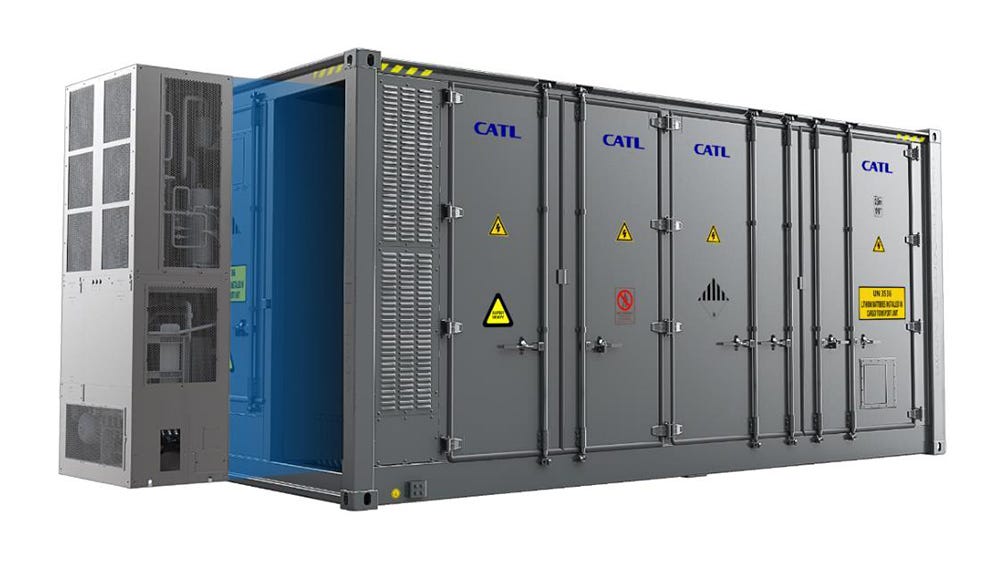
1. Time-to-power. A battery system can be installed in months. Paired with on-site generation, it lets a facility begin operating while the grid connection is still years away. It also raises effective capacity beyond what the connection alone can deliver: if the grid provides 50 MW but the facility needs 200 MW at peak, the battery charges when load is light and discharges when it exceeds the connection’s limit. At the extreme, a facility goes fully off-grid with solar and batteries, bypassing the queue entirely.
2. Shock absorption. When a training run spikes or drops demand by tens of megawatts in seconds, batteries match it instantly. Turbines take minutes. The rest of the power system sees a smoother load instead of raw spikes. That smoothing saves money: batteries store cheap off-peak energy and discharge during spikes, reducing peak charges.
3. Grid services. A facility with co-located storage can provide frequency regulation and voltage support back to the grid, turning it from a burden into a resource.
4. Protecting the compute. A power cut mid-training means a lost checkpoint, potentially days of wasted work. Batteries bridge outages in milliseconds, far faster than a turbine can start, and deliver cleaner power through solid-state inverters than rotating generators produce. For racks of GPUs sensitive to voltage fluctuations, that matters.
Batteries have a hard constraint. They store hours of energy, not days. They cannot sustain a facility through a prolonged outage or replace the grid as a primary power source. Gas, grid, and eventually nuclear provide that sustained generation. But batteries are the fast-responding layer that makes the rest of the stack viable.
The Trust Problem
If batteries can do all of this, the obvious question is why the storage market is not larger. The answer is not technology, cost, or capacity.
Storage batteries and EV batteries began developing in parallel around 2009. Today the storage market is only about a fifth the size of the power-battery business. The bottleneck is proving they work. Vendors claim cycle lives and efficiencies that nobody can independently verify. Some equipment underperforms in the field. Buyers cannot tell good from bad, so they price everything as if it might be bad.
That shows up directly in what people will pay. Tesla’s Megapack sells at several times the per-Wh price of comparable Chinese storage products overseas. Tesla has five years of deployed operating data, a track record asset managers can underwrite. Chinese manufacturers, many of them technically competitive, do not. Someone has to close that trust gap.
Back to the Lab
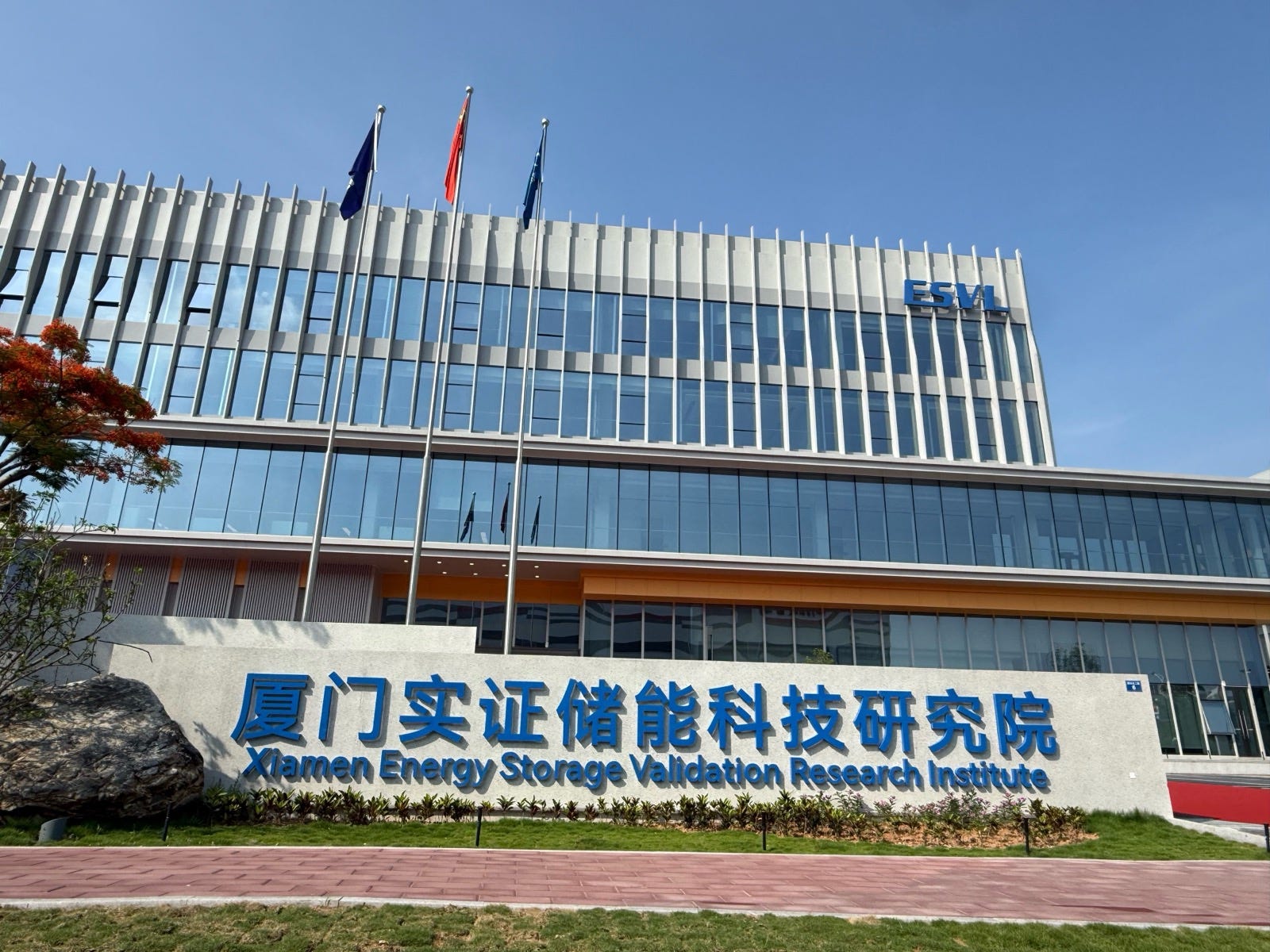
That burned-out shipping container in Xiamen was not a failure. It was a test. The hall I walked through is one of five laboratories in what CATL and the Xiamen municipal government have jointly built as the world’s largest energy storage validation platform: the Empirical Energy Storage Technology Research Institute (实证储能科技研究院). Ten hectares, roughly RMB 3 billion, and built from the start as industry-shared infrastructure (行业共享的基础设施), open to any manufacturer willing to put its equipment through the process.
Chen Xiaobo (陈小波), the institute’s dean, describes it as a physical exam center plus hospital (体检中心加医院): install a prototype, run the full test suite, identify failures, fix them on site, iterate. Another expert called it a wind tunnel (风洞).
The five labs test a storage system the way the real world would break it:
Grid connection. A 35kV/100MVA grid simulator that tests more than 10 large containers simultaneously, simulating a 1,000-node grid topology across 15 to 60 Hz to cover domestic and international standards. A system destined for Fujian’s grid gets tested against Fujian’s actual grid behavior. The lab serves a joint State Grid (国网) / China Southern Power Grid (南网) storage innovation consortium.
High-voltage safety. Testing from 1kV to 500kV, tracing the root mechanisms of ignition and explosion under extreme voltage. The engineering goal: equipment that does not catch fire and does not explode (不起火、不爆炸).
Thermal safety and combustion. The hall from the opening scene. A 20MW calorimeter, the first of its kind, inside 100,000 cubic meters of indoor burn space. Nine large storage containers can be deflagration-tested simultaneously. This is where batteries are documented failing under thermal stress.
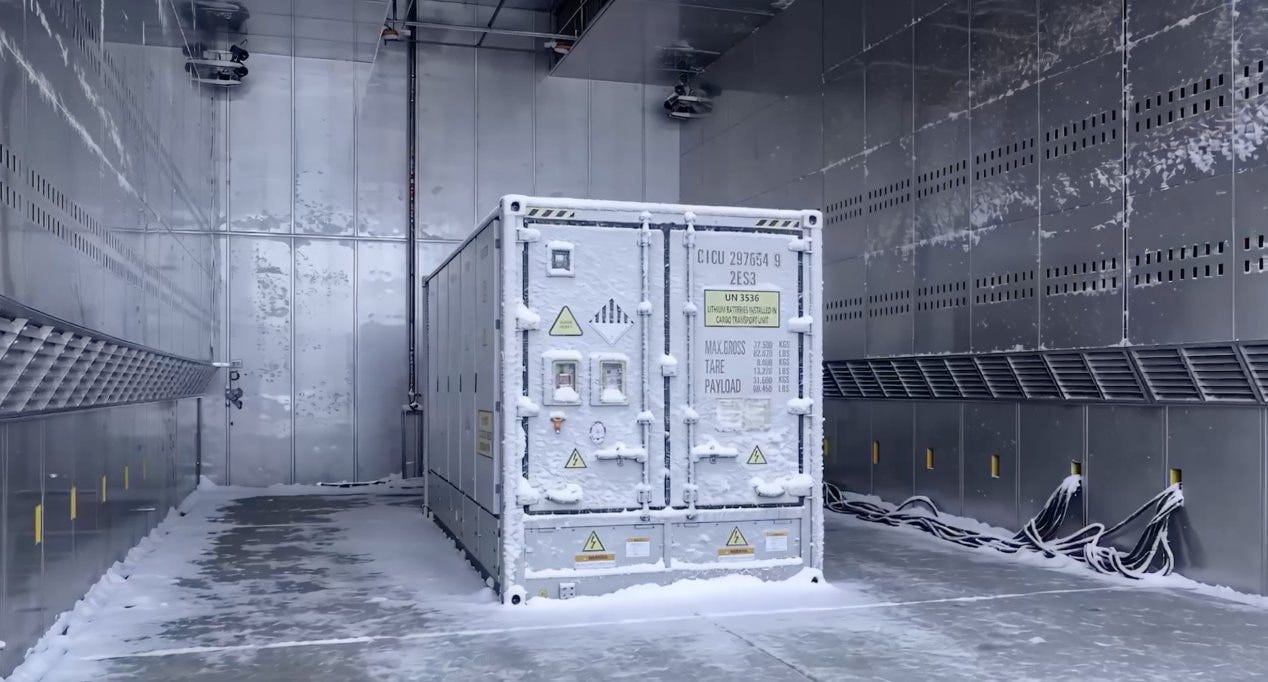
Environmental adaptability. Five chambers (climate, salt spray, rain, dust, environment) covering minus 50°C to 100°C, altitudes up to 7,200 meters, and full-grade dust and water protection. A container bound for the Gobi Desert or a Norwegian coast gets tested under the conditions it will actually face.
Electromagnetic compatibility. The only EMC lab in the world that can take a full 40-foot shipping container as a single unit. A 65-ton turntable, 5MW power supply, and an anechoic chamber running real high-power charge/discharge cycles. EMC testing at the scale the equipment actually ships at, not on a downsized sample.
Chen names three beneficiaries:
1. Equipment makers. Faster iteration, fewer field failures, deeper knowledge of their own products.
2. Long-term asset investors. Returns depend on uptime (带电率) and how quickly a station moves from grid connection to revenue. Validation shortens that timeline. “Real money they can actually earn” (实实在在可以赚到的钱).
3. The grid. Confidence that when a major event hits and storage needs to hold the grid up, it can.
The institute is already in talks with a European insurer about recognizing validation data. A second expert predicted a national grading body will eventually rate storage equipment on safety, reliability, and grid functionality. The chain: validated asset, rated asset, insurable asset, financeable asset class. Solar walked this path over the past decade. Storage is at the stage solar was before institutional capital flooded in.
CATL’s strategy: make the lab open, but the investment unrepeatable. The consortium model follows GB 38031, the power-battery safety standard that became a national standard through industry collaboration. Chen insists the intent is “not to block others” (不卡别人). Another expert: “it will be hard for anyone to invest in a facility this complete again.” Both are true. To reinforce the platform’s independence, CATL brought in TÜV Süd, TÜV Rheinland, CSA, and CGC (鉴衡) as co-supervisors. Storage is ~20% of CATL’s business. The lab’s value is raising the bar for the entire industry.
The Money Is Moving
Capital is already flowing. Nextpower acquired Prevalon Energy for up to $365 million in May 2026, buying into BESS and AI data-center infrastructure. Prevalon, spun out of Mitsubishi Power in 2024, has over 6 GWh deployed globally with firm contracts supporting hyperscaler data centers.
In Oregon, Aligned Data Centers and Calibrant Energy deployed a 31 MW/62 MWh battery system at a Pacific Northwest campus, the first US project where a battery was purpose-built to accelerate interconnection and bring a data center online years earlier. Operational in 2026.
LG Energy Solution signed a $1.6 billion deal with Michigan utility DTE Energy for 1.5 GW/6 GWh of battery storage across eight projects, using LFP cells manufactured in the US and Canada. LG shares surged 15% on the announcement.
In Croatia, the Pantheon AI project backed by KKR-owned Greenvolt is building a €50 billion hyperscale data-center campus with 500 MW of solar and 8 GWh of battery storage behind the meter, designed to operate fully off-grid to bypass interconnection constraints. It is the largest private US investment in Europe.
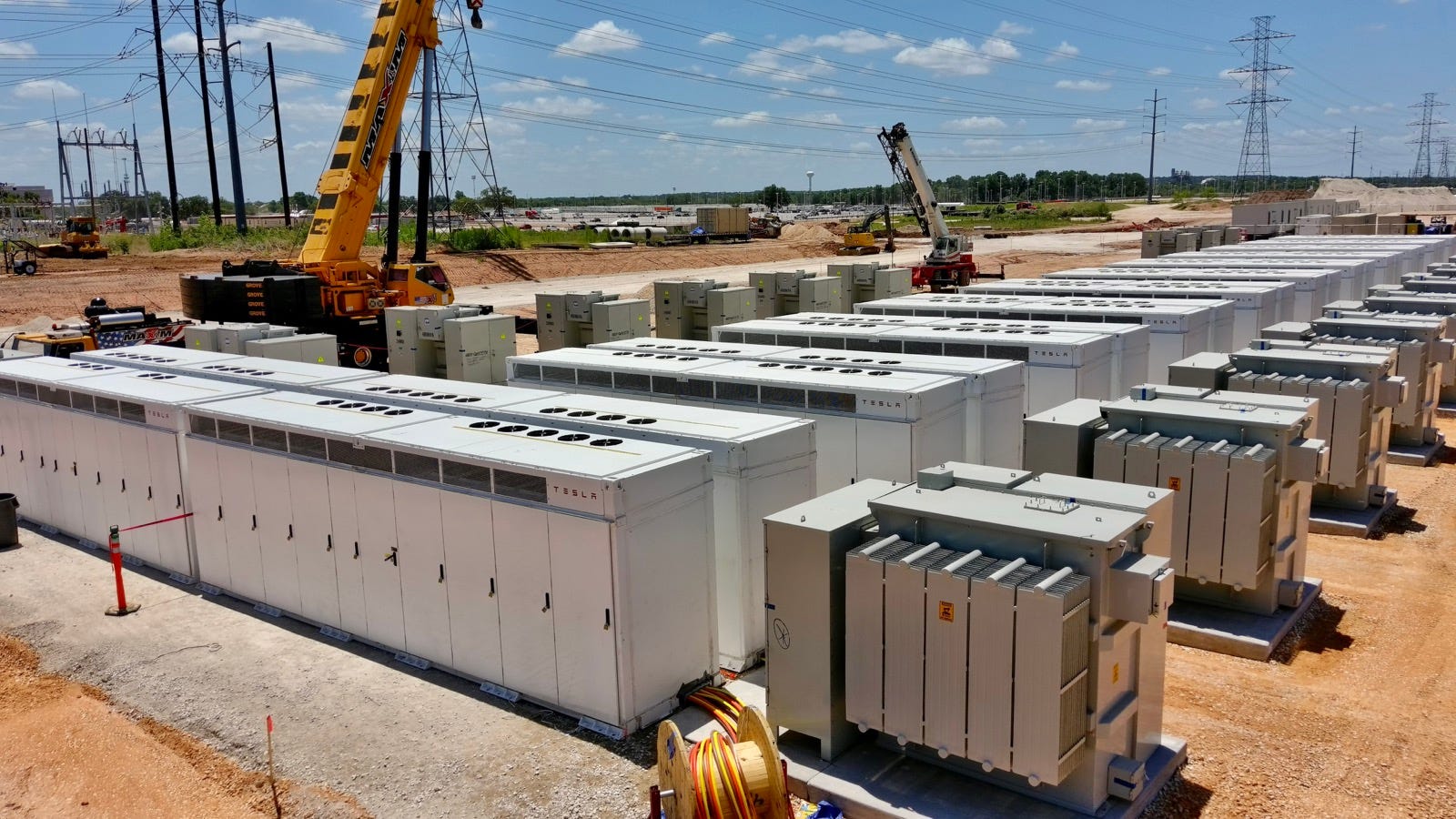
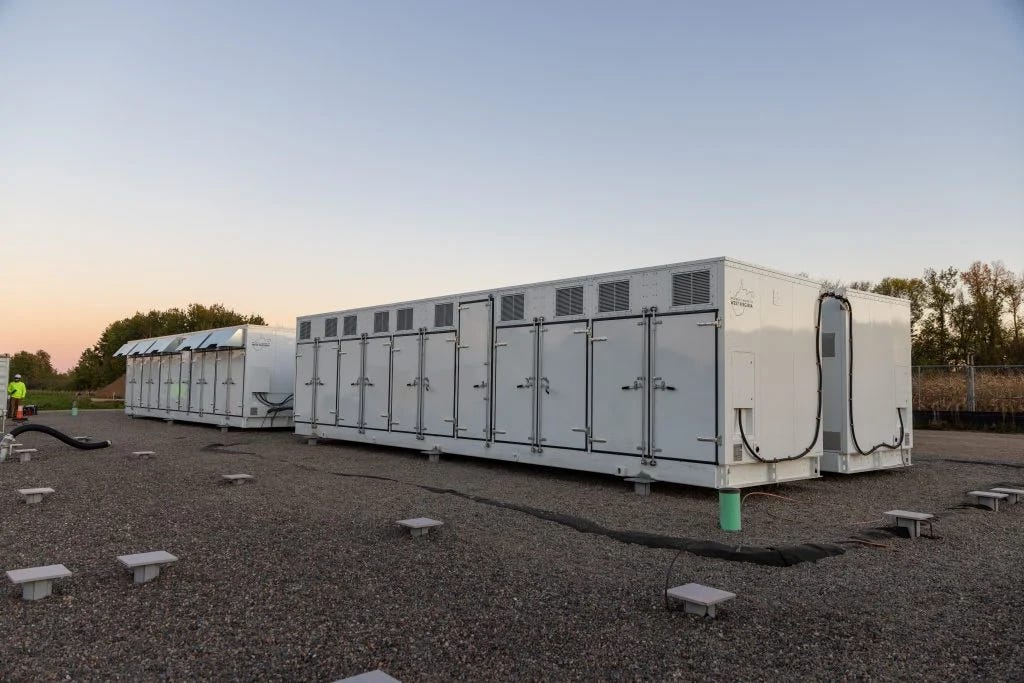
Google acquired Intersect Power for $4.75 billion, gaining 2.2 GW of operating solar and 2.4 GWh of battery storage co-located with data centers, targeting $20 billion in renewable infrastructure by the end of the decade. In Minnesota, Google partnered with Xcel Energy to deploy a 300 MW/30 GWh iron-air battery from Form Energy, the world’s largest battery by energy capacity, capable of discharging for 100 hours. Iron-air stores energy by rusting iron and releases it by reversing the reaction, a technology that directly addresses the “hours not days” constraint of lithium-ion.
Jefferies estimates that hyperscalers represent a ~20 GW BESS opportunity through 2035, with ~9 GW through 2030. BloombergNEF raised its US storage projection to 204 GW by 2035 even while cutting solar and wind forecasts.
In China the capital is flowing even faster, though across the storage ecosystem broadly rather than into named data-center deals. Chinese venture databases tracked more than 50 energy-storage-related fundraises in the first five months of 2026 alone, spanning cells, materials, systems, inverters, testing, and AI-driven power management. Sunwoda Power (欣旺达动力), one of the companies building AI-data-center-specific storage solutions, closed a RMB 1.68 billion (~$230M) C round at a RMB 26.7 billion valuation. Haier New Energy (海尔新能源) raised RMB 1 billion at a RMB 6 billion valuation. Saudi Aramco and French PE firm Eurazeo co-led a B round valuing 碧澄能源 (Bicheng Energy) at RMB 10 billion.
One startup, 京清数电 (JingQing Digital Power), a storage-inverter maker, raised three rounds in five months. 新能先锋 (New Energy Pioneer) is being funded to build battery testing services, the same layer CATL’s Xiamen lab targets. The data-center-specific market in China is forming through CATL itself: a $600 million acquisition of Zhongheng Electric for data-center power (Zhongheng’s HVDC systems already run in facilities operated by Alibaba, Tencent, ByteDance, and Baidu), a $942 million stake making it the largest shareholder of 21Vianet (世纪互联), one of China’s biggest carrier-neutral data center operators, and a 60 GWh sodium-ion order with HyperStrong (海博思创), the largest sodium deal globally. Together the Zhongheng and 21Vianet deals total roughly $1.5 billion and put CATL on both sides of the data center power equation: supply infrastructure and demand.
What This Changes
The economist George Akerlof called it a market for lemons: when buyers cannot verify quality, they price everything toward the worst case, and good products get punished. The energy storage market has exactly this problem. Akerlof’s fixes are certification, warranties, brand, and licensing. CATL’s lab is reaching for nearly all of them.
The dean called the price gap with Tesla “enormous” (巨大) and framed the lab as infrastructure for 出海 (going overseas). A credible validation record gives Chinese integrators like Sungrow, HyperStrong, and Envision bankability they currently lack. CATL’s numbers show where value is heading: ESS gross margin 26.7% against 23.8% for EV batteries, overseas revenue at 31.4%. The premium is in the validated system, not the cell.
The lab is also a competitive move, and not the only one. In EVs, CATL expanded steadily from cells into materials, components, financing, and partnerships with automakers. It did not need to control the entire industry to gain influence over it. The data center investments suggest a similar pattern: Zhongheng extends its reach into power systems, 21Vianet connects it directly to demand, and the validation lab sets the quality standard. Integrators are diversifying cell supply as the market matures. Cell leadership alone is not enough at the system layer. If validation becomes an industry norm, the early mover that built the infrastructure and co-opted the certifiers has a structural advantage, even under an open-access model. Standards may ultimately be set by neutral bodies, and the geopolitical risk on Chinese exports remains regardless of validation quality. But the lab exists, and nobody else has built one.
The burned-out shipping container is still sitting under the test structure in Xiamen, in 38-degree heat, inside a hall the size of a small aircraft hangar. It was not a failure. It was a product that went through the worst conditions anyone could engineer, and the data from its death was recorded. Before batteries become infrastructure, they have to become trusted assets. CATL is building that trust.