


Introduction
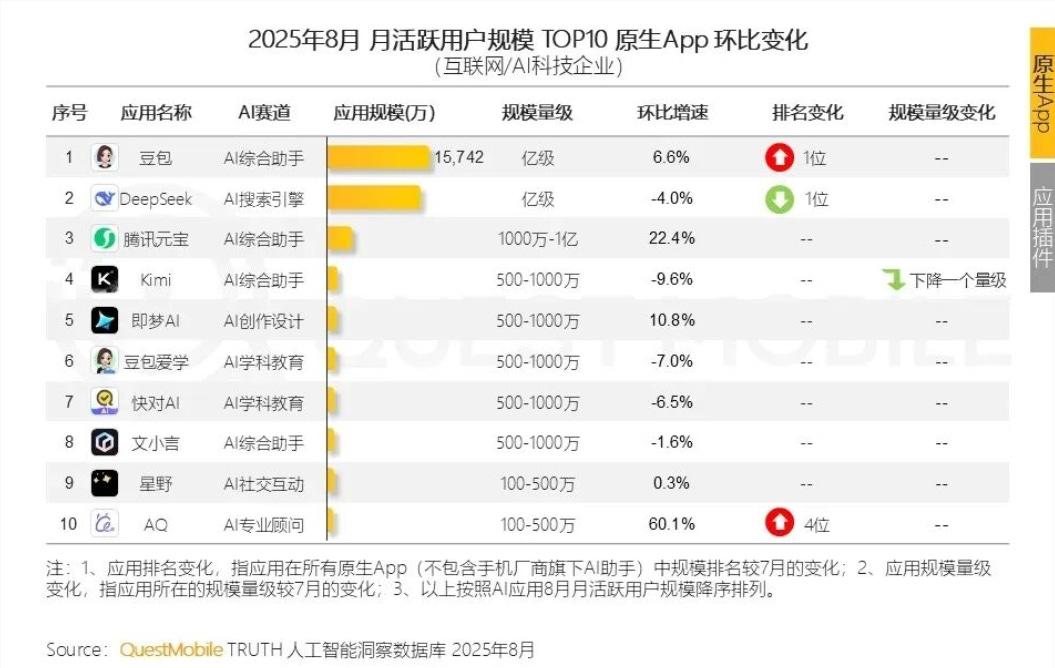
Deepseek has seen an exodus of users the past few months, with most of those users moving to Doubao, ByteDance’s everything AI app. Recent analysis from QuestMobile shows that Doubao has taken the top spot as the most popular AI app in China.
Background
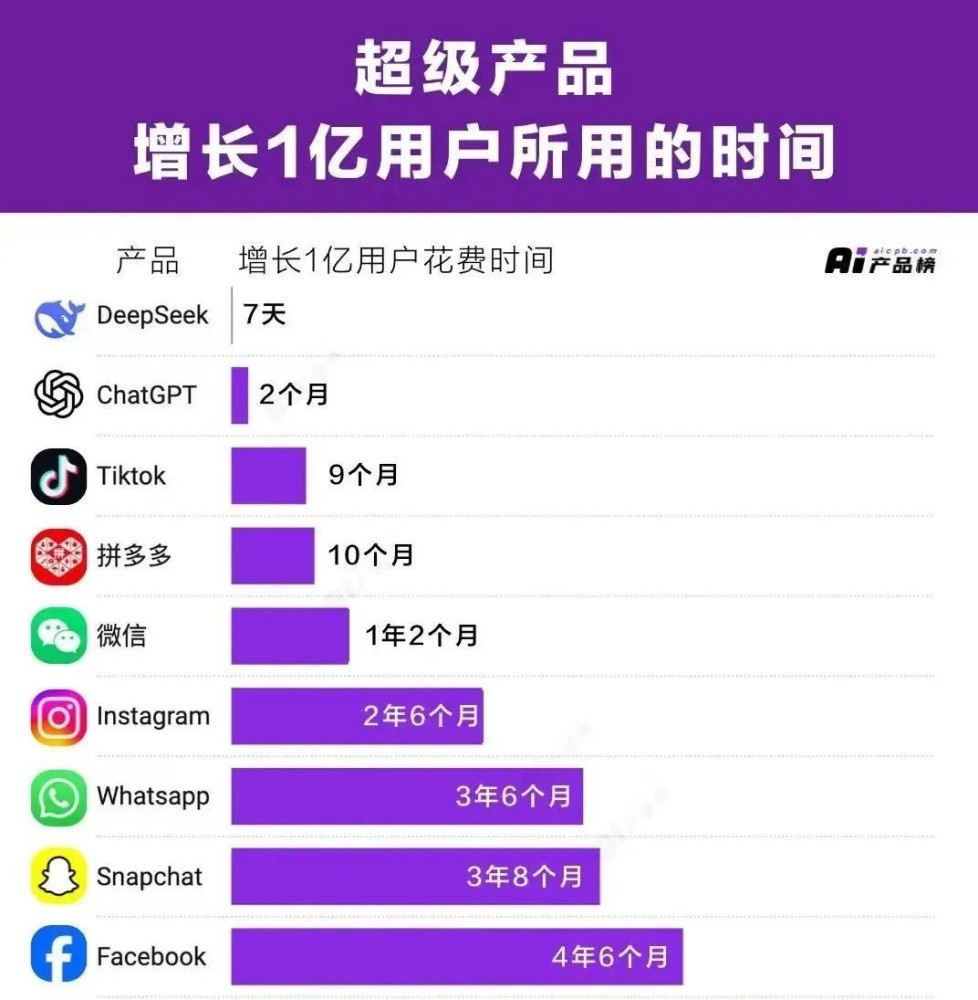
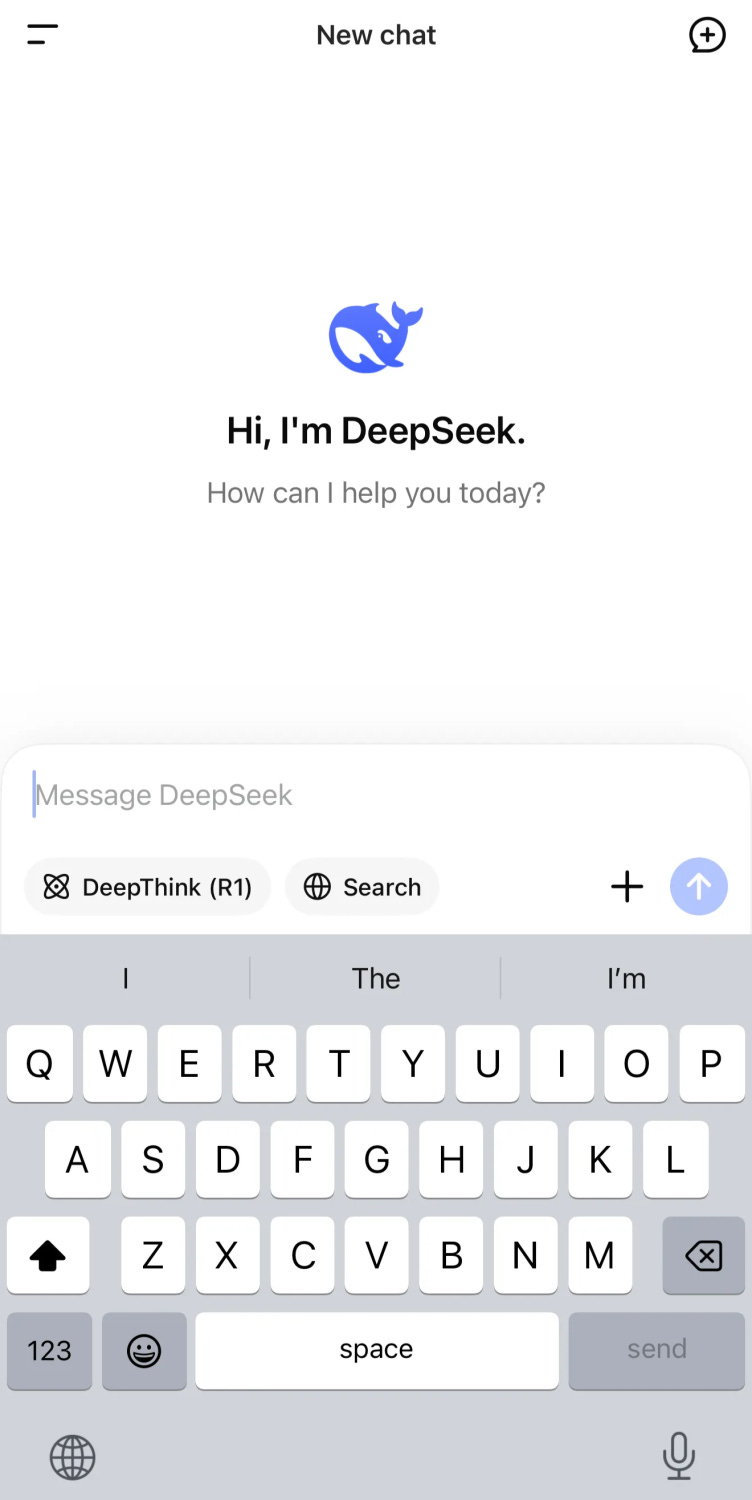
In January 2025, DeepSeek burst onto the scene with its first public model, DeepSeek-R1. The launch rattled global markets: the S&P fell 1.5% and NVIDIA lost $590B in market value. Adoption was explosive, reaching 100 million users in just seven days compared to the two months it took ChatGPT. At its core, DeepSeek offered the now-familiar large language model chat interface with reasoning capabilities and newly introduced agentic tools.
UI
Doubao (豆包, “Beanbun”) began in 2022 as an internal ByteDance tool called “Grace,” designed to help employees learn from company materials. It was rebranded and released to the public in 2023, scaling quickly from there. By 2024, ByteDance had invested ¥80B into AI, a figure nearly equal to the combined ¥100B spent by Baidu, Alibaba, and Tencent together.
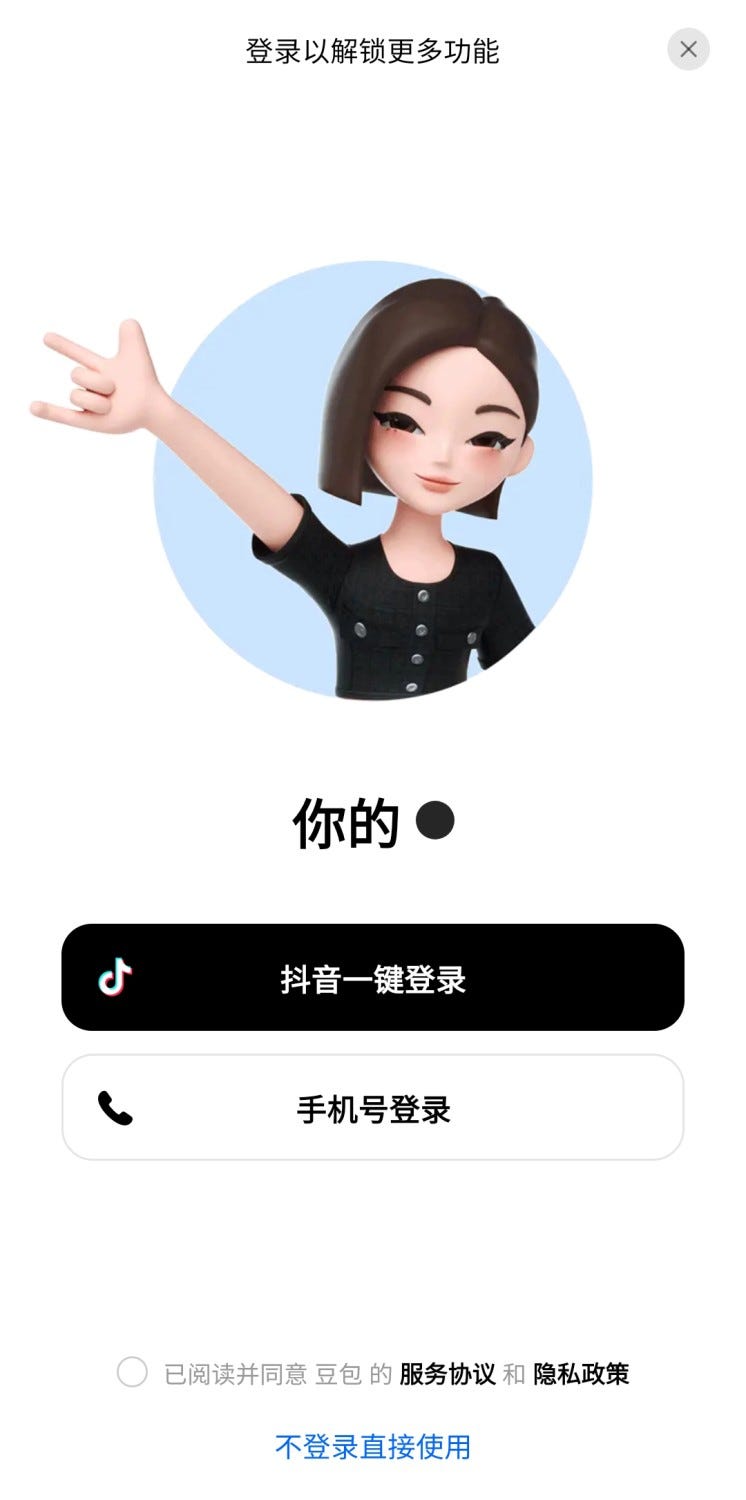
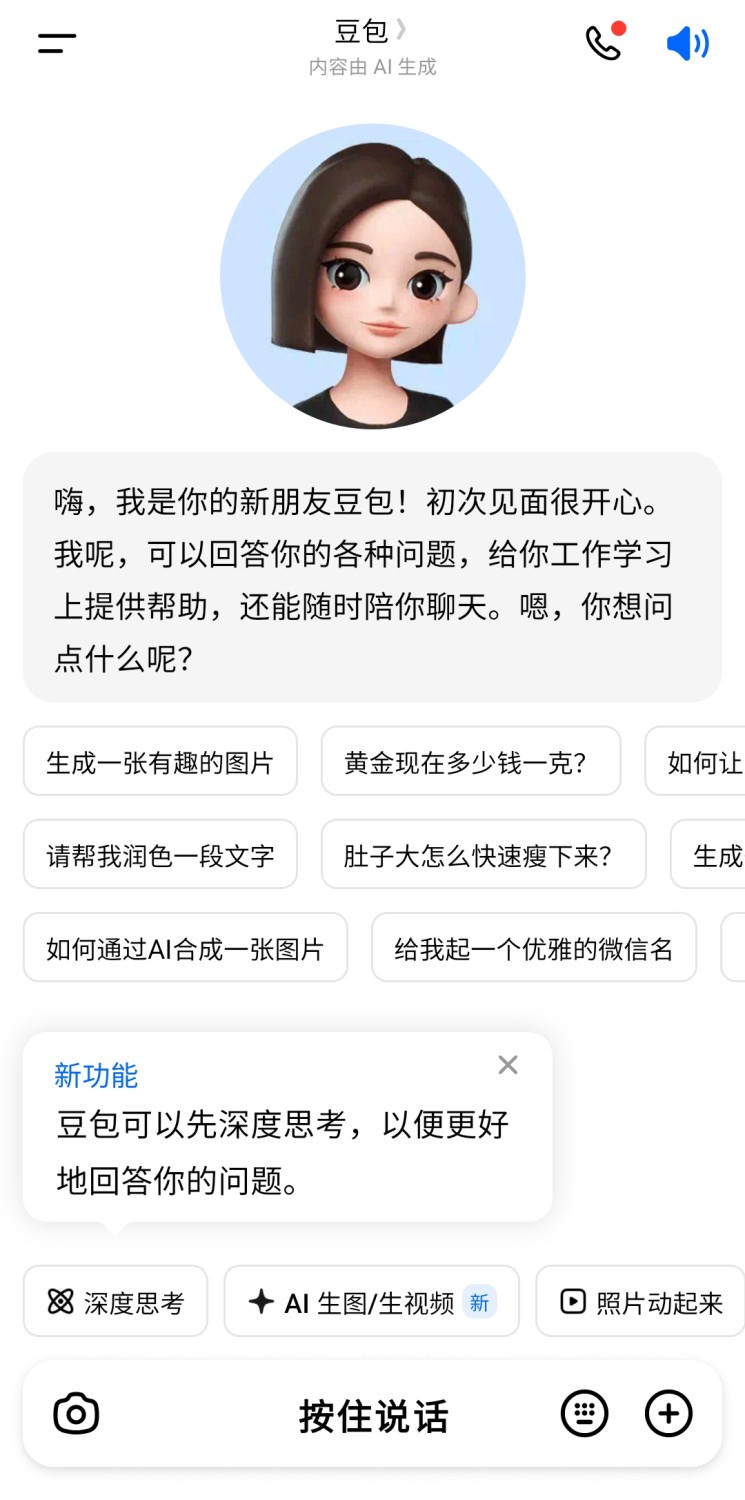
The user experience is where Doubao really stands out. You can log in seamlessly with either a Douyin (TikTok) account or a phone number. At the top of the interface, a moving Doubao character greets you with an introduction, adding a playful, familiar touch. Beneath that are sample prompts designed to showcase the platform’s capabilities, such as generating an image, checking the current price of gold per kilo, or offering health guidance on questions like how to lose belly fat.
Multimodal Responses
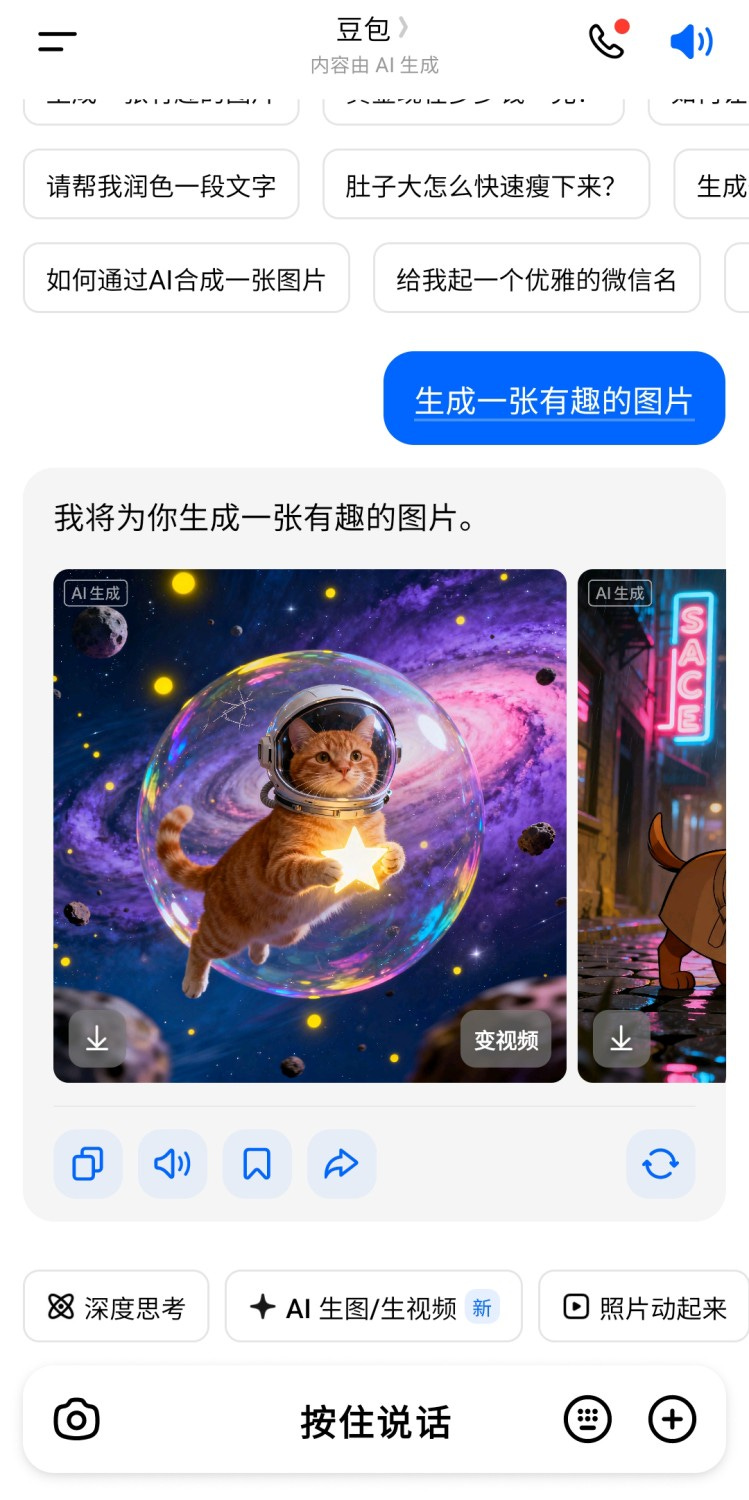
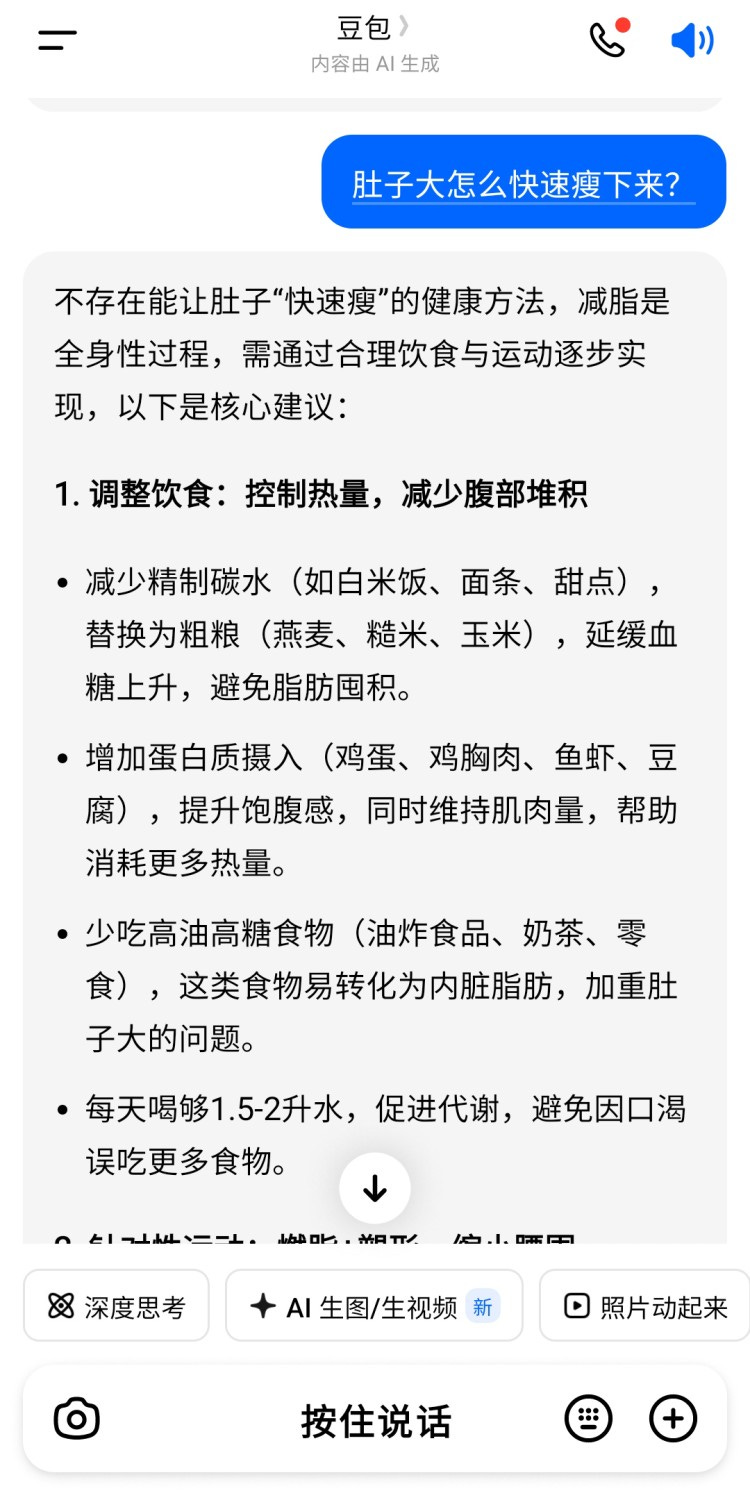
Responses in Doubao are impressively fast, multimodal, and polished. The platform can generate images, deliver text-to-speech replies that are read aloud, and provide answers that are both responsible and practical. For example, when asked about losing weight quickly, Doubao cautions that there is no healthy shortcut and instead recommends reducing sugar, cutting refined carbohydrates, and drinking more water.
Suite of Agents
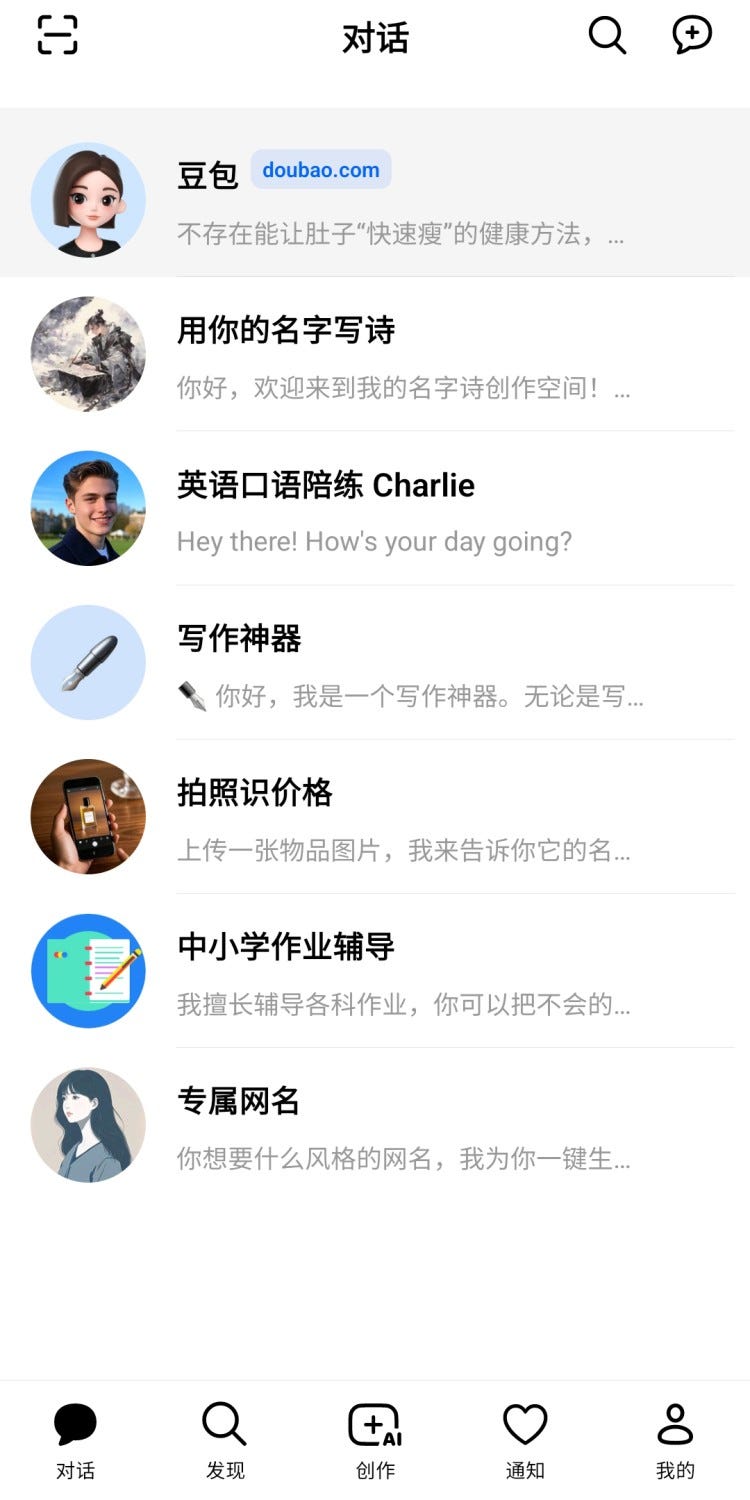
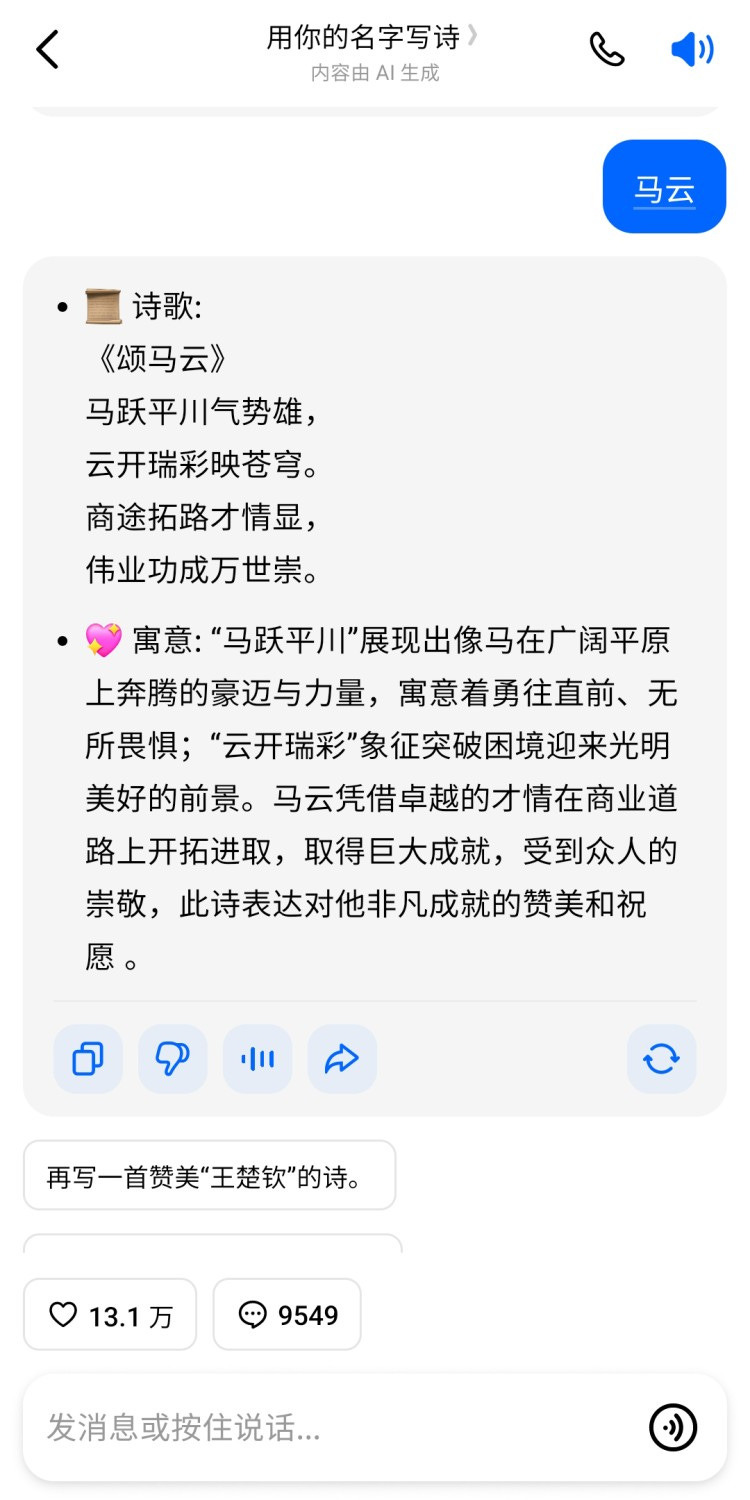
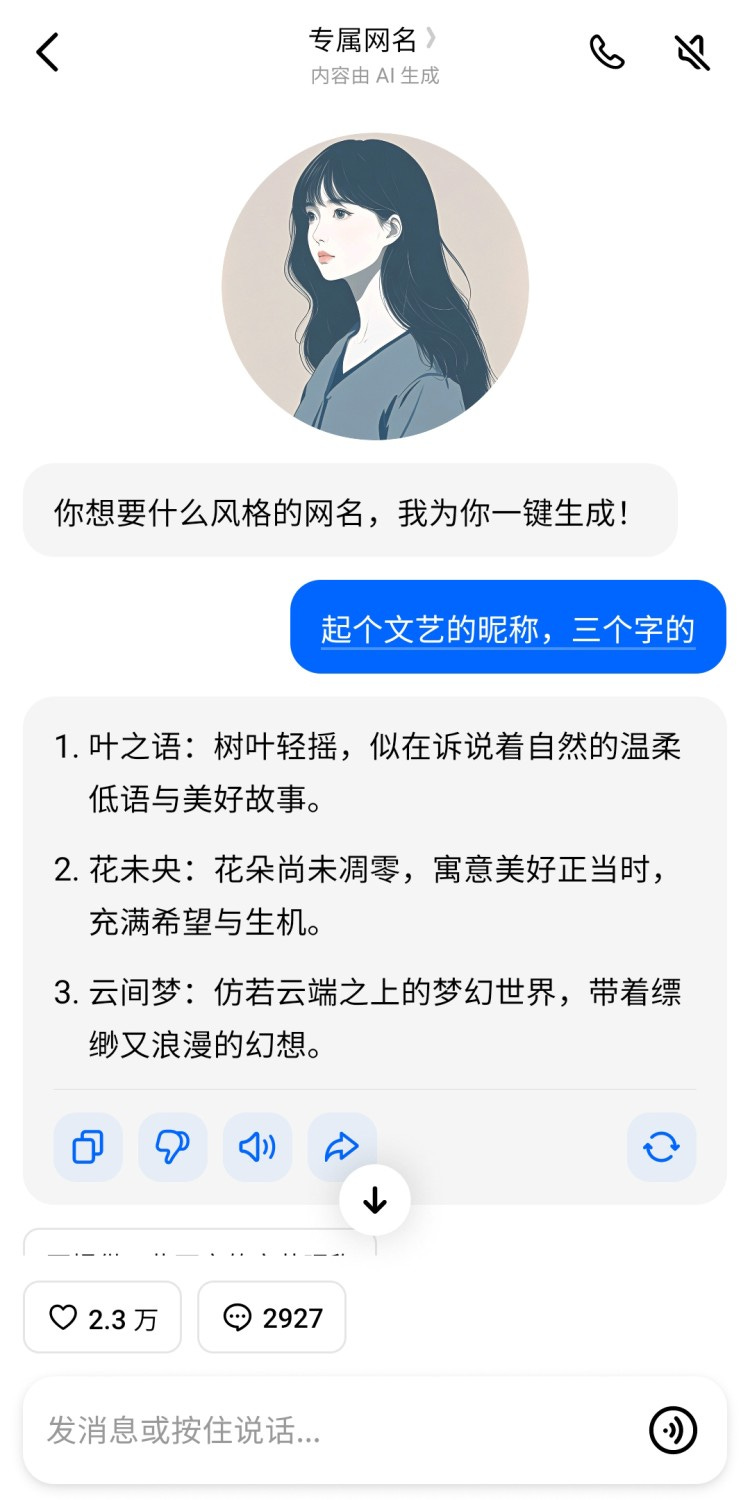
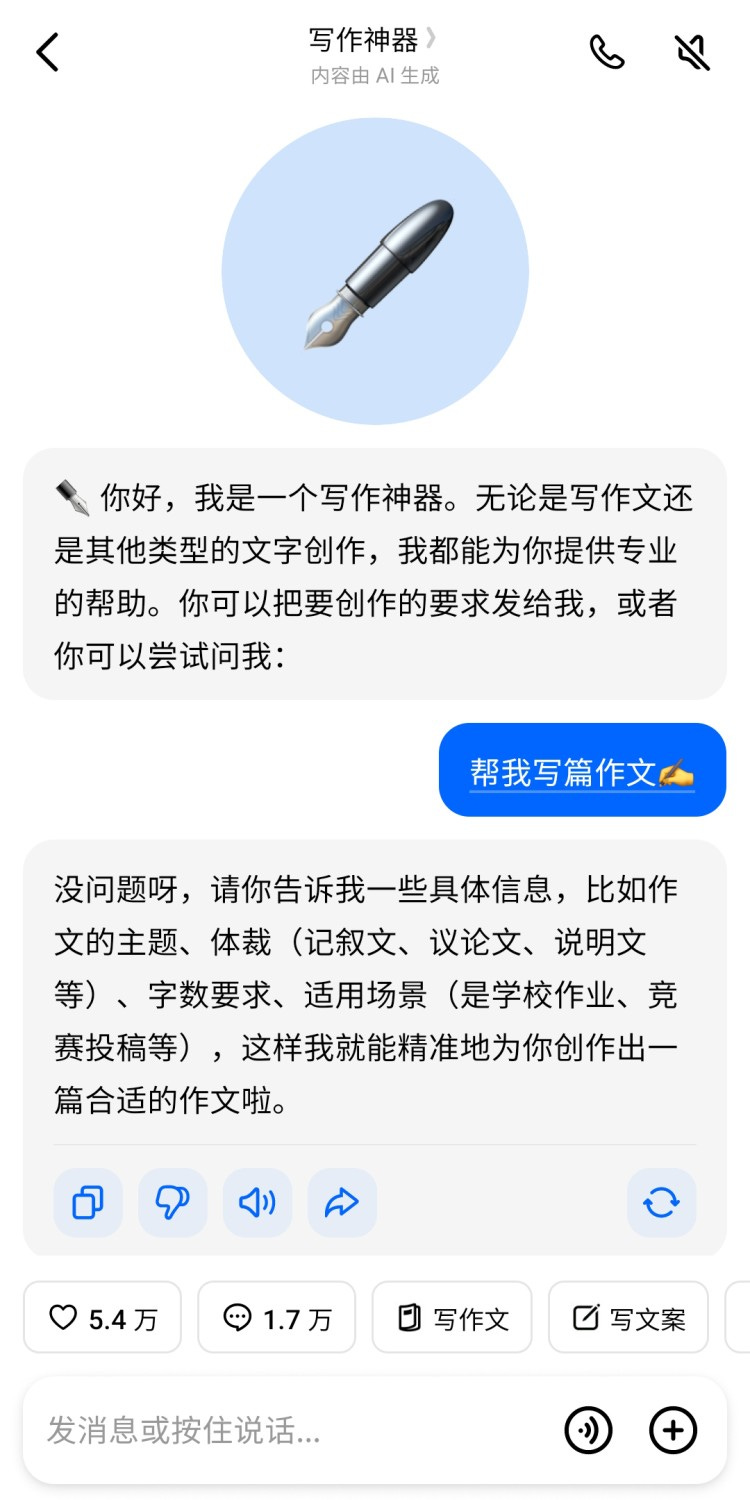
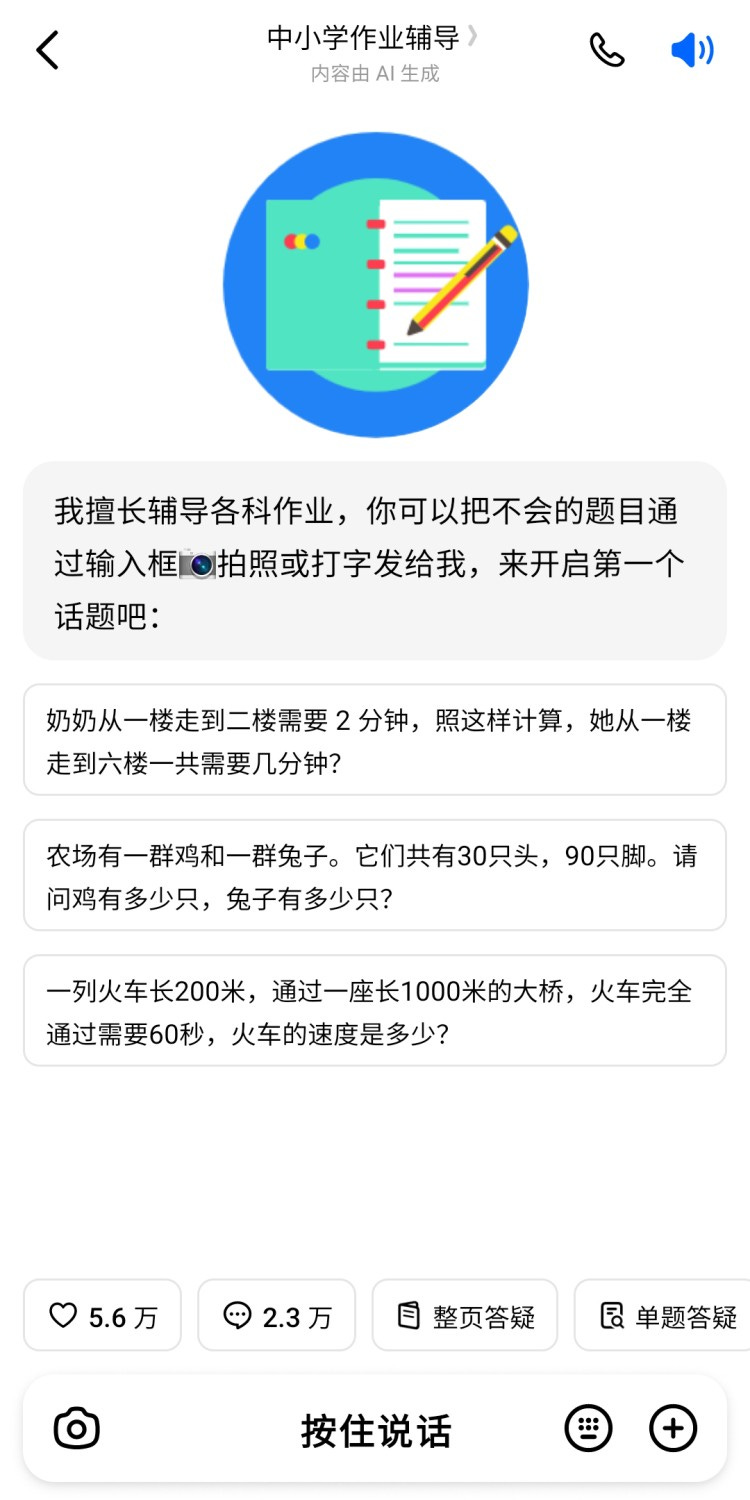
Opening the menu reveals much more than a list of past conversations. Instead, Doubao offers a full suite of tailored agents, each designed for specific tasks. These include a personalized poem generator, an English speaking coach, a versatile writing assistant, a price estimator that analyzes objects from photos, a homework coach for both elementary and high school students, and even a username generator. Together, they highlight how Doubao goes beyond being a simple chatbot to become a multifunctional platform.
Culturally Tailored Tools
Each of these tools is more than a surface-level feature. The poetry generator, for example, creates 七言绝句 (seven-character quatrains) based on a user’s name, tapping into the deep cultural significance of names in China, where each character often carries symbolic meaning chosen by parents. The username generator also goes further than random suggestions. It provides names with clear explanations of their meanings and the impressions they are meant to project.
Voice Chat
The English coach, known as “Charlie,” is another standout feature. Users can chat entirely in English, practice pronunciation through built-in text-to-speech, and even start a live audio conversation by tapping the phone icon. This combination makes language learning more interactive and engaging than standard text-based practice.
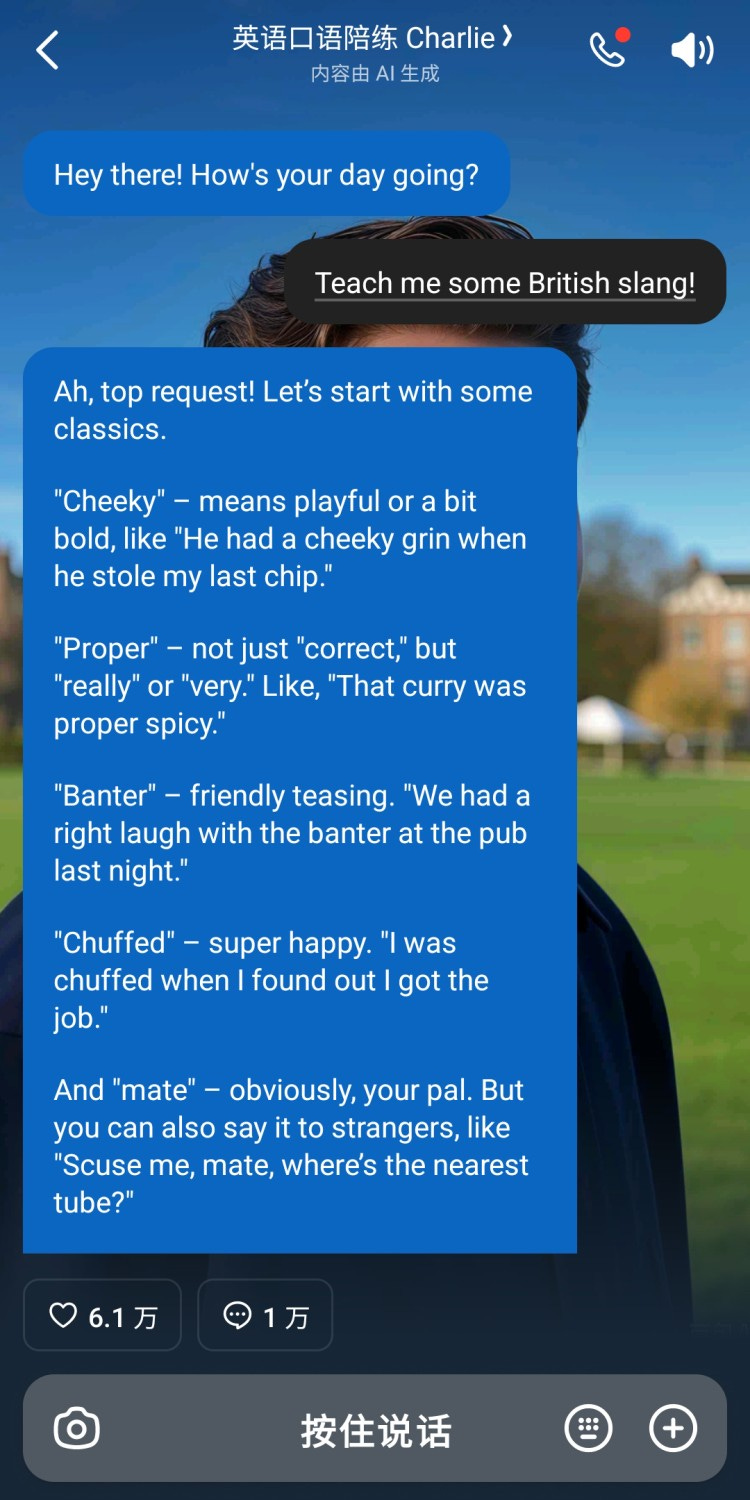
Solid TTS model. Questionable banter.
Turning Generic Features into Specific Tools
The writing tool is highly flexible, allowing users to set parameters such as tone (casual, formal, instructional), target audience, and word limits. It adapts output to match the specific needs of each task. The homework coach takes a similar approach to personalization. Rather than simply providing direct answers, it offers examples and walks students step by step through the reasoning process, making it a valuable guide for learning. All LLMs can do this, but here it’s quite smart to package them in specific tools.
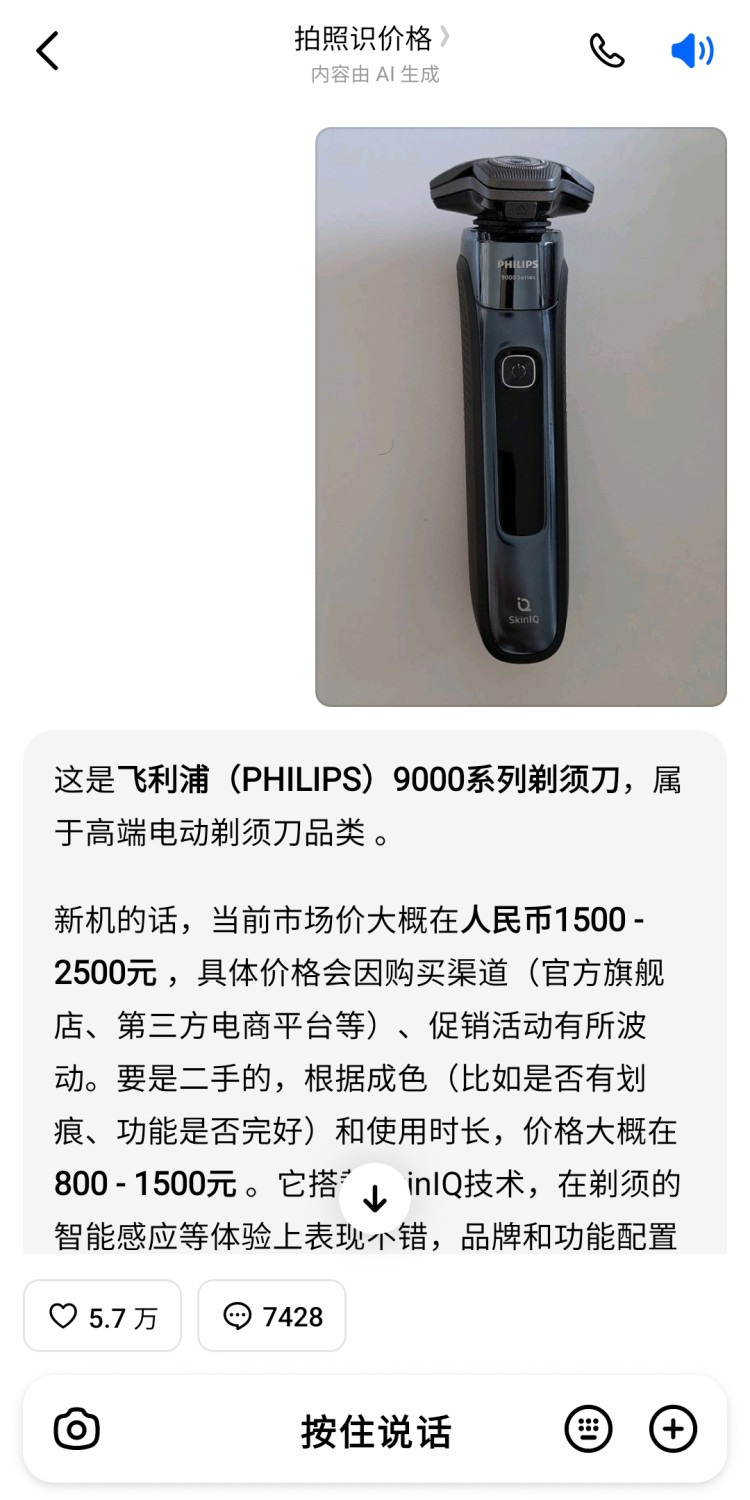
The price estimator is one of Doubao’s most impressive features. By simply snapping a photo, the tool can recognize the object, provide background information, and generate a valuation instantly, all without any additional prompting. It is a seamless blend of computer vision and practical utility. (For the record, my head shaver remains priceless.)
Community of Creators
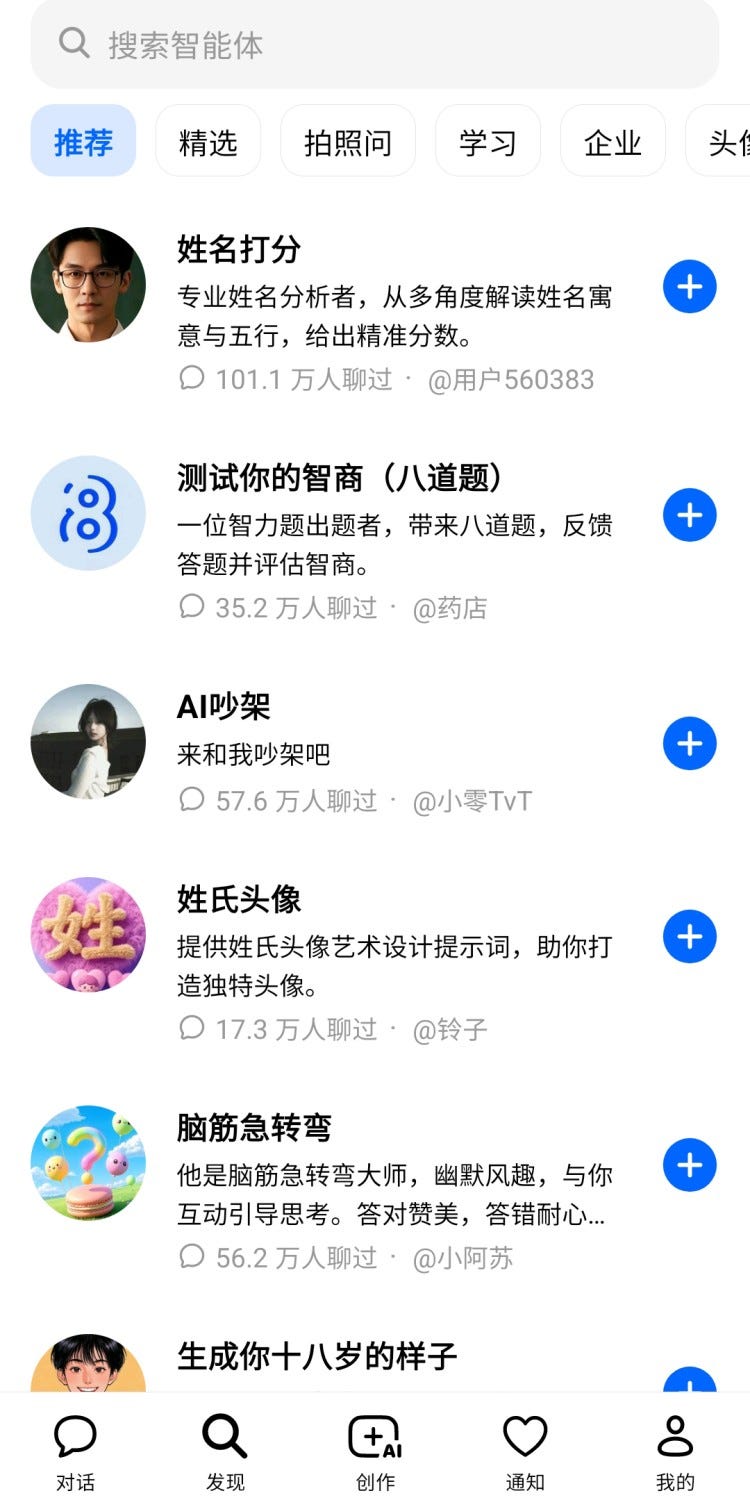
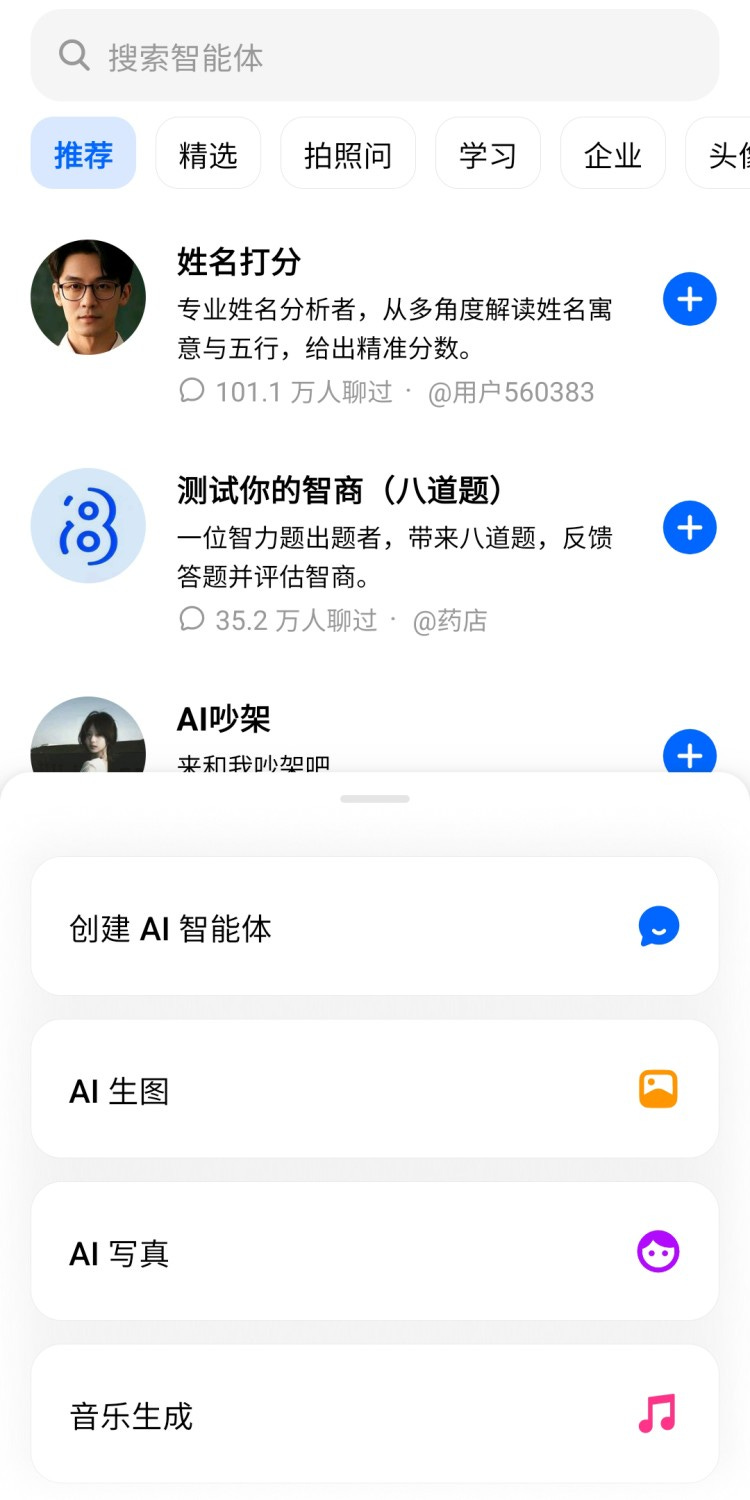
Beyond the built-in tools, Doubao also hosts a marketplace of user-generated agents with unique interfaces and functions. Some of the more creative examples include “Argue with me AI” and “Create an 18-year-old version of yourself.” For those who want something different, there is also the option to design a custom agent, submit it for approval, and make it available for others to use. This approach turns Doubao into more than a chatbot. It becomes an extensible platform shaped by its community.
Conclusion
Success like this shows that the future of AI is not only about building smarter models. What matters just as much is creating experiences people want to return to, built on cultural touchpoints, personalized tools, and a marketplace of agents that feel alive. Doubao demonstrates this clearly. The real winners will be those who build ecosystems that people actually live in. The future of AI belongs to sticky platforms.