


On Wednesday, SpaceX filed confidentially with the SEC to go public at a target valuation of $1.75 trillion. It’s expected to be the largest IPO in history, potentially raising $40B–$80B, far surpassing Saudi Aramco’s record $29.4B 2019 offering.
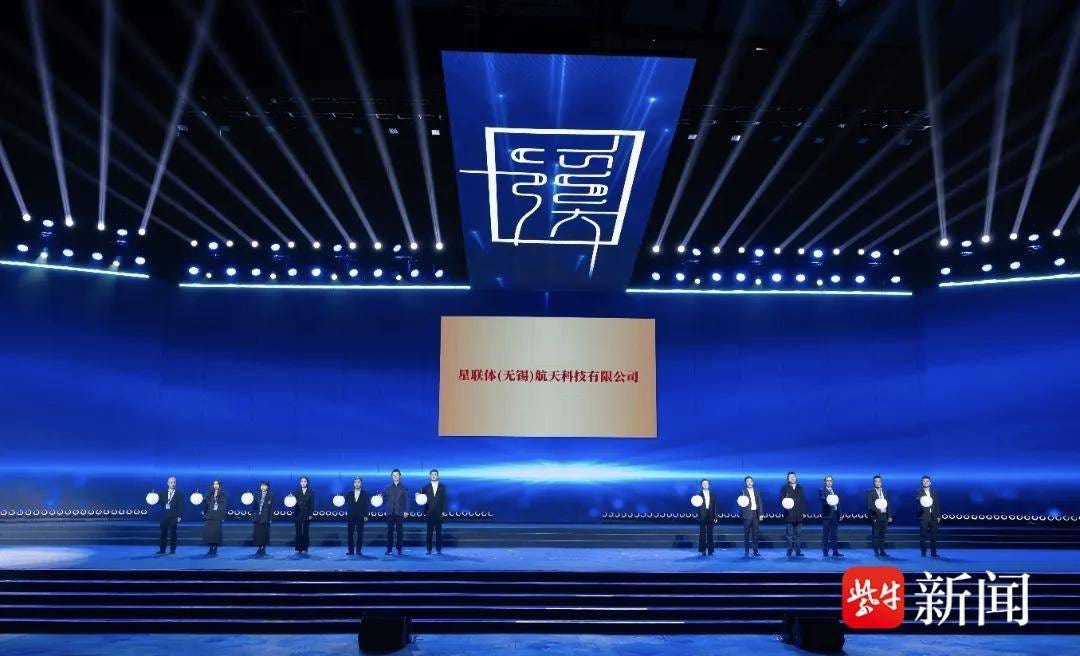
Twelve days earlier, in Wuxi, a Jiangsu province city that has become one of China’s biggest commercial aerospace hubs, thirteen companies signed the incorporation documents for 星联体 (”Star Consortium”).
With registered capital of ¥2 billion, it’s the largest registered private commercial aerospace enterprise in China. The founding partners include some of the country’s most active commercial satellite operators, and the business model is, structurally, the opposite of SpaceX.
The two aren’t rivals in any useful financial sense (one is targeting a $1.75 trillion public valuation, the other has ¥2 billion in registered capital) but they represent two different theories of how commercial space infrastructure gets built, both targeting the same 2027-2028 window.
The Trillion-Dollar Stack
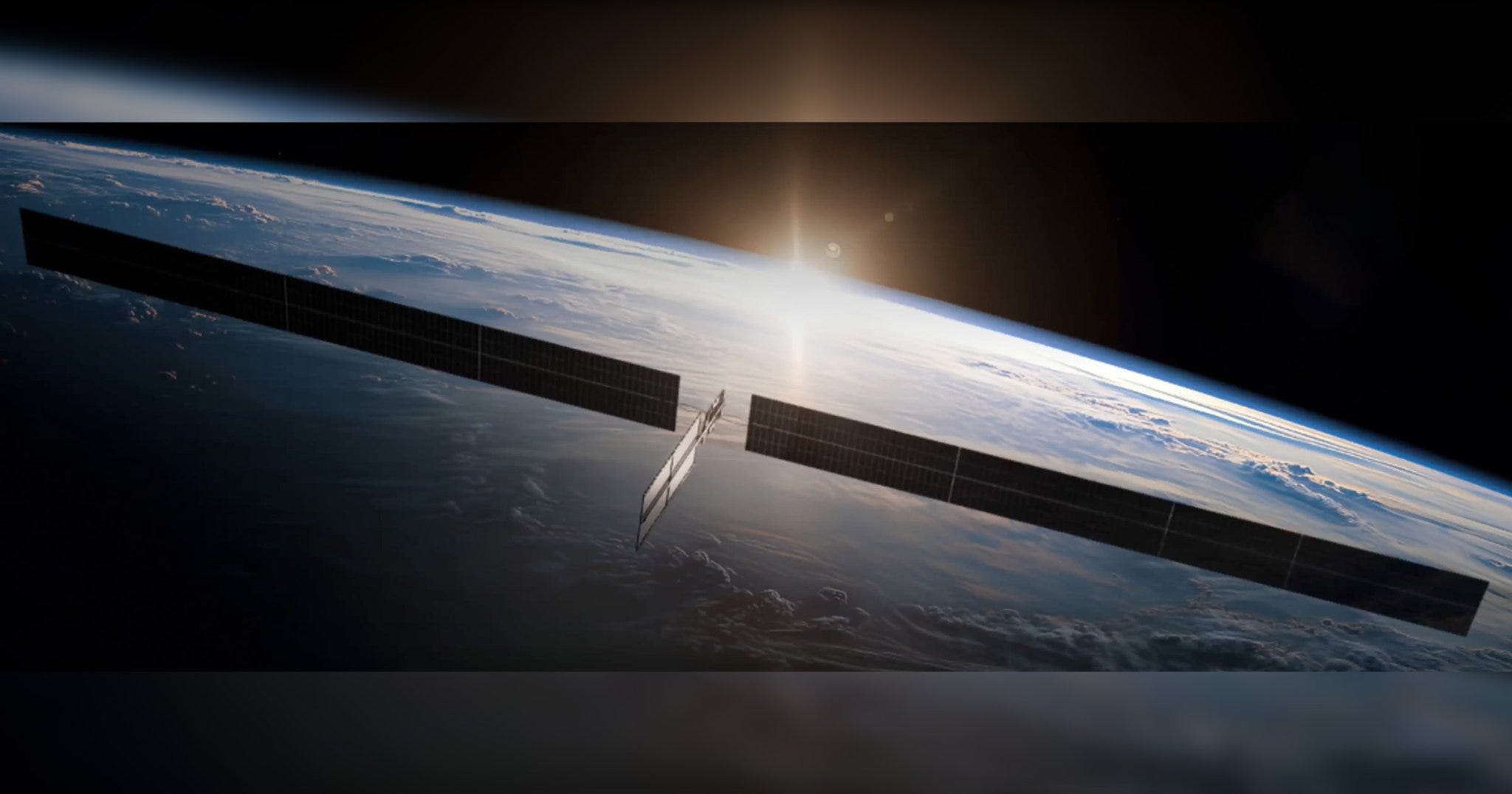
SpaceX’s S-1 is still confidential, though the public moves over the past two months sketch the thesis clearly enough. In early February, SpaceX announced a deal to acquire xAI, Musk’s AI company, valuing the combined entity at $1.25 trillion. The rationale was to integrate xAI’s compute with Starlink’s satellite network to build orbital data centers, solar-powered AI infrastructure running in low Earth orbit.
Ok. But. Why?
Data centers are bottlenecked by power grid access, land permits, cooling infrastructure, and terrestrial fiber connectivity. An orbital layer sidesteps all of them. Satellites have line-of-sight to any point on Earth and can route compute dynamically without laying cable. Whether the economics work is unresolved. Hardening hardware for orbit, tolerating latency on AI workloads, dissipating heat in a vacuum: none of these are solved problems at commercial scale. But SpaceX’s actual business is strong enough that investors can price the company on the vision and absorb the uncertainty.
Revenue hit roughly $15-16 billion in 2025, with Starlink accounting for $10.4 billion across 9 million subscribers. Free cash flow was around $2 billion, forecast to reach $5 billion in 2026. Active government contracts total $22 billion, including classified work through Starshield, the military satellite program. The IPO packages rockets, satellites, internet service, military infrastructure, and AI compute into a single entity, with each layer in theory feeding the others.
The xAI deal brings scale and complications together. Grok generated 3 million harmful images over an 11-day period in late 2025, triggering lawsuits (including a suit from the city of Baltimore), UK regulatory investigations, Southeast Asian bans, and enforcement action from New York’s attorney general. Those liabilities will require disclosure when the S-1 goes public. There’s also a CFIUS review underway because xAI has foreign investors including Qatar’s sovereign wealth fund and Abu Dhabi’s MGX, while SpaceX handles ITAR-controlled military hardware. Reports suggest this friction pushed the filing from February to yesterday. A June or July listing target leaves limited runway to resolve them.
Space for One More?
Even with those overhangs, SpaceX is filing from a position no competitor has come close to replicating. It built its dominance by owning the full stack, and the track record for everyone who tried to compete without that suggests it’s not optional.
Amazon’s Kuiper constellation had roughly 212 production satellites in orbit as of late 2025, and has already filed to extend its FCC deployment deadline from July 2026 to July 2028. It has AWS as a natural distribution channel and deep capital, but it does not own its rockets and does not own the full stack.
OneWeb made the case more starkly. It launched a first-generation low Earth orbit (LEO) constellation, ran out of money in 2020, and filed for bankruptcy before the service reached commercial viability. The UK government and Bharti Global acquired it out of administration, and it eventually merged with Eutelsat in 2023. The capital ran out because OneWeb tried to compete with Starlink on internet service without Starlink’s launch cost advantage, government contract floor, or ability to iterate on hardware.
Competing head-on with Starlink for consumer internet, without owning the rockets and the full vertical stack, doesn’t add up economically.
China’s commercial space companies are building for a different market entirely, but have likely learned from these case studies. Star Consortium exists to get them there faster than any one of them could alone.
The Wuxi Model
Star Consortium is targeting the industrial and government services market, selling maritime domain awareness, precision agriculture sensing, urban IoT, and emergency communications to Chinese shipping companies, provincial agriculture bureaus, and city governments. That market requires being operational, reliable, and cheaper than ground-based sensor networks or imported satellite data services, without needing to match Starlink on price or global coverage.
The consortium was formally established on March 20 at a development conference in Wuxi’s Liangxi District. Four of China’s top ten private commercial space companies are based in Wuxi, a concentration that reflects sustained provincial investment over the past decade. The thirteen founding partners include LandSpace (蓝箭航天), Space Pioneer (天兵科技), Oriental Space (东方空间), and Galaxy Aerospace (银河航天), alongside district-level investment groups and smaller satellite and terminal hardware companies. Registered capital surpasses Chang Guang Satellite Technology’s (长光卫星) ¥1.97 billion.
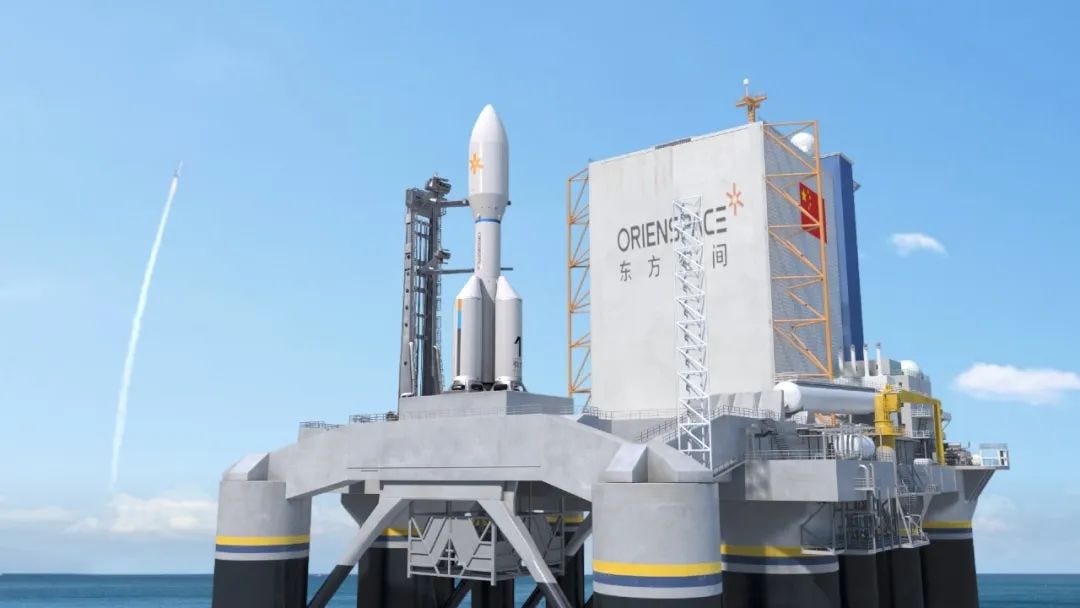
Star Consortium integrates eight existing constellation projects under a shared operational platform covering rocket launches, satellite manufacturing, payload development, terminal applications, and data operations. The stated model is “state-owned leadership, industrial coordination, market-oriented mechanism,” where provincial capital sets the frame, private companies execute within it.
The playbook is familiar in China. Local governments seeded the EV industry the same way, guaranteeing bus fleet procurement so manufacturers like BYD could iterate on battery tech and drive costs down before the consumer market was ready. Wuxi appears to be running the same sequence with satellites and launch services.
Tianyuan Constellation
The flagship initiative is the 天源星座 (”Tianyuan Constellation”), one high-orbit satellite and 216 low-orbit satellites, targeting completion by 2028. In 2026, development begins on the first batch, with 6-8 experimental satellites planned for launch. The strategy is “build while operating,” selling services on partial infrastructure while the full constellation assembles, rather than waiting for completion before taking customers.
Galaxy Aerospace’s Dual Play
Galaxy Aerospace is one of the thirteen founders, and filed its own IPO advisory on March 30, ten days after signing on to Star Consortium. That dual position, equity member in the shared platform while simultaneously seeking independent public capital, shows how the Chinese commercial space sector is positioning for the next few years. Operational assets get pooled for efficiency; the companies remain separately financed. Galaxy Aerospace’s Series C drew 全国社保基金 (”National Social Security Fund”) and 中央汇金 (”Central Huijin”), state capital designed for long-duration holds rather than venture exits. Its IPO materials cite progress in direct-to-mobile satellite technology; the company deployed over 20 satellites in 2025 against a production capacity of 100 per year.
Two Theories, A New Space Race?
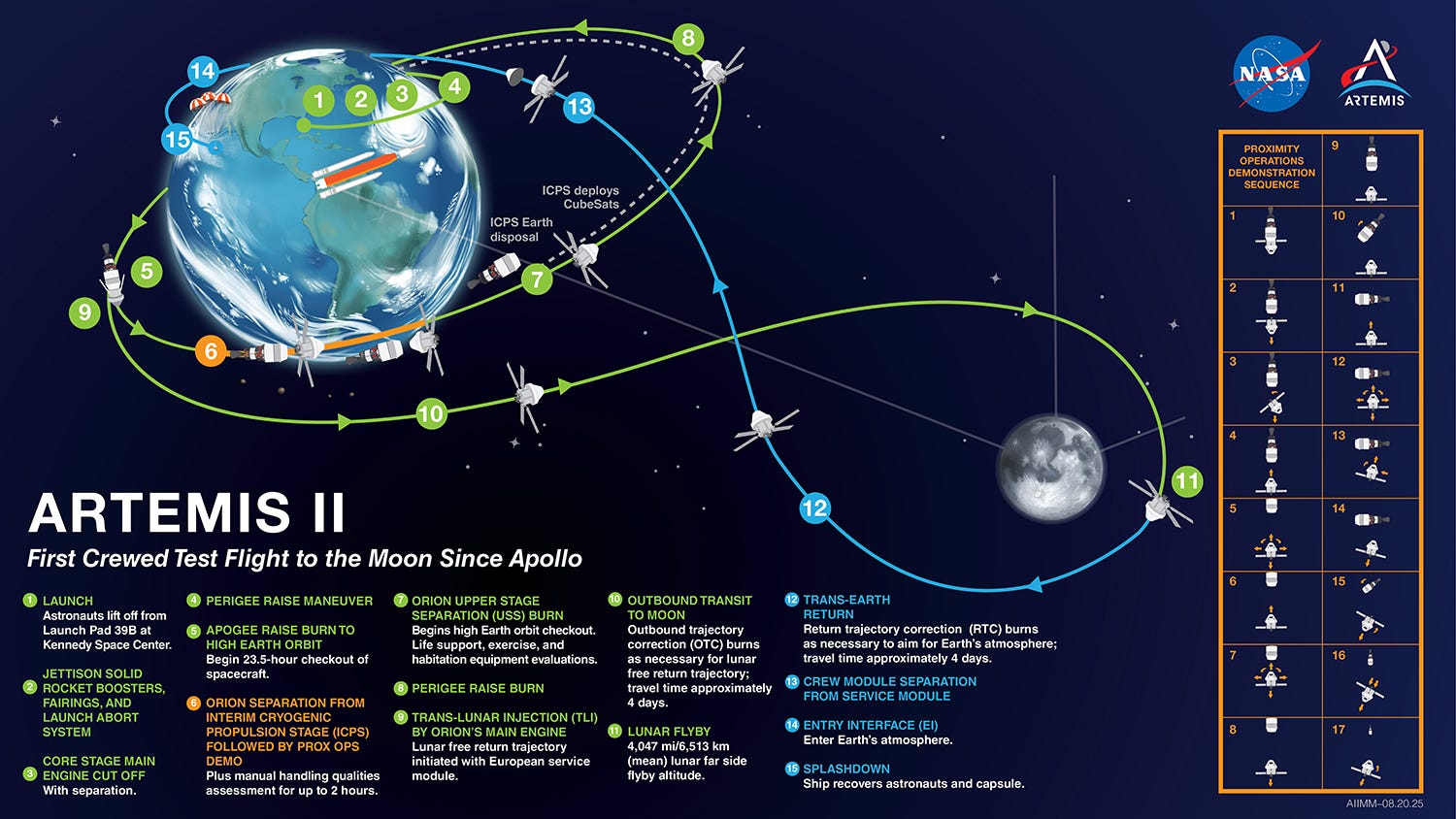
Both models are betting that commercial space infrastructure, not publicly funded programs like Artemis II, will define who controls orbital services by the end of the decade. They disagree on how to build it.
SpaceX’s answer is vertical integration. Own the rockets, the satellites, the distribution, the compute. Each layer compounds the others. Starlink revenue funds Starship development, Starship reduces launch costs, lower launch costs improve Starlink margins, the orbital compute layer extends the value of every satellite already in orbit. The logic requires a single entity capable of absorbing losses at each stage while the compounding builds. Musk has that entity, and US government contracts provide a revenue floor while the commercial side matures.
Star Consortium starts from different constraints. No Chinese commercial space company has SpaceX’s balance sheet, and none has a Pentagon-equivalent relationship to lean on while the market develops. The assets exist (satellites, rockets, data operations, terminal hardware) but they sit across organizations with different investors and different timelines. Pooling them under a shared platform makes each component more valuable without requiring any company to acquire the others. Provincial capital provides patience where venture capital would demand exits; the private operators provide commercial urgency where state-owned enterprises typically cannot.
The Unresolved Questions
Both theories target the same 2027-2028 window, and both have hard dependencies that could slip.
When SpaceX’s S-1 becomes public, the conversation will centre on valuation multiples, Starlink subscriber growth, and Grok’s legal exposure in formal disclosure. Whether the orbital data center thesis is achievable on any near-term timeline is a harder question, and the IPO prices SpaceX on that vision without needing to resolve it.
The Launch Cost Bottleneck
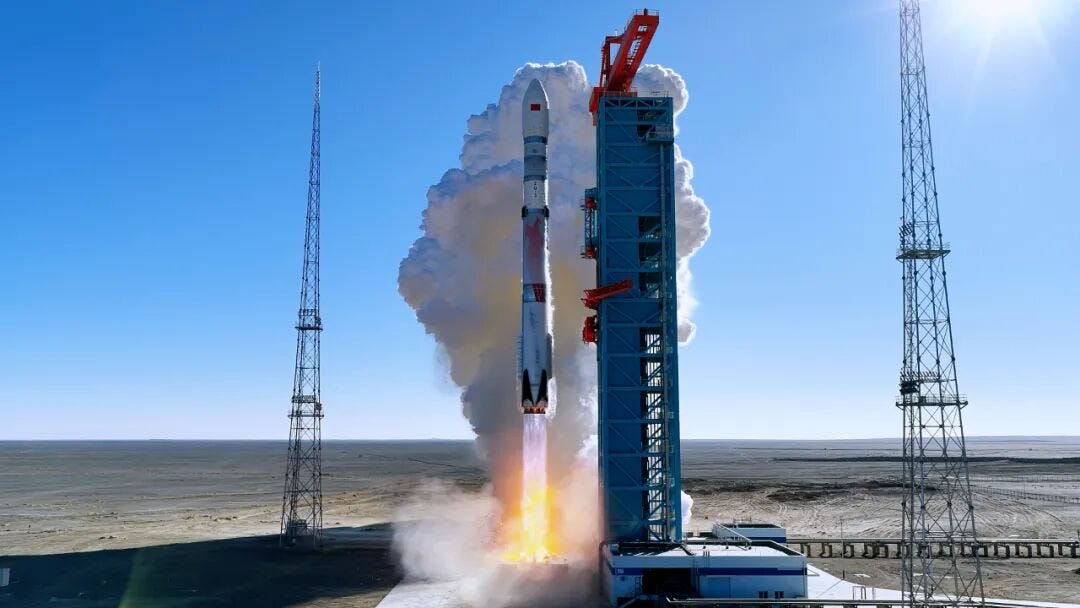
On the Chinese side, the 2027-2028 viability target depends on launch cost reductions happening roughly on schedule. LandSpace’s Zhuque-3 (朱雀三号) attempted its first stage recovery in December 2025 and failed. The company is targeting a recovery test in Q2 2026, with the first full reuse flight in Q4 if that succeeds. The goal is to cut launch costs from around 100,000 yuan per kilogram to 20,000 yuan per kilogram. Until that or something close to it is achieved, the economics of running a commercial constellation at scale don’t make sense. Deep Blue Aerospace has vehicles at the pad with similar ambitions.
Thirteen Partners, One Platform
Then there’s the coordination problem. Star Consortium has to execute across thirteen partners with different investors, different timelines, and different commercial incentives. Shared platforms hold together until the partners’ interests diverge, and that divergence is predictable, whether it’s a member finding a better commercial use for its satellite capacity than the shared plan allocates, or IPO pressure pushing a company toward maximizing its own metrics. The “state-owned leadership” component (read guaranteed customers) may be what holds it together through those tensions. It may also be what makes the structure slow when speed is what the market rewards.
Can thirteen companies with different owners share operational infrastructure across a full space stack without coordination costs consuming the efficiency gains? Can Galaxy Aerospace run as both a consortium member and a separately listed public company without those two roles pulling in different directions?
Both ideas are in orbit. Who knows where they’ll land.