

The China Round — July 24, 2026
A $1.5 billion robot brain that proves itself at the mahjong table, two rival takes on AI memory raised in the same city in the same week, and an AI chip funded by a landscaping contractor

The China Round is a weekly report tracking venture and strategic investment activity across China’s core technology sectors: AI, robotics, semiconductors, new energy and materials, aerospace and defense, and frontier tech.
It is free, published weekly, and written for investors, operators, and founders tracking where China’s tech capital is moving and why it matters.
About the author: Dermot McGrath is Irish, based in Shanghai, a decade in China’s tech and investment ecosystem, fluent Mandarin. Co-founded a VC fund scaled to nine-figure AUM. Now running ZenGen Labs, a cross-border strategy studio covering AI, robotics, and deep tech.
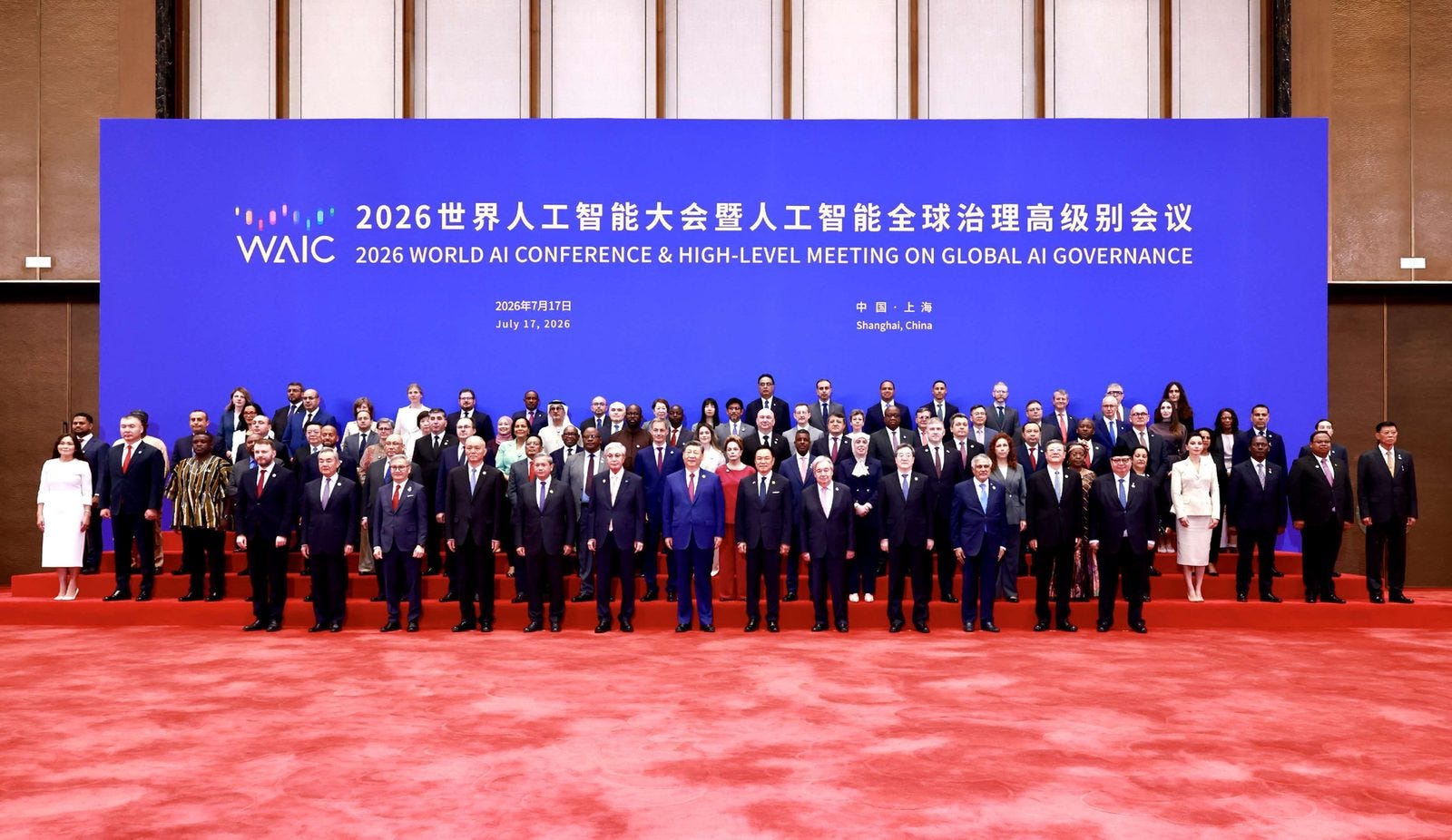
A seven-month-old company raised $80M at angel stage, two rival startups in Shanghai raised in the same week for competing visions of AI memory, and AI-generated 3D content produced the category’s largest round to date. Elsewhere, a medical device maker and a landscaping contractor turned up among the investors in an AI chip company that has yet to sell anything. Several deals were timed to coincide with WAIC, where Xi Jinping announced the creation of the World Artificial Intelligence Cooperation Organization (WAICO). The other kind of memory had its own week. As this issue goes out, CXMT (长鑫科技), China’s largest DRAM maker, saw its shares begin trading in Shanghai at ¥49.5 against an ¥8.66 issue price, a 471% jump that briefly made it the most valuable company on the A-share market at over ¥3.3 trillion (~$458B).
Where the Money Went
191 deals this week across AI, robotics, semiconductors, energy, and frontier tech. 22 deals with published exact amounts disclosed a combined $1,469M (~¥10.6B), a strong but not exceptional week by 2026 standards. AI dominated both the deal count and the disclosed capital, and advanced manufacturing spread across the widest range of sub-sectors.
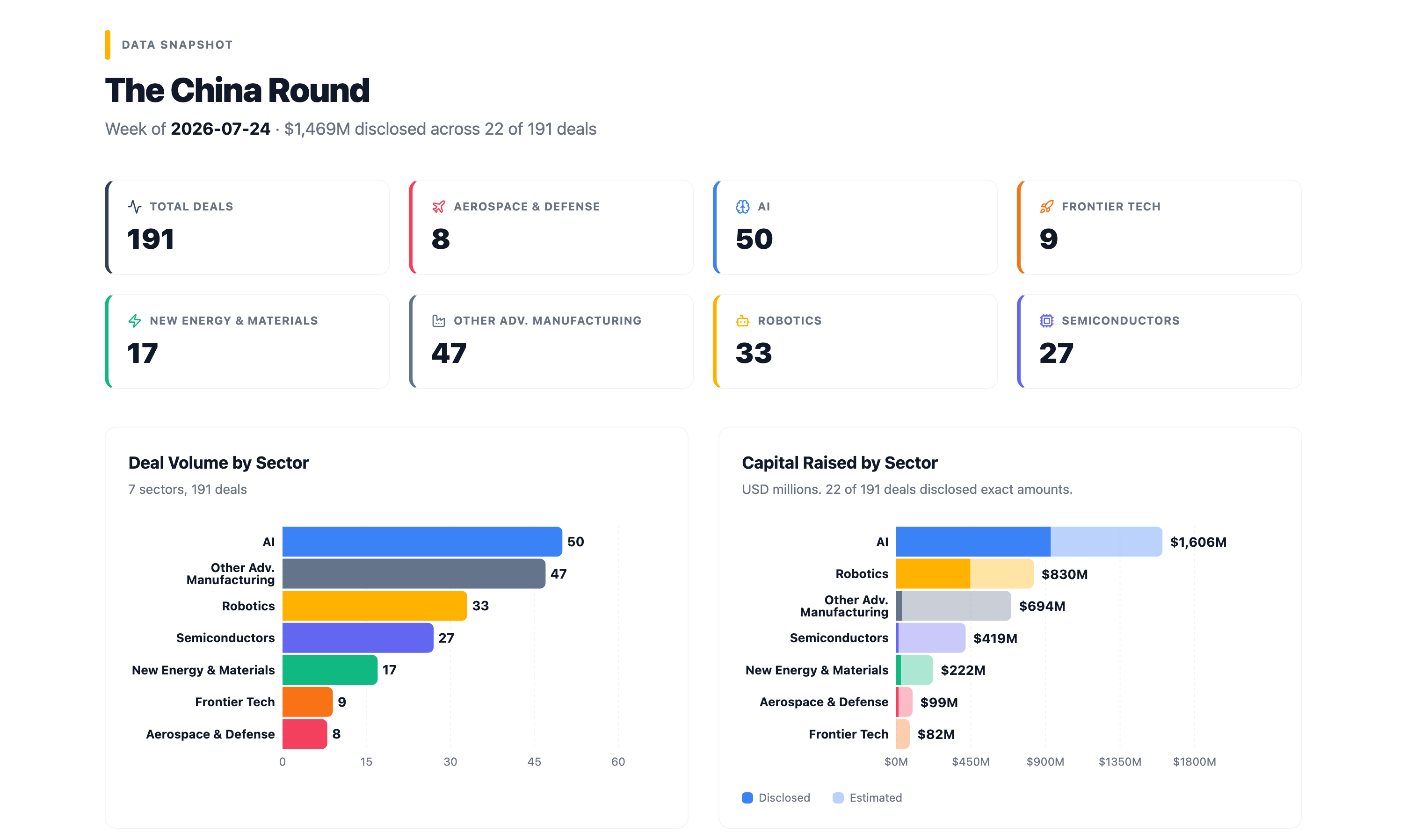
🧠 AI (50 deals)
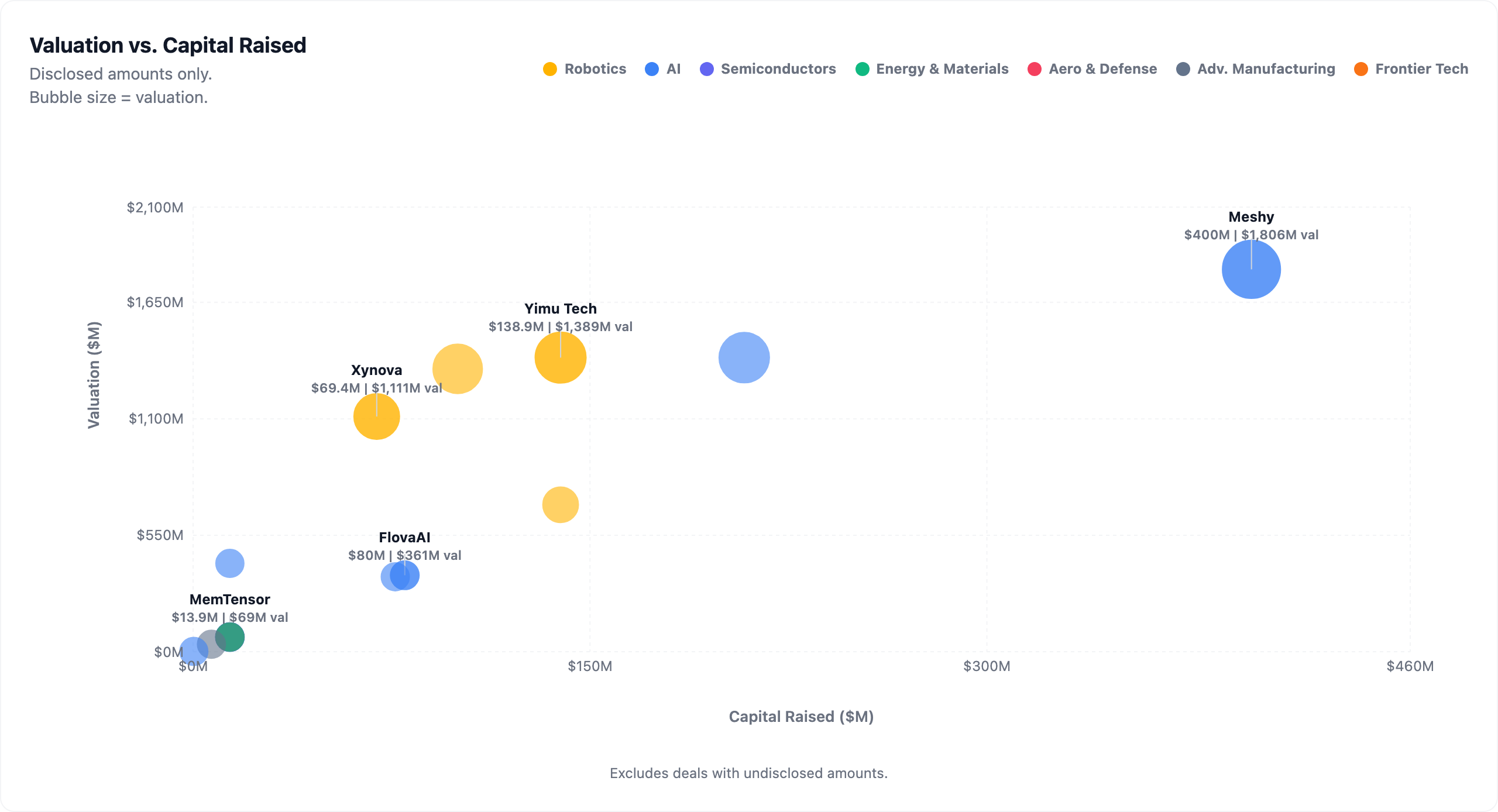
A cluster of large rounds arrived within days of each other, several timed to coincide with WAIC in Shanghai. Meshy raised ~$400M (~¥2.9B) for AI-generated 3D content, the largest known round in that category globally. FlovaAI, a 7-month-old company founded by the developer of CapCut, raised $80M (~¥576M) at angel stage. Two “AI memory” startups, Red Bear AI and MemTensor, both raised in Shanghai in the same week with competing architectures for persistent AI memory, the ability for language models to remember prior conversations and accumulated knowledge. HiDream.ai (智象未来) pulled in ¥1.5B (~$208M) with China’s Social Security Fund co-leading, a marker of how Beijing categorizes generative AI as strategic infrastructure. Calculet (原粒半导体) raised over ¥700M (~$97M) for AI chips built to run agents on local hardware. Design Order (设序科技) raised its B round for industrial AI software that embeds inside Siemens NX, with plans to enter the European market this year.
🤖 Robotics (33 deals)
The highest-valued robotics round went to Psibot (灵初智能), which raised ~$100M (~¥720M) at a $1.48B valuation with Chery Auto leading and Lens Technology co-investing. A car manufacturer and an Apple/Tesla components supplier are writing the checks for an embodied AI company (AI systems built to control physical robots rather than run as software alone), not traditional VCs. Elsewhere, Xynova (曦诺未来) raised ¥500M (~$69M) for dexterous robot hands, extending a pattern where each of its rounds has been led by a different platform company (CATL, JD, Li Auto, and now Meituan). Yimu Tech (一目科技) hit ¥10B (~$1.39B) valuation on its E round for tactile sensors. Futuring Robot (未来不远机器人) raised ~¥1B (~$139M) at Pre-A for home service robots.
⚡ New Energy & Materials (17 deals)
Mostly undisclosed amounts, with state and corporate capital dominating the cap tables. Xuandian (玄电新材) raised near ¥100M (~$14M) for conductive carbon black, a specialty chemical added to lithium-ion battery electrodes to improve conductivity. TCL’s venture arm led the A round for Tianjiao Xinneng (天交新能), a new energy company. China General Nuclear Power Group (CGN), a state-owned nuclear operator, opened its Yunnan renewable energy subsidiary to outside capital.
🔬 Semiconductors (27 deals)
Mostly undisclosed amounts and mostly state-adjacent capital. Tongyong Semiconductor (通用半导体) disclosed its B round at several hundred million RMB (~$40M+). The rest were smaller or undisclosed rounds across analog chips, micro-sensors, and lithography components. Zhongxin Juyuan (中芯聚源), a fund linked to SMIC, China’s largest chipmaker, appeared in two deals.
💡 Frontier Tech (9 deals)
LiangYi (两仪万象) raised its A+ at ¥2B (~$278M) valuation after setting a world record of 11,000 trapped atoms for neutral-atom quantum computing. Trapped atoms serve as quantum bits (the quantum equivalent of a transistor), so more of them, controlled precisely, means more computing power; LiangYi’s 11,000 nearly doubles the previous record of 6,100, held by Caltech. Lei Jun’s Shunwei Capital has invested in every one of LiangYi’s rounds. Jingjie Juneng (竞界聚能) raised a hundreds-of-millions-of-RMB (~$40M+) angel round at ¥1.5B (~$208M) valuation for a fusion reactor that uses an unconventional approach to confining the superheated plasma that powers the reaction. Jingjie Juneng’s round drew an unusually broad 9-investor syndicate led by Loongson VC, the venture arm of China’s flagship domestic CPU company.
🚀 Aerospace & Defense (8 deals)
Xingchen Daohe (星辰道合) raised a near-¥100M (~$14M) angel round for satellite communications equipment. The remaining seven deals were smaller or undisclosed.
⚙️ Other Advanced Manufacturing (47 deals)
The largest disclosed round went to Lanhe Tech (蓝河科技), which raised a B+ of several hundred million RMB (~$40M+) for UV-LED equipment used to cure coatings and etch circuits in electronics manufacturing. The round was led by the China Internet Investment Fund, a fund under China’s State Council (the country’s top government body). IBDTEC (博顿光电) raised a B+ for ion beam equipment used in manufacturing superconducting tape, a material that carries electricity with zero resistance and is critical for advanced magnets in everything from MRI machines to fusion reactors. The company claims near-100% domestic market share in that niche.
Spotlight
Meshy
B Round, ~$400M (~¥2.9B), ~$1.5B valuation (~¥10B+)
AI 3D content generation platform.
Meshy generates 3D models from text prompts and images. The company was founded by Hu Yuanming (胡渊鸣), who studied in Tsinghua University’s elite Yao Class (its top computer science track, which admits roughly 30 students per year from a national exam pool of over 10 million) before completing a computer science PhD at MIT. There he won the Sprowls Thesis Award and an Honorable Mention for the Outstanding Doctoral Dissertation award from SIGGRAPH, computer graphics’ top research conference. His open-source graphics compiler project, Taichi, has 28,000+ stars on GitHub.
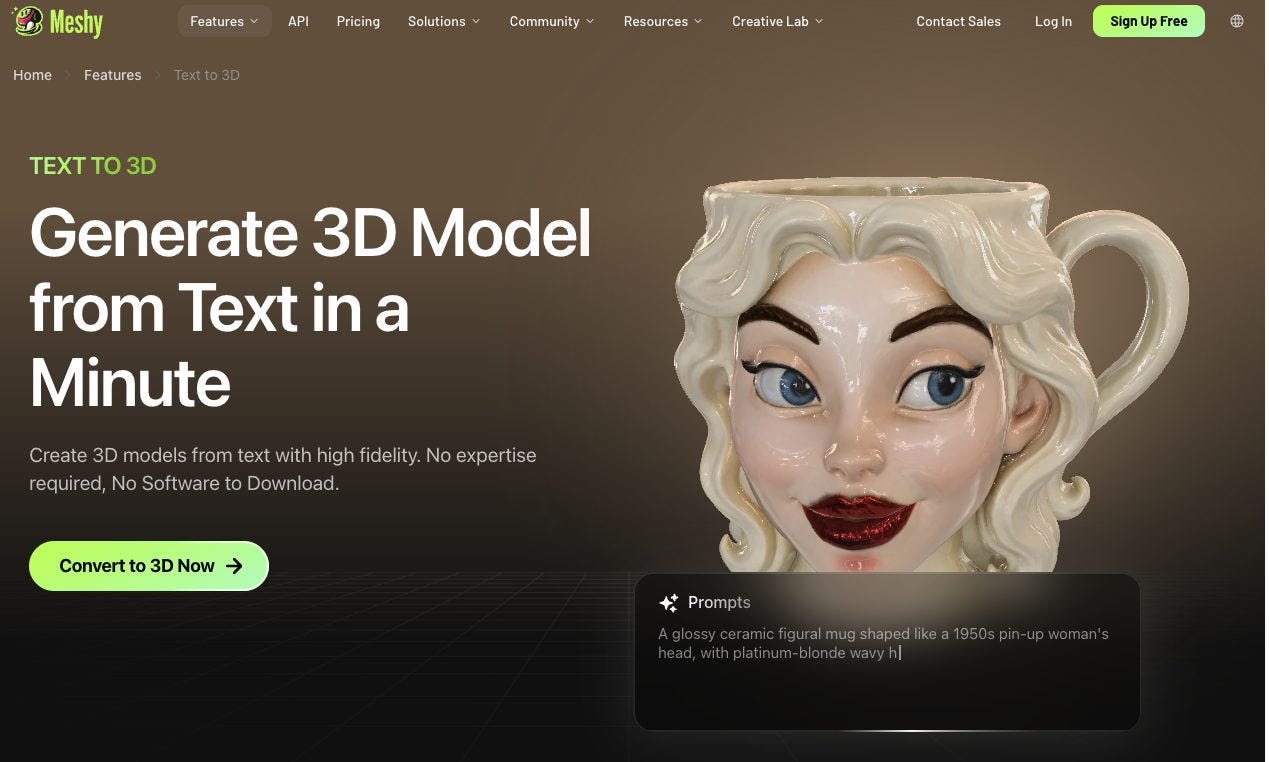
Over 60% of Meshy’s users are in the US and Europe, an unusual profile for a Chinese AI company. Meshy reports 12 million registered users and over 100 million 3D models created. It holds SOC 2 (a US security-audit standard that enterprise buyers require) and GDPR certifications, credentials that few Chinese AI startups bother with because they are not targeting Western enterprise customers. Annual recurring revenue was reported at ~$40M as of April 2026, with 60%+ coming from the US and Europe.
The round is the largest to date for a company built specifically for AI 3D generation. Luma AI’s $900M raise in November 2025 was larger in absolute terms, but Luma is an AI video company rather than a pure 3D tool. Vast/Tripo, a Beijing-based competitor, crossed $1B valuation in March 2026, several months before Meshy.
Investors: IDG Capital (IDG资本), Matrix Partners China (经纬创投), Monolith Management (砺思资本), and others.
Red Bear AI (红熊AI)
A+ Round, hundreds of millions of RMB (~$40M+), ~¥3B valuation (~$417M)
Enterprise AI memory for customer service and knowledge management.
Red Bear AI builds what it calls “model-native memory,” a system that gives large language models the ability to remember prior conversations and accumulated knowledge rather than starting from scratch with every interaction. The company was founded in April 2024 and this is its sixth round. Its valuation has gone from ¥500M at Pre-A in 2025 to over ¥1.5B at the A round in April 2026 to close to ¥3B now, a 6x climb in 15 months. Three members of the founding team put roughly ¥30M of their own money into the A round at that round’s valuation.
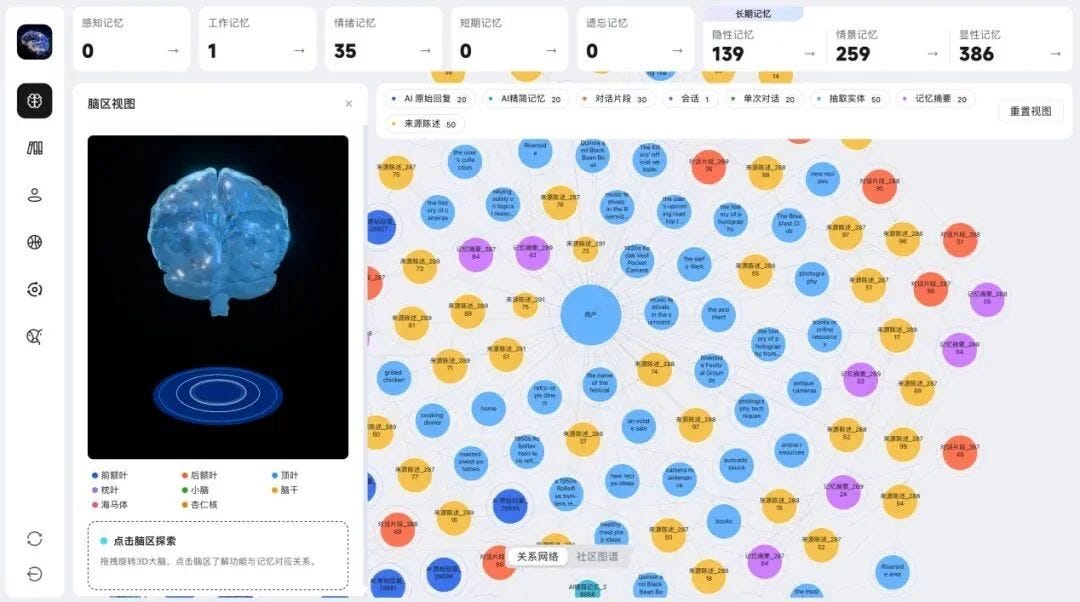
Red Bear reported ¥135M (~$19M) in full-year 2025 revenue, primarily from enterprise customer-service deployments. Its clients use the memory layer to maintain context across thousands of customer interactions, which per company materials has improved first-contact resolution rates by over 60% and reduced human workload by 70%. The company is based in Shanghai. Its product brand is Memory Bear.AI; the corporate entity operates as Red Bear AI.
The revenue number matters because most competitors in this category are still pre-revenue. The open question is whether “AI memory” becomes a standalone infrastructure category or gets absorbed as a feature inside foundation models as their working memory (the amount of text a model can hold during a conversation) keeps expanding.
Investors: Jiuwei Fund (九纬基金), Zhejiang Zhangyi Asset (浙江彰宜资产), Grerich Investment (格睿丰投资).
MemTensor (记忆张量)
Pre-A Round, ~¥100M (~$14M), ¥500M valuation (~$69M)
Open-source AI memory operating system.
MemTensor is the other half of this week’s memory race in Shanghai. Where Red Bear AI built a closed enterprise product with revenue, MemTensor built an open-source memory operating system called MemOS and attracted strategic investors from China’s hardware ecosystem.
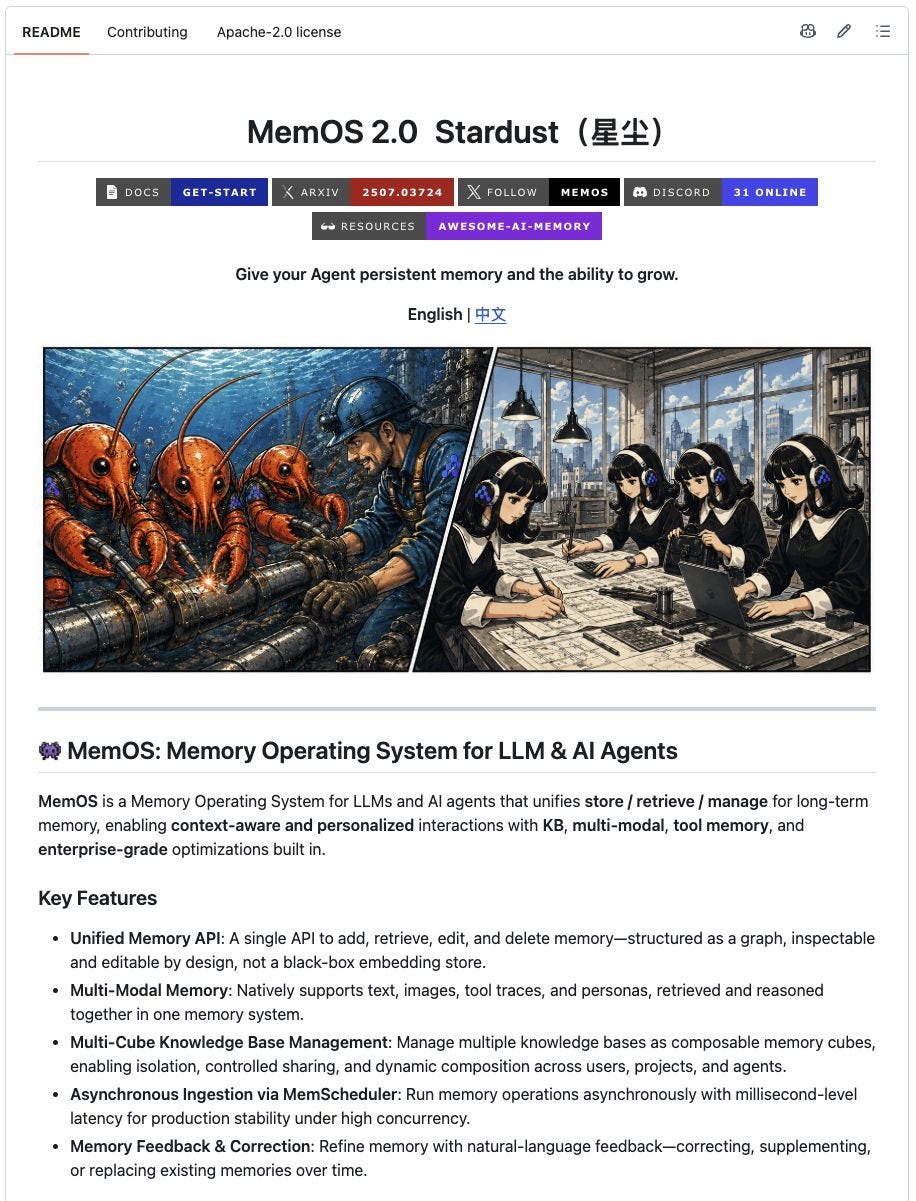
MemOS has 10,400 stars on GitHub against 61,800 for Mem0, the most widely adopted open-source memory framework and its closest rival. MemTensor’s own paper on arXiv, a preprint repository where researchers post papers before peer review, claims MemOS beats Mem0 on LoCoMo, a standardised test for long-context memory that measures how well a system retains and retrieves information across extended conversations, scoring 73.31 against 64.57. That comparison is out of date. Mem0 shipped a new memory algorithm in April 2026 and now reports 92.5 on the same benchmark, comfortably ahead of the MemOS figure. MemOS’s own repository advertises 35.24% token savings (tokens are the chunks of text AI models are billed for processing), which directly cuts the cost of running AI applications, while MemTensor’s funding announcement put the figure at 70%.
The company was founded in November 2024 and incubated by the Shanghai Algorithm Innovation Research Institute, a government-backed research institution. Huawei’s Hubble Investment (哈勃投资), Huawei’s strategic venture arm, and Honor Terminal (荣耀终端), a device manufacturer that was formerly Huawei’s smartphone unit before being spun off in 2020, are both investing in AI memory as something that needs to be built into hardware at the operating-system level, not bolted onto cloud APIs after the fact.
MemTensor raised a near-¥100M angel round in June 2025 from Fudan Science and Innovation Mother Fund (复旦科创母基金), Suanfeng Capital, and China Securities, making this Pre-A its second significant raise in just over a year.
Investors: Huawei Hubble Investment (哈勃投资), Honor Terminal (荣耀终端), and others. Financial advisor: Yunxiu Capital (云岫资本).
FlovaAI (雨舟智能)
Angel Round, $80M (~¥576M)
AI video creation agent platform.
FlovaAI is an AI video creation platform founded by Guo Lie (郭列), who previously built Facemoji, a face-animation startup that ByteDance acquired for roughly $300M in 2018. After the acquisition, Guo led the development of CapCut (剪映), ByteDance’s video editing app, which grew into one of the most downloaded creative tools globally.
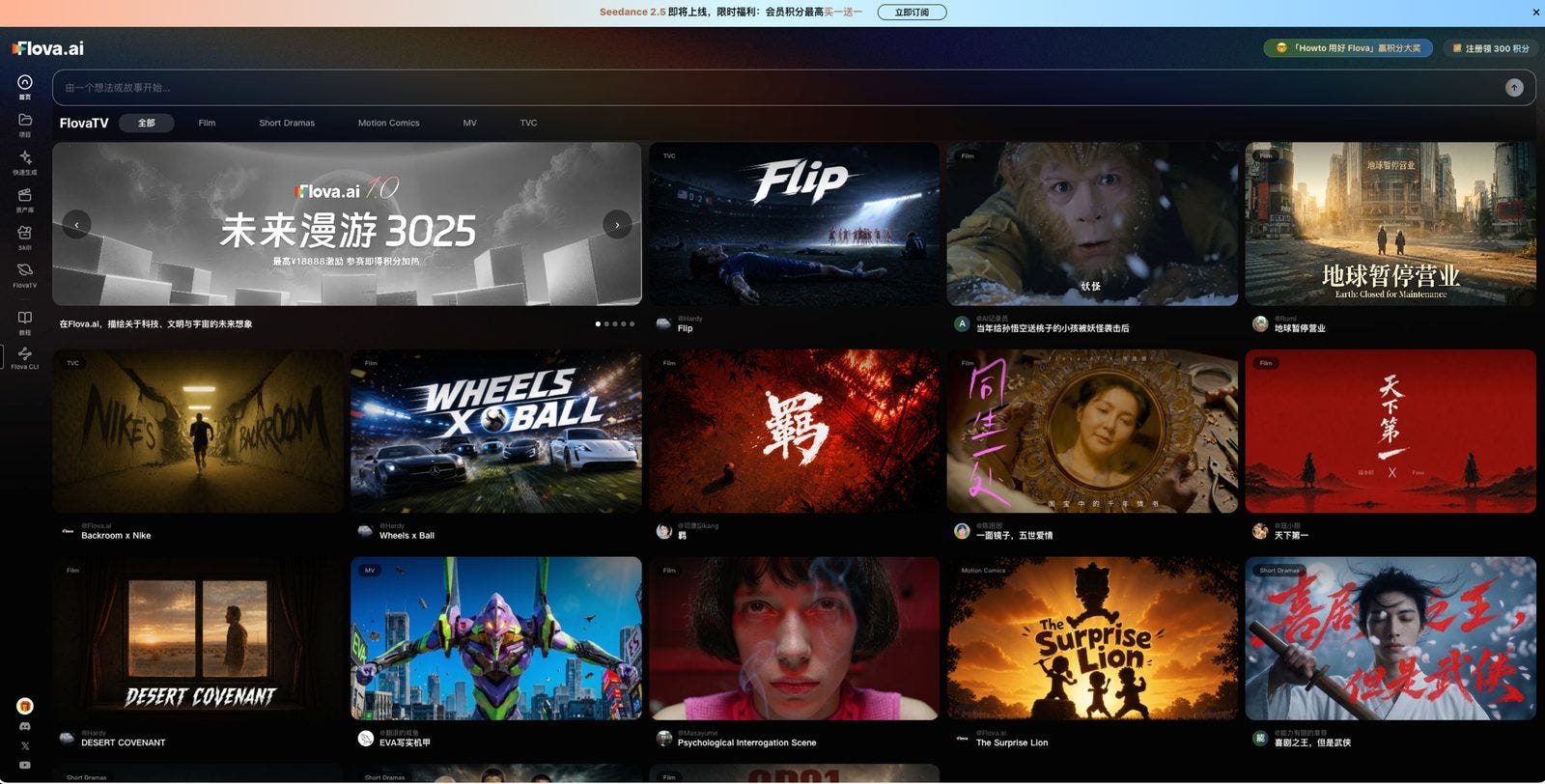
The company’s legal entity, 雨舟智能(深圳)有限公司, was registered in Shenzhen in December 2025, making it roughly 7 months old at the time of this round. $80M at angel stage is series-A-scale capital for a company that barely existed at the start of the year. The pricing reflects a bet on the founder: Guo has already built and sold a company in the same category, and the investors backing him, HongShan (formerly Sequoia China), IDG Capital, and Sky9 Capital, are repeat backers.
The product sits in a crowded category alongside Kling, Sora, and Veo. Whether FlovaAI can differentiate on product rather than founder reputation remains the open question.
Investors: HongShan (红杉中国, formerly Sequoia China), IDG Capital (IDG资本), Sky9 Capital (云九资本).
Calculet (原粒半导体)
A Round, over ¥700M (~$97M), valuation not disclosed
Edge AI chips for agents that run on the device.
Calculet builds silicon for AI agents, software that carries out multi-step tasks with little human supervision, running on local hardware instead of in a data center. Its own framing is moving “full-strength intelligence from the machine room to the edge.” The design uses chiplets, an approach that assembles a processor from several smaller pieces of silicon rather than printing one large one, which cuts cost and lets a company mix chip generations as edge hardware requirements shift. Calculet splits its chiplet design across three layers it calls CalcuMex, CalcuGrid and CalcuKit.
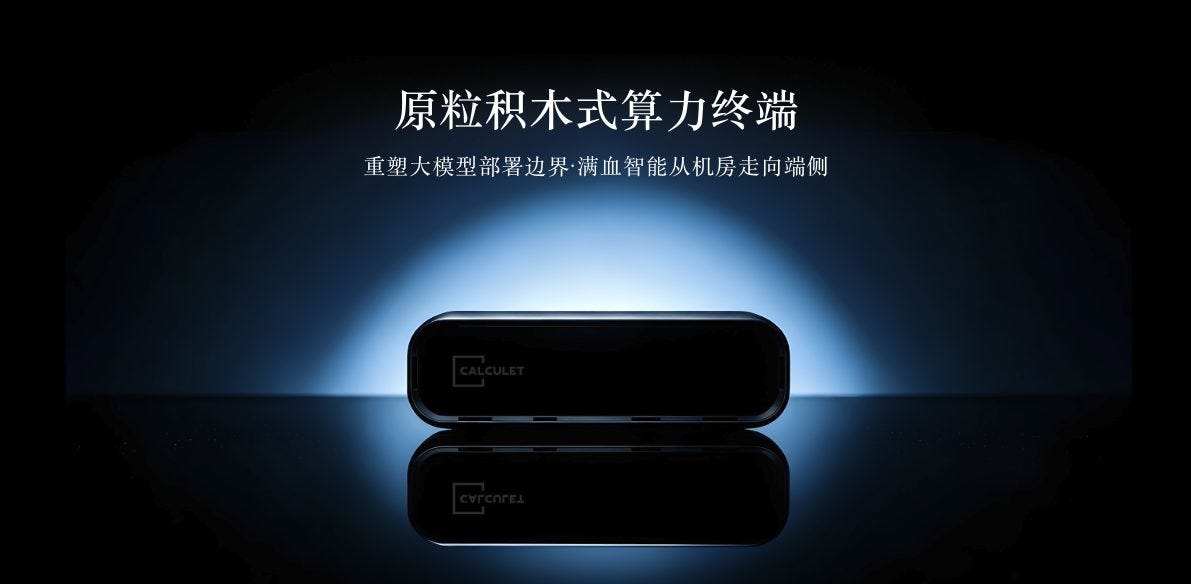
The A round closed at over ¥700M (~$97M) three months after an IDG-led Pre-A of over ¥500M (~$69M) in April. That is over ¥1.2B (~$167M) inside roughly three months, and Chinese financial press led with exactly that number rather than with the chip.
Calculet has not sold anything yet. The company says its first chip has been 点亮, or “lit up,” the term Chinese engineers use for first silicon returning from the fab and powering on, and press coverage puts it at engineering verification, meaning testing under real operating conditions. It says it has started taking an edge compute product to market. There is still no mass production, no disclosed revenue, no shipment number, and no named customer, and the post-money valuation was not disclosed.
Andon Health (九安医疗), a medical device maker whose best-known product became the COVID antigen tests it sold overseas, came in alongside By-health (汤臣倍健) and 绿茵生态, a landscape greening and ecological restoration firm. All three are listed companies. IDG and Summitview appear too, but as 老股东, existing shareholders adding to their positions rather than leading. Andon has a track record in consumer hardware. Xiaomi put $25M into its iHealth arm in 2014 and exited a decade later, selling the 20% stake to Andon’s Hong Kong subsidiary for about $45.91M and taking Andon to full ownership.
With no revenue disclosed, the ¥1.2B raised so far is a bet on the team. CEO Fang Shaoxia (方绍峡) holds a Tsinghua electronic engineering PhD and more than 30 AI chip patents in China and the US. His 2023 seed coverage described him as a former AI processor R&D director at an international semiconductor major that acquired the work he led, without naming it, and ITJuzi still describes it that way. Press reports from 2026 name AMD and Xilinx. Co-founder and COO Yuan Gang (原钢) is his senior from the same Tsinghua lab, with more than 20 years in integrated circuits.
Investors: Andon Health (九安医疗), By-health (汤臣倍健), 绿茵生态, 北洋海棠基金, and 仁爱基金, with IDG Capital (IDG资本), Summitview Capital (武岳峰科创), Innoangel Fund (英诺), and 一维创投 adding to existing positions.
Psibot (灵初智能)
A Round, ~$100M (~¥720M), $1.48B valuation (domestic database ITJuzi reports ¥9.62B, roughly $1.34B at current rates)
Embodied AI models for humanoid robots.
Psibot builds AI systems that allow a robot to understand, reason about, and interact with physical environments without being explicitly programmed for each task. The company was founded in September 2024 by Wang Qibin (王启斌), a Peking University PhD with more than 20 years running products in robotics and consumer electronics. He worked at BlackBerry and Sonos before becoming an executive at Yunji Technology, a hotel delivery robot company, where he ran delivery-robot development and commercial rollout.
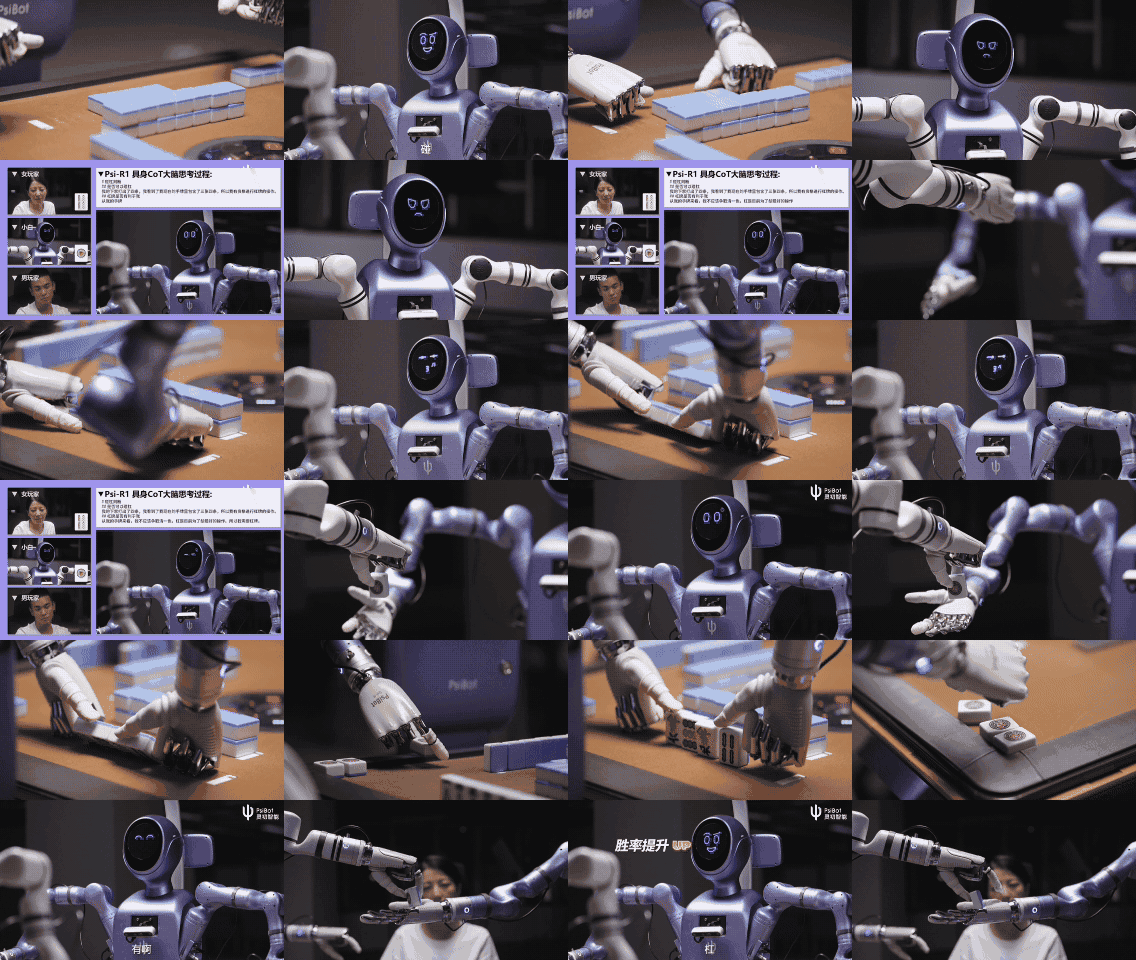
Psibot released two models in rapid succession. Psi R0, launched in December 2024, learns from trial and error (a technique called reinforcement learning) rather than from scripted instructions. Psi R1, launched in April 2025, added a layered architecture that combines deliberate visual reasoning (understanding what it sees) with fast reactive action (responding to unexpected changes), enabling the robot to handle multi-step tasks in open environments.
The company’s chief scientist is Yaodong Yang (杨耀东), a Peking University (PKU) Boya Scholar (one of its highest research appointments) and assistant dean of PKU’s AI Research Institute. Co-founder Chen Yuanpei (陈源培) is a Stanford visiting scholar who worked under Fei-Fei Li, the computer scientist who co-created ImageNet, a foundational computer vision dataset.
Chery Auto (奇瑞汽车) led and Lens Technology (蓝思科技) co-invested. Chery is an automaker that has already launched its own humanoid robot brand, AiMOGA (墨甲), which has shipped 220+ units at a retail price of ¥285,800 (~$39,700). Lens Technology was founded by Zhou Qunfei (周群飞), who started as a migrant factory worker making watch lenses in Shenzhen at age 16 and became China’s richest self-made woman when the company listed in 2015. Lens is best known for making the glass covers on iPhones and iPads. It and rival Biel Crystal are the joint leaders in high-end cover glass, together holding over half the global market. It is also Tesla’s third-largest supplier of screens, structural parts, and glass components. In 2025, Lens reported ¥10.3B (~$1.4B) in humanoid-robot revenue from manufacturing force sensors, joint modules, dexterous hands, and structural components. Both investors are buying into the AI “brain” layer of humanoid robots because they already manufacture the physical components. The total raised since Psibot’s founding is approximately $300M.
Investors: Chery Auto (奇瑞汽车, lead), Lens Technology (蓝思科技). Prior investors include Hillhouse (高瓴), BlueRun Ventures (蓝驰创投), and state capital entities including China Development Bank Capital (国开金融), Guozhong Capital (国中资本), and CCTV Convergence Media Fund (央视融媒体基金).
Design Order (设序科技)
B Round, hundreds of millions of RMB (~$28M+)
AI-powered industrial drawing automation inside Siemens NX.
Design Order builds AI software that automates the creation of engineering drawings, the detailed technical blueprints that factories use to manufacture parts. Its core product, 闪设2D (”FlashDraft 2D”), embeds directly inside Siemens NX, one of the most widely used industrial design platforms, meaning engineers can generate drawings without leaving their existing workflow. The company signed an ecosystem partnership with Siemens in March 2026, announced at Siemens’ first Tech Summit China. It renamed the 闪设 line to 则形AI at the end of June, though both names are still live on its site.
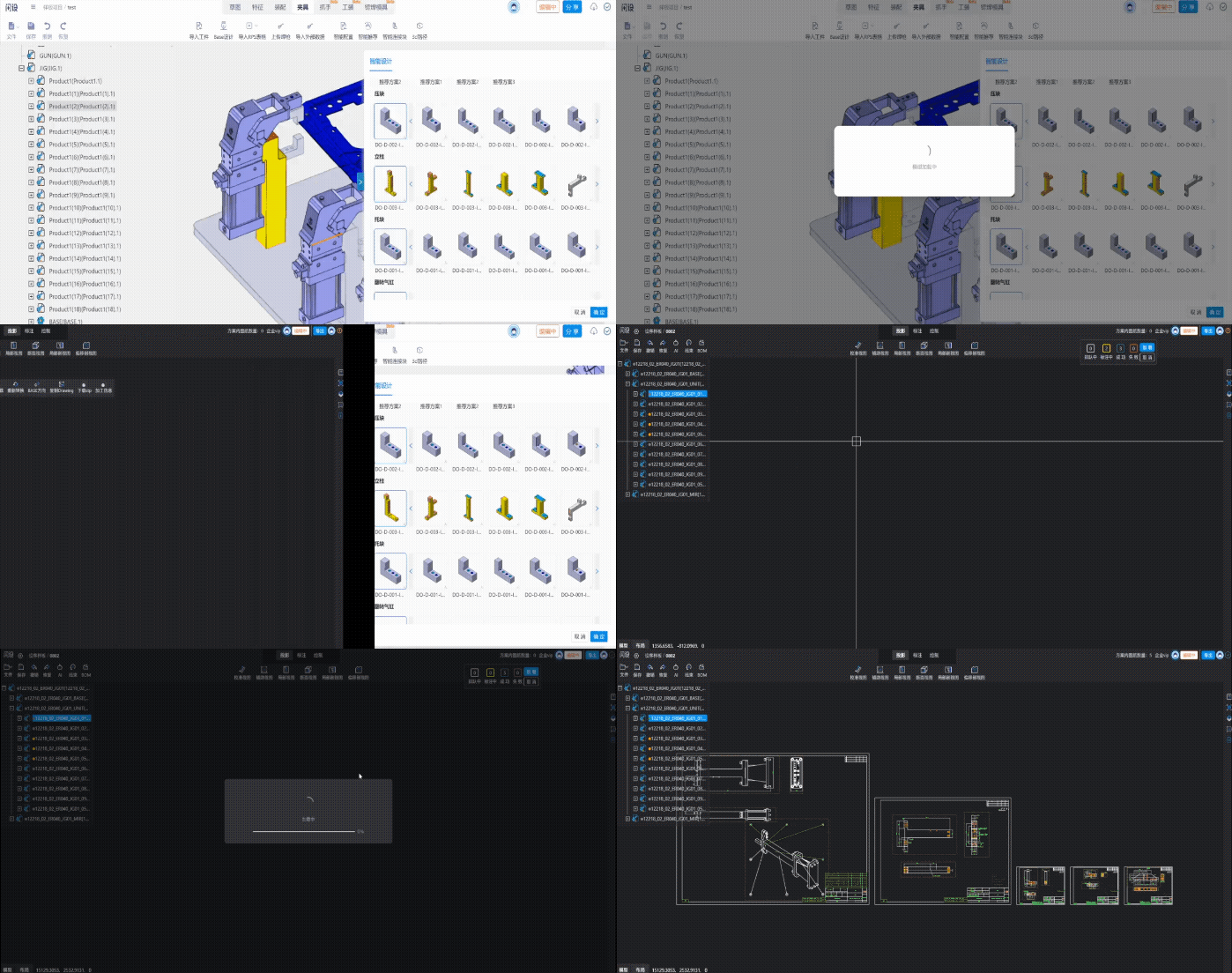
The company’s feature recognition and annotation accuracy exceeds 95% within the Siemens NX environment, per industry reporting. According to Design Order, Honda used the product to increase drawing throughput from 30 per day to 300 per day per engineer, though this figure has not been independently verified outside the company’s own materials.
Design Order declared 2026 its 出海元年 (”year of going global”) and has already signed seed customers in Germany. The company reported that H1 2026 contract value grew 70% year-over-year, with a full-year revenue forecast of approximately ¥200M (~$28M). About a third of revenue comes from RaaS (Robot-as-a-Service) deployments.
The company is entering Europe by making Siemens’ own platform more productive, rather than building a competing product at lower cost, and the March partnership puts that on a formal footing. Prior investors include ByteDance, SIG, Banyan Capital (高榕资本), K2VC (险峰), Lenovo, and Amoeba Capital. Cumulative funding across all rounds exceeds ¥300M (~$42M).
Investors: Heding Gong (合鼎共), Yonghua Investment (涌铧投资), Shenzhen Capital Group Industry Fund (深产投).
Also on the Radar
Xynova (曦诺未来) — A+ Round, ¥500M (~$69M), ¥8B (~$1.1B) valuation
Dexterous robot hands. Per Chinese venture reporting, each of its 4 rounds was led by a different platform company: CATL-linked capital at angel, JD.com at Pre-A, Li Auto at A, and now Meituan at A+. Order book exceeds 10,000 units. The sequential platform lock-in is among the strongest indicators of humanoid supply-chain formation in China.
Yimu Tech (一目科技) — E Round, ¥1B (~$139M), ¥10B (~$1.39B) valuation
Tactile sensors for robots. Founded in Silicon Valley by a CMU (Carnegie Mellon University)-trained founder, now commanding a unicorn valuation as a component supplier. Co-runs an open-source tactile dataset with Stanford. Produces sub-3mm sensors with 10,000+ resolution points at milligram-level force precision.
Futuring Robot (未来不远机器人) — Pre-A Round, ~¥1B (~$139M), ¥5B (~$694M) valuation
Home service robot deployed in 500+ real households with 50,000+ cumulative service hours, per company reporting. Repeat-exit founder Zhang Yi (张翼), formerly of NYSE-listed Zhangmen Education (see Repeat-Exit Founder Premium below). The ¥36,000 (~$5,000) F2 model comes with rent-to-own financing.
Jingjie Juneng (竞界聚能) — Angel Round, hundreds of millions of RMB (~$40M+), ¥1.5B (~$208M) valuation
Fusion energy. Most fusion reactors try to confine superheated plasma inside a donut-shaped chamber (a tokamak). Jingjie Juneng is betting on a less common approach, a hybrid of two alternative confinement methods. Founded by a professor from Zhejiang University’s fusion research center. 9 investors in a single angel round, led by Loongson VC (龙芯创投), the venture arm of China’s domestic CPU champion.
LiangYi (两仪万象) — A+ Round, hundreds of millions of RMB (~$40M+), ¥2B (~$278M) valuation
Neutral-atom quantum computing. World record of 11,000 trapped atoms (see Frontier Tech above). A Tsinghua spinout. Lei Jun’s Shunwei Capital has invested in every one of its rounds.
Robotplusplus (史河机器人) — C+ Round, hundreds of millions of RMB (~$40M+), ¥6B (~$833M) valuation
Industrial inspection and cleaning robots for ship hulls. Claims 70-80% domestic market share in hull cleaning, though that figure is the company’s own and the market is contested (see The Niche Monopoly Builders below). Customers include Saudi Aramco, COSCO, and Dubai Drydocks. Revenue growing at 50%+ per year, overseas business quadrupling year-over-year.
Remo-telight (星遥光宇) — Strategic Round, hundreds of millions of RMB (~$40M+), ¥1.5B (~$208M) valuation
Space laser communication terminals, devices that allow satellites to talk to each other using beams of light instead of radio waves. Founded by a team from Chinese Academy of Sciences (CAS) Academician Wang Jianyu (王建宇), who led the Micius quantum satellite and Chang’e lunar instruments. Terminals already deployed on 100+ satellites. The company is raising as China’s megaconstellation programs, Guowang and Qianfan, which aim to deploy thousands of satellites for global internet coverage, drive demand for high-speed inter-satellite links.
Xuandian (玄电新材) — A Round, near ¥100M (~$14M), ¥500M (~$69M) valuation
Conductive carbon black for batteries. Phase 1 plant in Inner Mongolia (30,000 tons per year) is in trial production. Strategic investor Jiebang Tech is a listed battery materials company, providing a direct downstream customer. The target market is currently dominated by US chemical company Cabot.
Lead Health (利德健康) — Pre-A Round, over ¥100M (~$14M+)
AI-powered equipment for biological manufacturing, the process of using engineered cells to produce drugs, chemicals, and materials. Over 100 customers including the Chinese Academy of Sciences, Fudan University, and Huaxi Hospital, per company reporting. Contract value approaching ¥100M in its first 15 months. Listed semiconductor equipment maker Piotech (拓荆科技) is among the investors, a cross-sector move of industrial capital into biotech.
RealAI (瑞莱智慧) — B Round, hundreds of millions of RMB (~$40M+), ¥4.5B (~$625M) valuation (ITJuzi)
AI safety and security. China Merchants Capital (招商局资本) led. The founding team includes researchers behind an Outstanding Paper award at ICLR 2022, one of AI research’s top academic conferences. One of few Chinese AI companies focused specifically on AI safety as its core product rather than as a feature.
The Bigger Picture
The AI Memory Layer Race
Two Shanghai startups raised in the same week on the same thesis, that large language models need persistent memory to be useful in the real world.
Red Bear AI took the enterprise path. It sells to businesses that need their AI customer-service agents to remember what happened last time a customer called. The company has ¥135M (~$19M) in 2025 revenue, six rounds closed inside a 15-month stretch, and a valuation of ~¥3B (~$417M). Its investors are traditional venture funds.
MemTensor took the infrastructure path. It built an open-source memory operating system called MemOS and attracted Huawei’s Hubble Investment and Honor Terminal, both device manufacturers, as strategic investors. Its benchmark claim against the leading open-source alternative was its own, not an independent evaluation, and that alternative has since overtaken the score. Its valuation is one-sixth of Red Bear’s. It has no disclosed revenue. But its investors are the companies that build the phones and laptops that will eventually need memory built into the hardware layer.
Red Bear’s bet is that memory is an enterprise application, like Salesforce, deployed on cloud servers for specific business workflows. MemTensor’s bet, backed by the composition of its investor base, is that memory is an operating system component that needs to sit on the device itself, built into the hardware stack alongside the processor and the model.
This distinction matters because expanding model context (the amount of text an AI model can hold in its working memory during a conversation, which grows every quarter) threatens the first model more than the second. If the next generation of foundation models can remember everything natively, an enterprise memory add-on becomes redundant. But on-device memory that works without a cloud connection, running on a phone, a laptop, or an industrial controller, serves a function that bigger context windows do not address.
The Niche Monopoly Builders
A different class of company raised significant capital this week, specialists building dominant positions in industrial categories that rarely make fundraising newsletters.
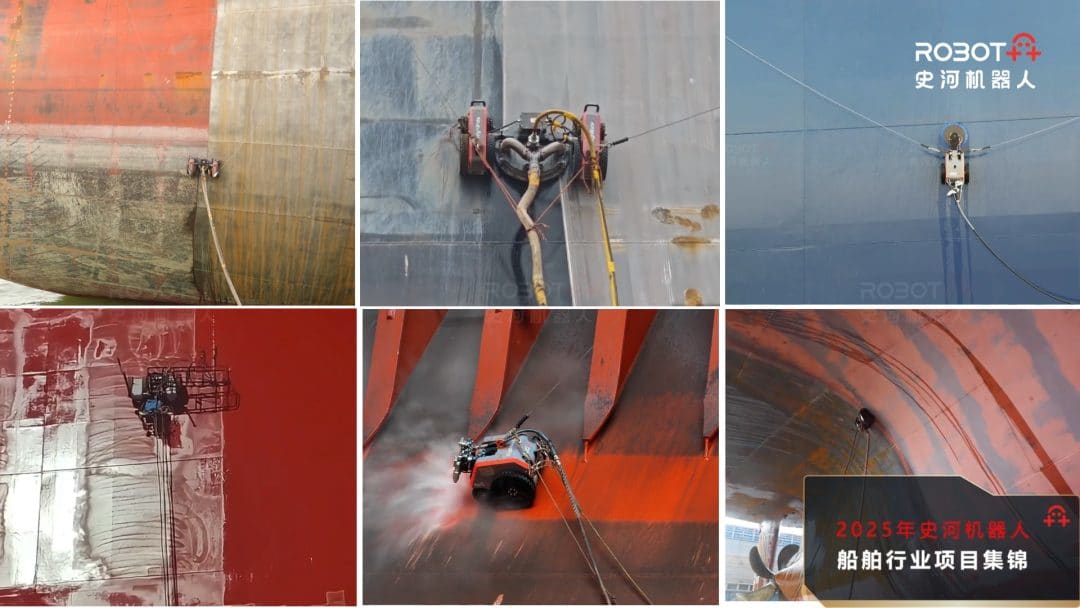
Robotplusplus (史河机器人) has spent a decade building robots that clean and inspect ship hulls, the underwater surfaces that accumulate marine growth and need regular scraping to keep vessels fuel-efficient (even a thin layer of slime can increase a large ship’s fuel consumption by 10-15%, per IMO estimates). It raised a C+ round at ¥6B (~$833M) valuation on the strength of an international customer base including Saudi Aramco and a claimed 70-80% domestic market share.
That share figure is the company’s own, and the niche is not as quiet as it looks. Seahi Robotics (世航智能), based in Suzhou and founded only in 2023, says on its own site that it was “the earliest enterprise in China to conduct research and the first to commercialize underwater cleaning robots,” and it raised over ¥1B (~$139M) in a single A round this year, more than Robotplusplus took in its C+. Both companies name COSCO as a customer. Two firms cannot both have been first and both hold most of the market, and neither claim has an independent source behind it. What is verifiable is that hull cleaning has gone from a job done by divers to a category with two well-funded Chinese robotics companies competing for the same ports.
Xuandian (玄电新材) is trying to break Cabot Corporation’s hold on conductive carbon black, a specialty chemical added to lithium-ion battery electrodes to improve how well they conduct electricity. Cabot, a Boston-based chemical company, has dominated this niche for decades. Xuandian’s Phase 1 plant in Inner Mongolia, capable of producing 30,000 tons per year, is now in trial production. The company is barely 2 years old and already has a listed battery-materials company as a strategic investor.
Remo-telight (星遥光宇) makes laser communication terminals for satellites, devices that allow satellites to talk to each other using beams of light instead of radio waves, which are faster and more secure than traditional radio links. The company was spun out of a lab led by CAS Academician Wang Jianyu, who previously led the Micius quantum satellite program. Its terminals are deployed on over 100 satellites, and China’s two megaconstellation programs, Guowang and Qianfan, aim to deploy thousands more for global internet coverage, all needing exactly this kind of hardware.
Lead Health (利德健康) builds AI-controlled equipment for biological manufacturing, the process of using engineered cells to produce drugs, chemicals, and materials. Per company reporting, it has signed over 100 customers including the Chinese Academy of Sciences and Fudan University, with contract value approaching ¥100M (~$14M) in just 15 months.
These companies share a profile that China’s industrial policy calls 专精特新 (”specialized, refined, distinctive, innovative”): small firms that dominate a critical supply-chain niche rather than competing in a broad market. The Chinese government actively supports such companies through its “little giant” program, which has certified over 17,600 firms across advanced manufacturing, materials, and components. As AI commoditizes and the technology layer becomes harder to differentiate, defensible value moves downstream to the companies that own the factory, the certification, and the customer relationship.
The Repeat-Exit Founder Premium
Two deals this week priced a founder’s prior exit far above what the stage would normally justify.
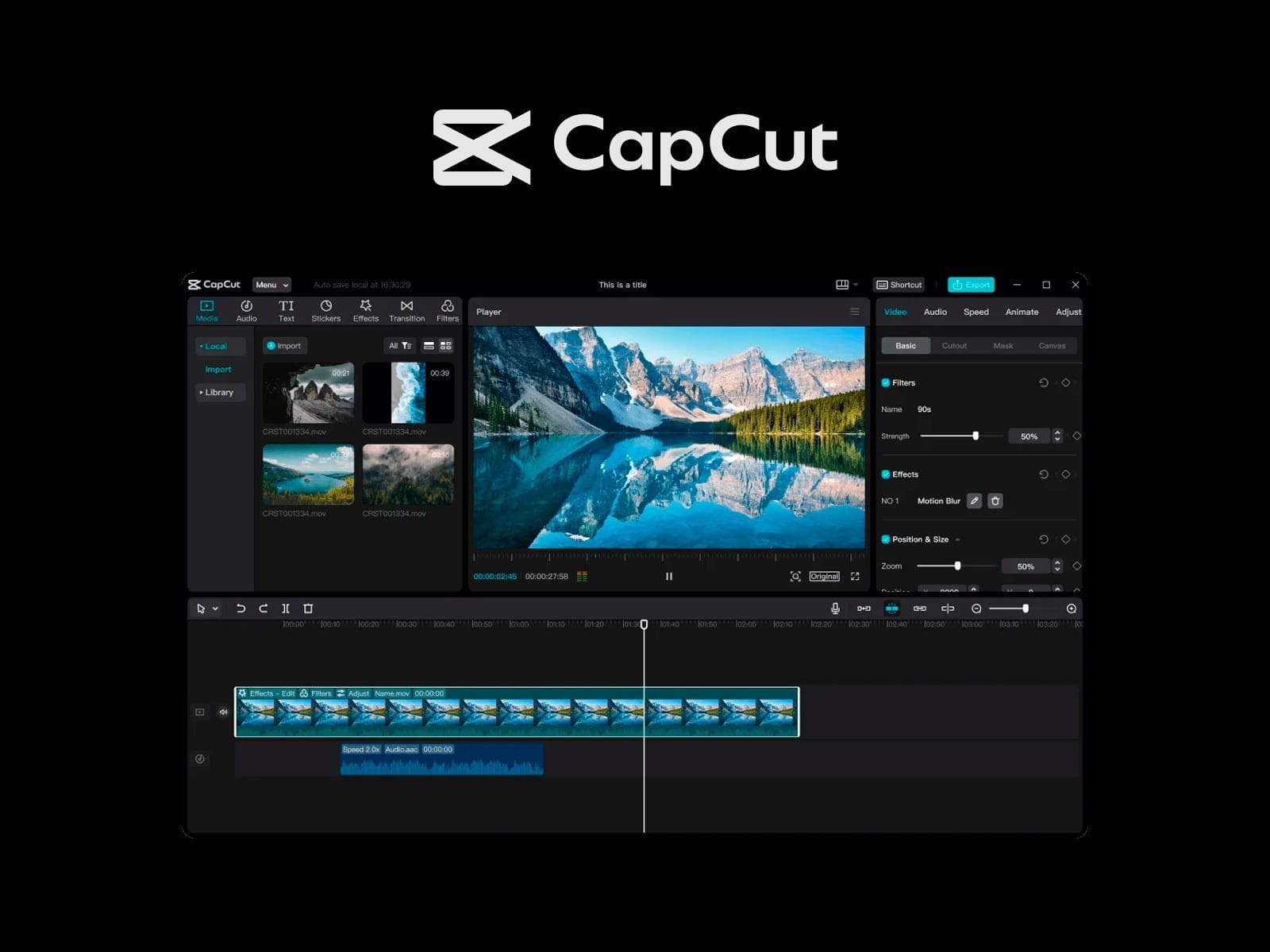
FlovaAI’s Guo Lie (see Spotlight above) registered his new company in December 2025. 7 months later, it raised $80M (~¥576M) at angel stage from HongShan, IDG Capital, and Sky9 Capital. That is series-A-scale capital for a company that, by conventional Chinese venture standards (where a typical angel round is ¥5-20M), should still be in seed mode.
Futuring Robot’s Zhang Yi built Zhangmen Education (掌门教育) into a NYSE-listed online tutoring platform serving 60 million registered students. When Beijing’s 2021 “Double Reduction” (双减) policy banned for-profit tutoring overnight, erasing roughly $100B in market value across the sector, Zhang pivoted to home service robots. His Pre-A round of ~¥1B (~$139M) at a ¥5B (~$694M) valuation drew 8 investors including Boyu Capital. The robot has shipped to 500+ real households with 50,000+ cumulative service hours, per company reporting.
These rounds are 4-10x typical benchmarks for their respective stages. The investors are pricing the founder’s demonstrated ability to build and scale a company to an exit in a different sector, and betting that the skill transfers.
Consumer video editing and AI video agents share surface similarities but face different competitive dynamics. Education marketplaces and physical robots face entirely different hardware, manufacturing, and deployment challenges. Both deals are priced on the founder rather than the product, and that is where the risk sits.
If AI memory becomes an infrastructure category, the race that started in Shanghai this week will be studied the way the early database wars are studied now. If it gets absorbed as a model feature, these companies become footnotes. The capital is moving before the answer is clear.
Deal data compiled from Chinese corporate announcements, financial news, and investment databases. Amounts and valuations are as reported and may be incomplete. For informational purposes only. Not investment advice. Verify all figures independently before acting on them.