


Weilan Deep Sea (卫澜深海), a Xi’an startup building underwater robots to maintain offshore energy installations, has completed five funding rounds in nine months, according to an October 8 report by 36Kr. The latest is labeled “angel++++”; the report gives no amount. The report names Shenzhen Capital Group (深创投), Yuanhe Origin (元禾原点) and Guoce Capital (国策资本) among its core shareholders, with existing backer Innoangel (英诺天使) investing further. The money will fund underwater AI development, a training center and deployments at offshore oil and gas sites.
Weilan wants to reduce the cost of sending ships and crews to maintain underwater installations. Saturation divers live in pressurized chambers aboard a support vessel between working dives, sometimes for weeks. Offshore contractor Boskalis describes stays of up to 28 days. For operations deeper than 120 meters, Weilan puts the cost of a specialist diving vessel and dozens of support staff at more than RMB 1M (about $150,000) a day. Remotely operated vehicles, or ROVs, already carry out inspection and construction work, often controlled from a vessel or platform. Weilan’s proposed saving comes from leaving a robot at the installation, ready to work without a dedicated ship accompanying each mission.
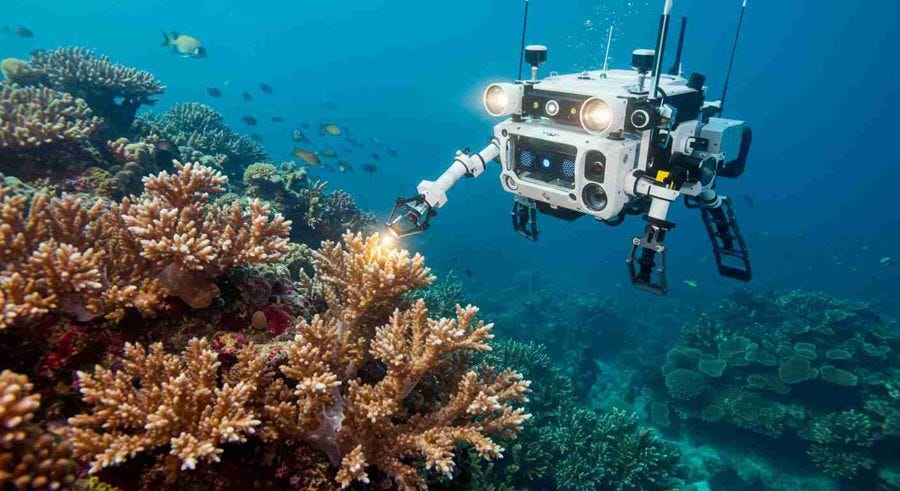
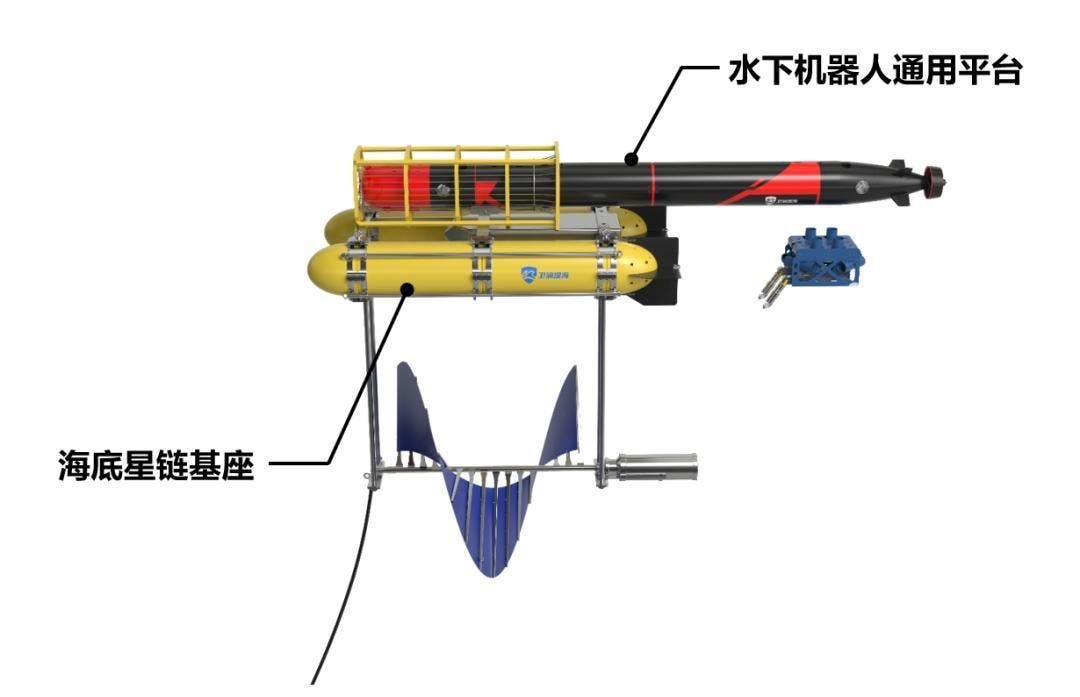
The company pairs its two-armed “Super Frogman” (超级蛙人) robot with a seabed base designed to generate electricity from ocean currents and supply the robot with power and communications. The first tasks include inspecting structures, cleaning off marine growth and checking the sacrificial zinc anodes that protect equipment from corrosion. Zhang says marine growth has to be cleared regularly to keep structures safe and stable, and the anodes checked to see whether they still work.
Founder Zhang Dayu started Weilan in 2021 out of a lab team at Xi’an Jiaotong University, where he went on to doctoral study; the company says he was born in 1998 and is now an assistant professor there. A local state seed fund backed it before the current run of rounds, and the university says the accelerator MiraclePlus (奇绩创坛) did too.
The power technology was developed to supply equipment left underwater for long periods, including sensors used to detect submarines. A company profile on the Chinese startup database innoHere describes a moored seabed power station supplying sonar arrays and other anti-submarine monitoring devices. The university’s profile of Zhang describes that intended application too. In a December 2025 36Kr article, the company listed military uses for its robot, such as underwater reconnaissance, and described military demand as its initial market while it expanded into civilian work. The October funding report and Zhang’s October interview with the tech outlet Jiazi Guangnian (甲子光年) discuss only civilian applications: supplying power to robots that maintain offshore energy installations.
Going With the Flow
Zhang’s doctoral research focused on getting a seabed power station to harvest energy from slow currents. In a 2022 paper, he and his colleagues studied how the angle and number of turns in a screw-shaped turbine affected its ability to start rotating and capture energy. They optimized the geometry using numerical models and tested it in a water flume. A turbine that cannot start turning in slow water produces nothing there. The university says Zhang’s work solved that problem for very slow deep-sea currents: his screw design starts on its own at 0.1 meters a second, less than a tenth of walking pace.
The innoHere profile says the station converts current energy into power for fixed sensors and can wirelessly recharge uncrewed underwater vehicles that dock with it during regular patrols. Weilan is building on that combination: its seabed base supplies the maintenance robot with power and a communications connection.

Co-founder Guo Penghua is a professor at Xi’an Jiaotong and was one of Zhang’s doctoral supervisors. The company says its chief technology officer, whom it does not name, is a former chief designer at China State Shipbuilding Corporation (中国船舶集团) who led more than ten major national research programs, including equipment-development programs, with total funding above RMB 2B.
The business registry lists Zhang with a 37% stake. Yuanhe Origin holds 9.7%, two funds carrying Innoangel’s name hold about 12%, a Shenzhen Capital Group fund 5.8% and a fund carrying Guoce’s name 3.6%.
On-the-Job Training
By the company’s figures, the robot positions itself to within a meter, has two six-axis arms with a payload of more than 10 kilograms, has 48-hour endurance and can hold its place in a 3-knot current, about 1.5 meters a second. Holding position matters when the robot needs to inspect a particular spot or use its arms while the water moves around it. The seabed base, which the company calls a “seabed starlink base,” captures current energy over an area of up to 10 square meters and also supports communications.
