


Two months ago, Meituan reported a RMB 16 billion ($2.2 billion) net loss for Q3 2025, the company’s first operating loss in three years. Analysts downgraded the stock. Morningstar projected market share would slide from 73% to 55% by 2027. JD had launched a 100-billion-yuan subsidy campaign, Alibaba threw RMB 50 billion behind Ele.me’s rebrand as Taobao Flash Delivery, and Meituan matched them. Marketing spend nearly doubled to RMB 34.3 billion.
While the company was losing money defending market share, it had its eyes on something much larger long term.
In the same quarter, Meituan secured China’s first nationwide low-altitude logistics license. It released a 560-billion-parameter AI model family called 龙猫 (”Longcat”). Its venture arm poured capital into quadruped robots and humanoids. R&D spending jumped 31% to RMB 6.9 billion.
I’ve watched Meituan evolve from a coupon app to a delivery giant. Now it’s building infrastructure to automate urban life. Drones flying regulated routes, quadruped robots climbing stairs, humanoid robots running unmanned pharmacies around the clock, AI coordinating billions of route decisions per hour, and a conversational assistant where you speak what you need instead of tapping through menus. Food, medicine, groceries, general retail, emergency supplies - anything local, delivered in 15 minutes by autonomous systems instead of human riders.
How?
The Foundation
To understand what Meituan is building, we need to understand what Beijing is enabling.
The Low-Altitude Economy
The “Low-Altitude Economy” (低空经济) became a national strategic priority in the 2024 Government Work Report. The term covers all economic activity below 1,000 meters (extending to 3,000 meters in designated corridors): drones, air taxis, vertiports, airspace management systems, and the manufacturing supply chain behind them. The Civil Aviation Administration of China projects the sector will hit RMB 3.5 trillion ($483 billion) by 2035.
This is part of Xi Jinping’s “New Productive Forces” (新质生产力) agenda: a deliberate shift from the consumer internet era of food delivery apps and group-buying discounts toward high-tech, high-efficiency industrial development. The government wants companies competing on technology and infrastructure, not burning cash on subsidies. It wants autonomous systems, advanced manufacturing, and infrastructure that makes Chinese cities the most efficient on earth.
For years, drone logistics was stuck in regulatory sandboxes while the technology, logistics and safety regulations were figured out. Companies like Meituan could test in designated districts (Shenzhen’s Nanshan, Shanghai’s Yangpu), but couldn’t scale. Every new city meant new permits, new negotiations, new limitations. The technology worked well, but the administrative borders made it impossible to scale.
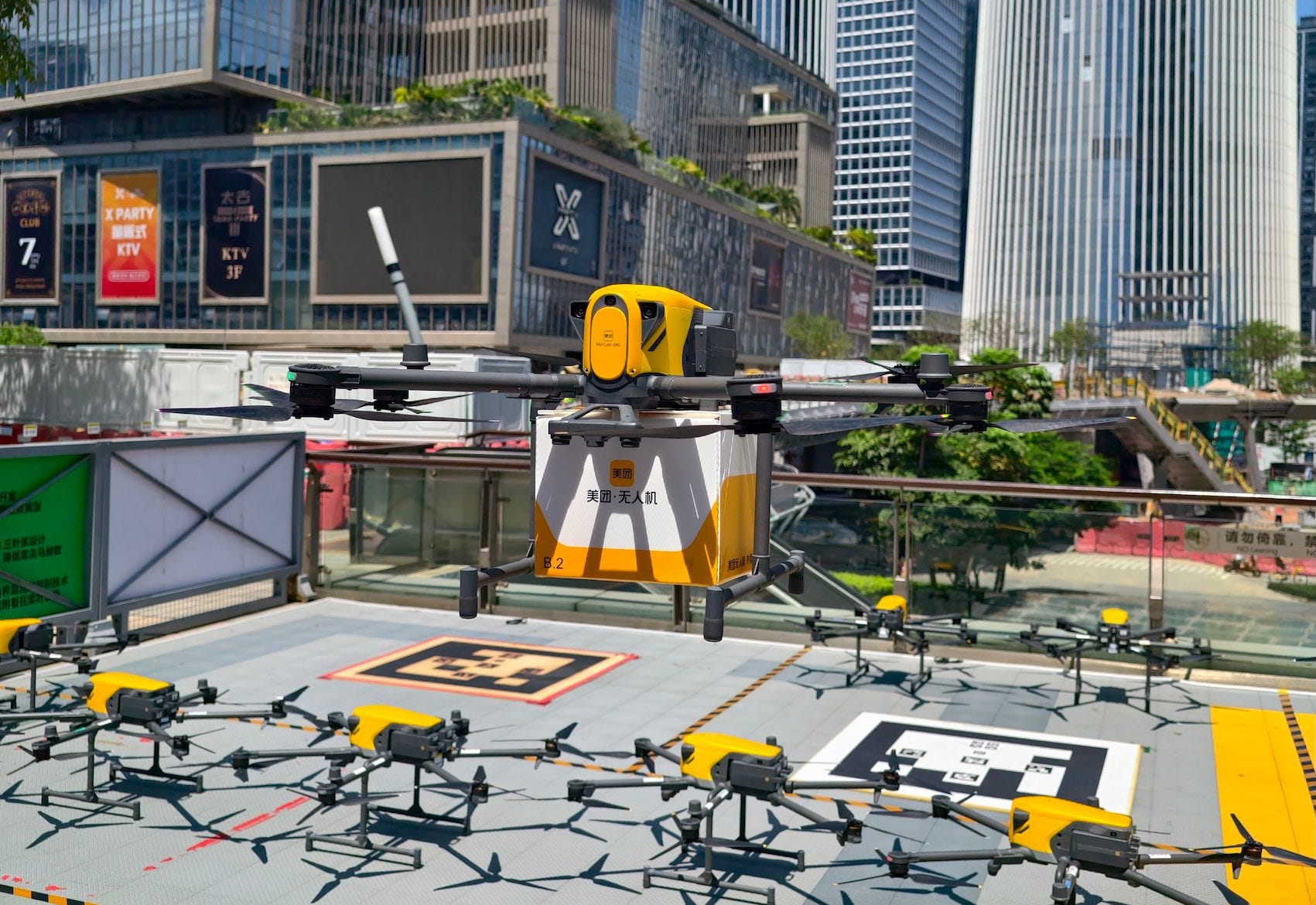
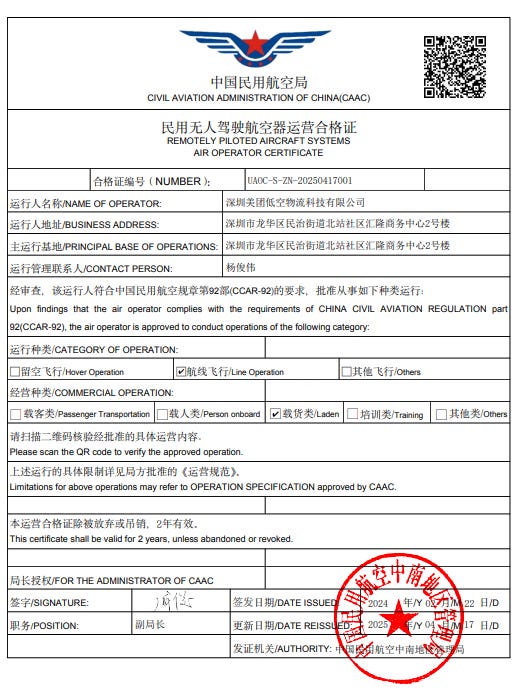
That changed in April 2025 when the CAAC issued Meituan the first nationwide low-altitude logistics operating license. Meituan’s now fourth-generation drone platform and its safety management systems had passed airworthiness review for general aviation, the same standard applied to manned aircraft. The company could now replicate its Shenzhen operations anywhere in the country without starting from zero each time, opening the skies for business.
Robotics and Embodied AI
Beijing is building an economy around intelligent machines.
In March 2025, the Government Work Report elevated “embodied intelligence” (具身智能) to national priority, alongside biomanufacturing, quantum technologies, and 6G.

The CCP Central Committee recommended incorporating it as a core driver of economic growth in China’s 15th Five-Year Plan. Beijing launched an RMB 57 billion ($8.2 billion) National AI Industry Investment Fund and approved China’s first national standards for humanoid robots, creating a unified framework for mass production.
China now has over 150 humanoid robot companies (probably too many), expanding at 50% annually, with financing hitting RMB 10 billion ($1.4 billion) in the first half of 2025. UBTECH’s Walker S1 humanoids are working assembly lines at EV companies NIO and Zeekr. China holds 7,705 humanoid robot patents over the past five years, five times the United States, and accounts for 54% of global industrial robot installations. Internet giants are piling in, backing quadruped and humanoid startups as the next logistics frontier.
What About Jobs?
China has chronic employment pressure, particularly among youth. Why encourage automation that displaces delivery riders, warehouse workers, and retail staff?
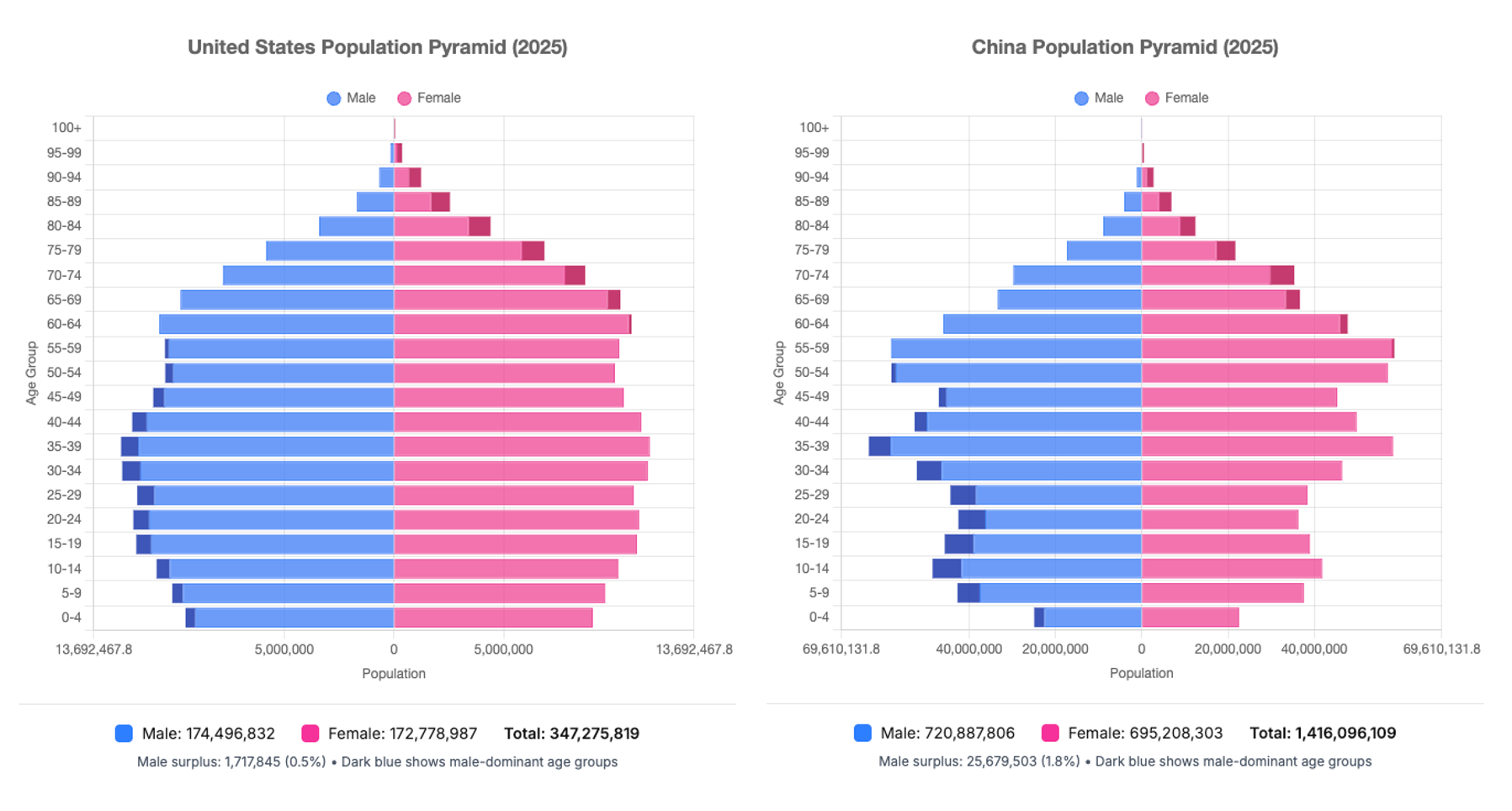
Demographics.
China’s workforce is aging rapidly. By 2022, the average worker was 40. Workers aged 16-24 represent only 7% of the labor force. Labor shortages are emerging in manufacturing, construction, and logistics. Beijing’s view is that automation solves the labor shortage rather than creates unemployment, with over 10 million workers annually now benefiting from retraining programs.
Delivery riders are gig workers, not state employees. Meituan employs millions of them, but they lack the political sensitivity of factory workers in state-owned enterprises. Retraining gig workers into higher-skill roles (robot supervision, drone maintenance, logistics management) is preferable to subsidizing low-productivity service jobs indefinitely. What’s more, in practice drones complement riders rather than replace them. Meituan is building what Beijing wants built.
The Brain
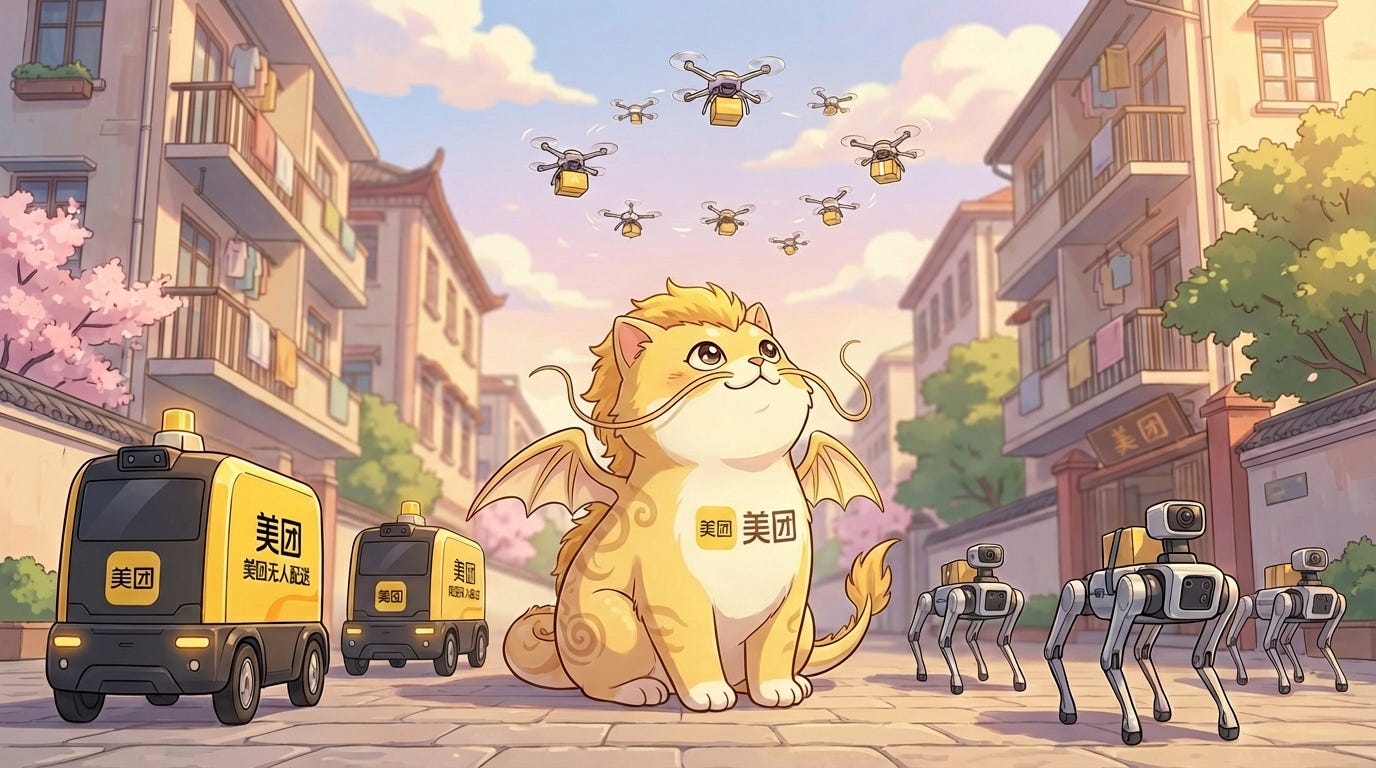
At the center of Meituan’s system sits an AI called LongCat (龙猫, lóngmāo). Lóng means dragon; māo means cat. It’s also the Chinese title for Miyazaki’s My Neighbor Totoro. A soft name for a massive industrial AI stack.
The flagship model, LongCat-Flash, has 560 billion parameters but only activates 27 billion per inference. You get the intelligence of a huge model at a fraction of the compute cost, which matters as AI moves to edge devices and robotics where efficient models will dominate. In January 2026, Meituan released LongCat-Flash-Lite, pushing response speeds to 700 tokens per second, fast enough that users don’t notice they’re talking to an AI. LongCat powers the conversational layer.
The physical orchestration runs on Super Brain (超脑, chāonǎo), Meituan's dispatch system. It performs 2.9 billion route planning calculations per hour during peak times, fusing GPS data, drone telemetry, weather feeds, and airspace restrictions to assign orders to the optimal transport mode in real time. A light item during rush hour gets routed to a drone. A heavy grocery order goes to an autonomous vehicle or human rider. A hybrid order might fly the middle mile by drone and get handed off to a rider for the final 100 meters.

The Body
Meituan’s physical infrastructure has three layers, each filling gaps the others can’t reach.
1. Drones
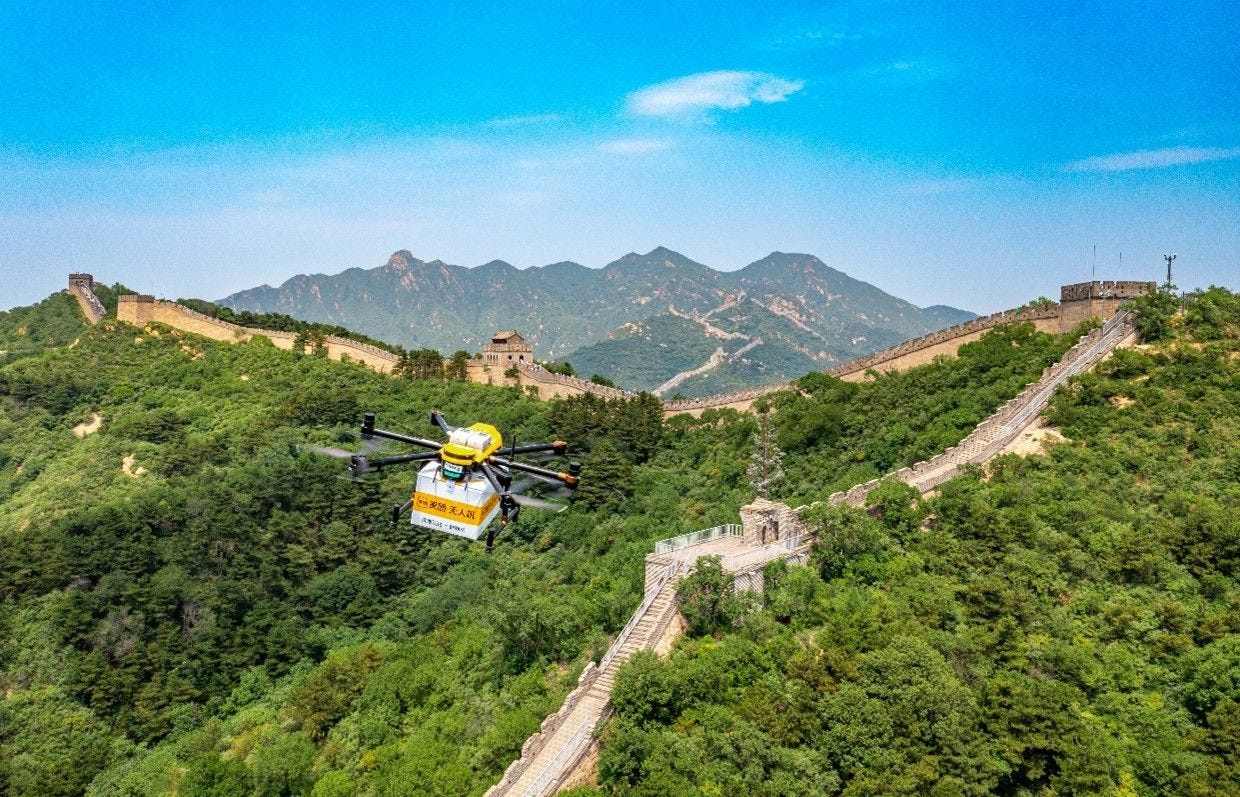
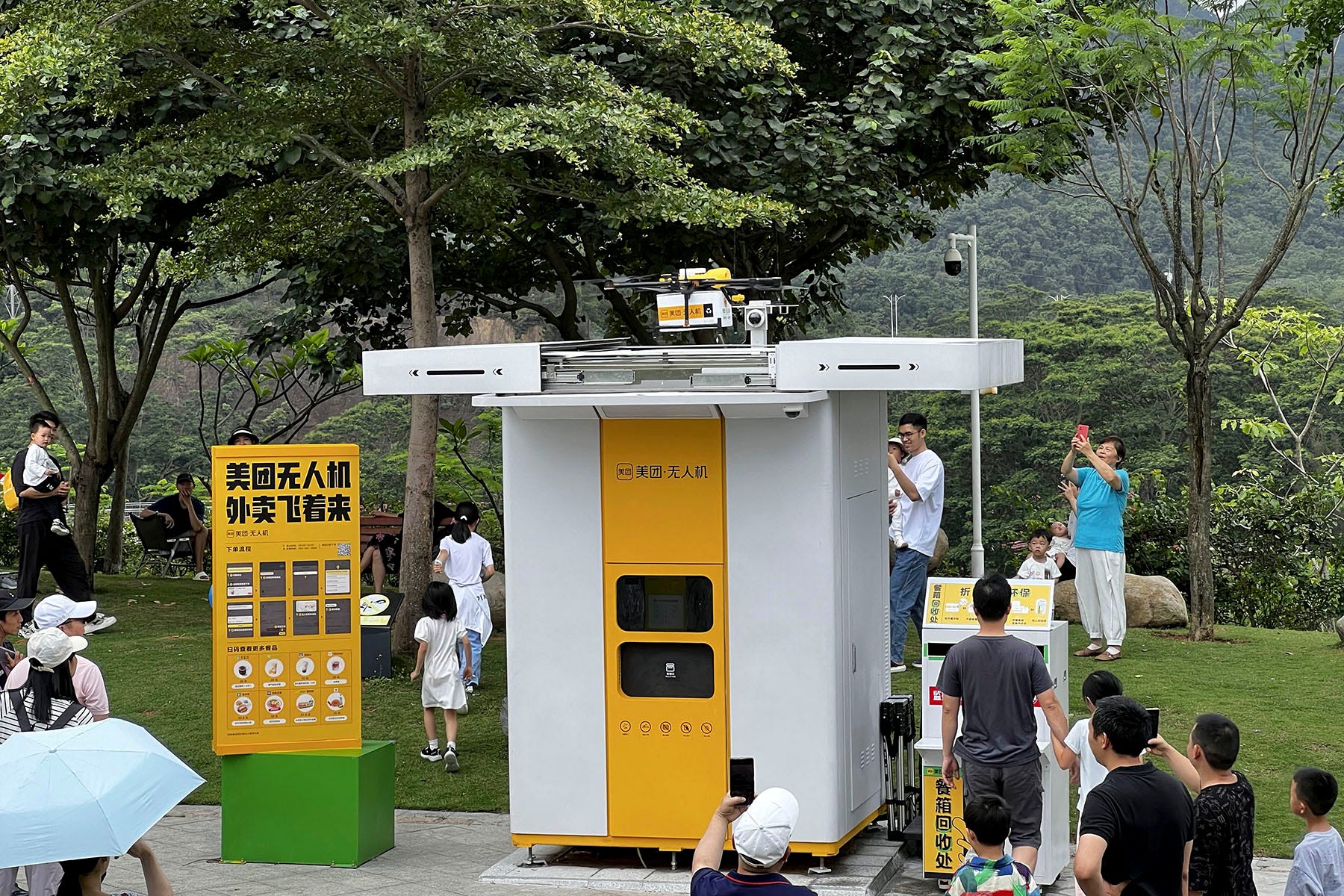
The fourth-generation platform operates at 50 decibels from 15 meters, ambient street noise, critical for approval in dense residential compounds. By December 2025, Meituan had 65 commercial routes across Shenzhen, Shanghai, Beijing, Hong Kong, and Dubai, with 740,000 cumulative orders. Use cases now extend beyond food: drones deliver food, water and emergency kits to tourists at the Great Wall’s Badaling section, areas inaccessible to road vehicles.
2. Robotics
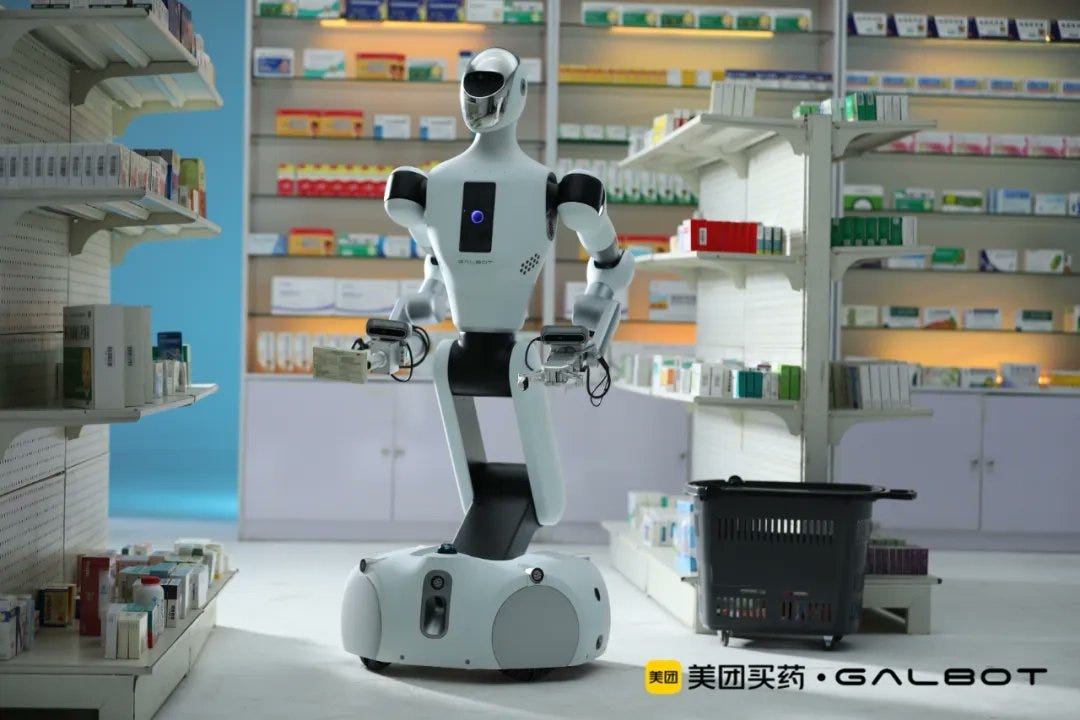
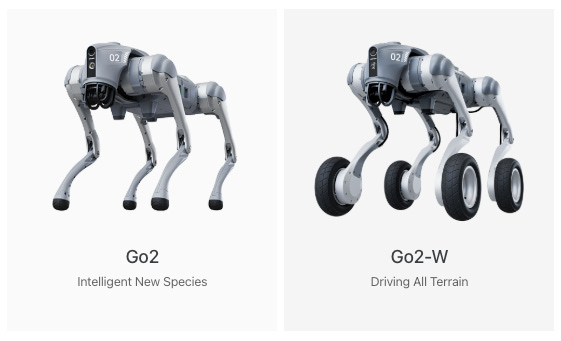
Drones can’t climb stairs or navigate building interiors, a gap Wang Xing, founder and CEO of Meituan, addressed directly at the Q4 2024 earnings call: “AI has greatly promoted the development of robot technology. Meituan will pay attention to and invest in start-up companies driving this wave.” That investment has been aggressive. Meituan is now Unitree’s second-largest shareholder, and in September 2024 signed a strategic cooperation agreement with Galbot to build “the world’s first humanoid robot-enabled intelligent pharmacy solution.” Unitree quadrupeds handle unstructured terrain; Galbot humanoids open doors, press elevator buttons, pick items from shelves. Parts of this are already running: in Beijing, Galbot robots operate unmanned pharmacies, picking and packing 5,000+ SKUs around the clock. The pilot is expanding to 100 pharmacies by end of 2025.
3. Multimodal integration
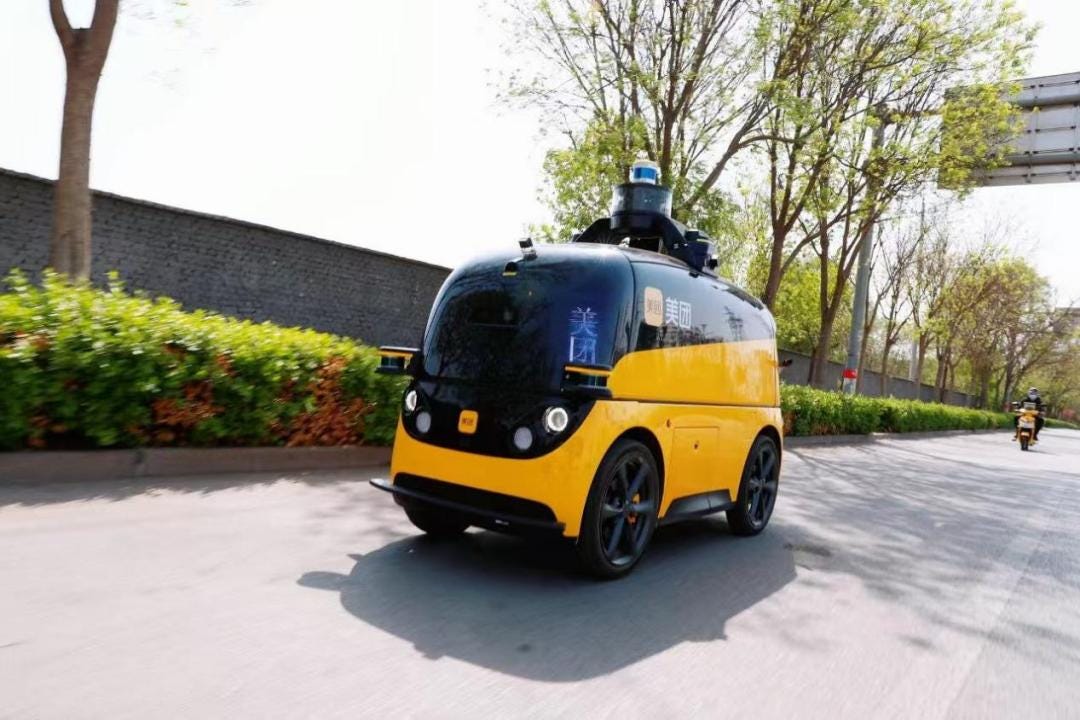
Meituan’s drone delivery doesn’t necessarily replace riders. In many cases it coordinates with them. A human courier picks up from the restaurant and brings the order to a rooftop launchpad. Staff load the drone, which flies a predetermined route to an automated pickup kiosk near the customer’s building. The kiosk holds up to 28 orders; customers retrieve via app notification, or a ground robot handles the final 100 meters. Rider handles the first mile, drone handles the middle mile, automation handles the last. Each mode plays to its strength: humans navigate restaurant chaos, drones skip traffic, robots climb stairs.
The Interface
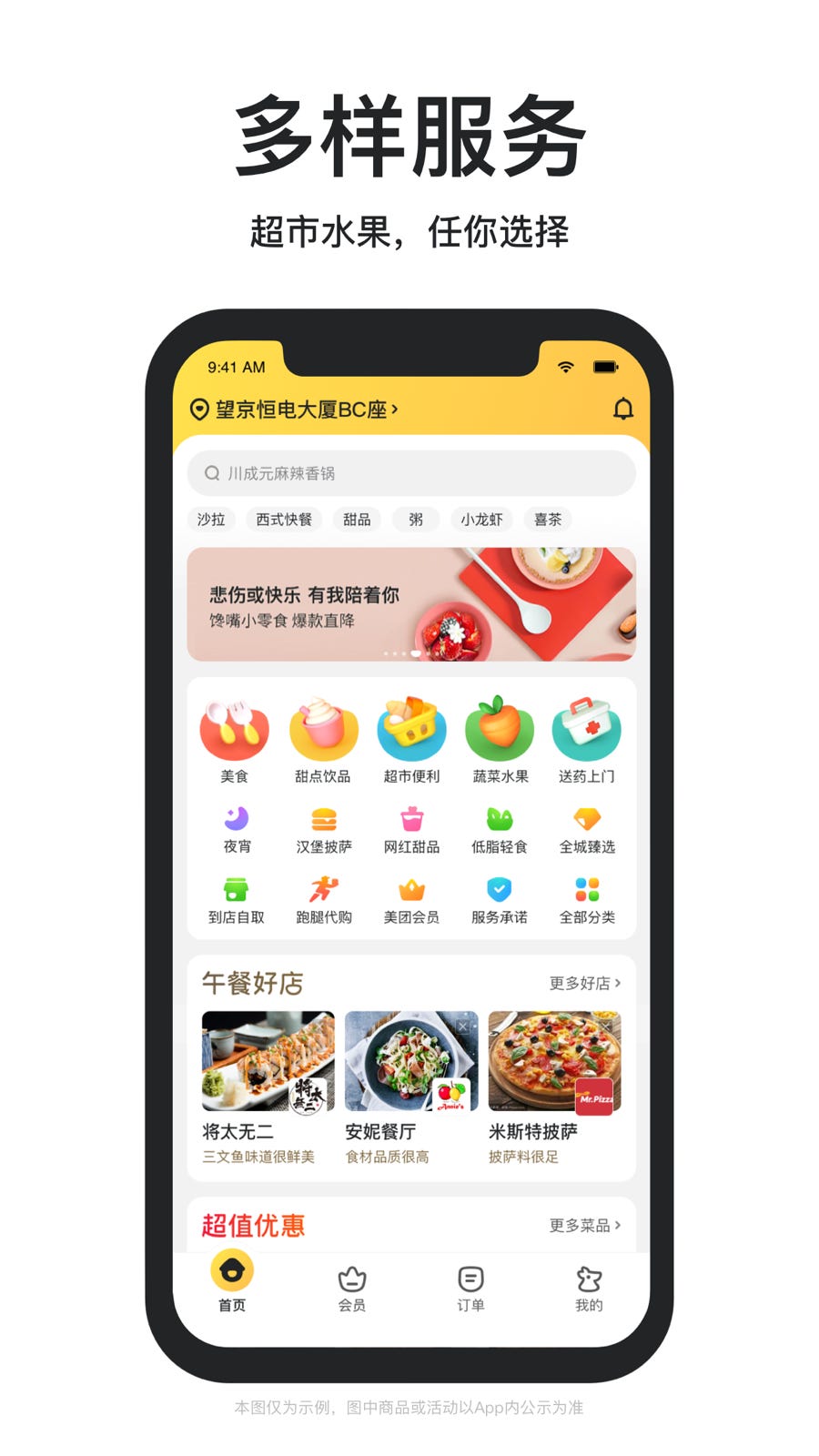
The Meituan app has over 500 million monthly active users. It’s how most of urban China orders food, books hotels, buys movie tickets, hails bikes. One super app, one interface, one relationship with the customer.
Now Meituan is betting that interface might change. In five months, they launched three AI products, testing different market approaches.
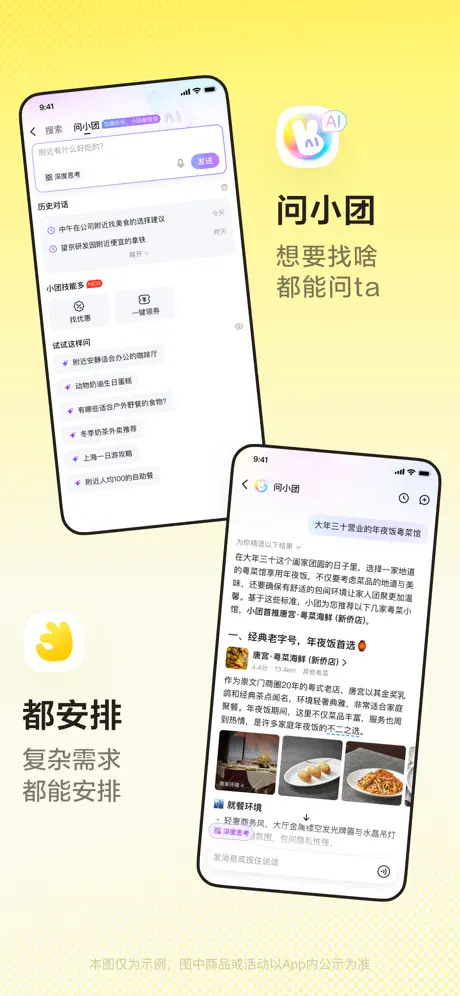
In January 2026: Wen Xiaotuan (问小团 - “Ask Little Tuan”), an AI search assistant inside the main Meituan app. Complex queries like “year-end gifts that arrive in 30 minutes” return structured recommendations from merchant data. The assumption here is that users stay in super apps but want AI-enhanced search.
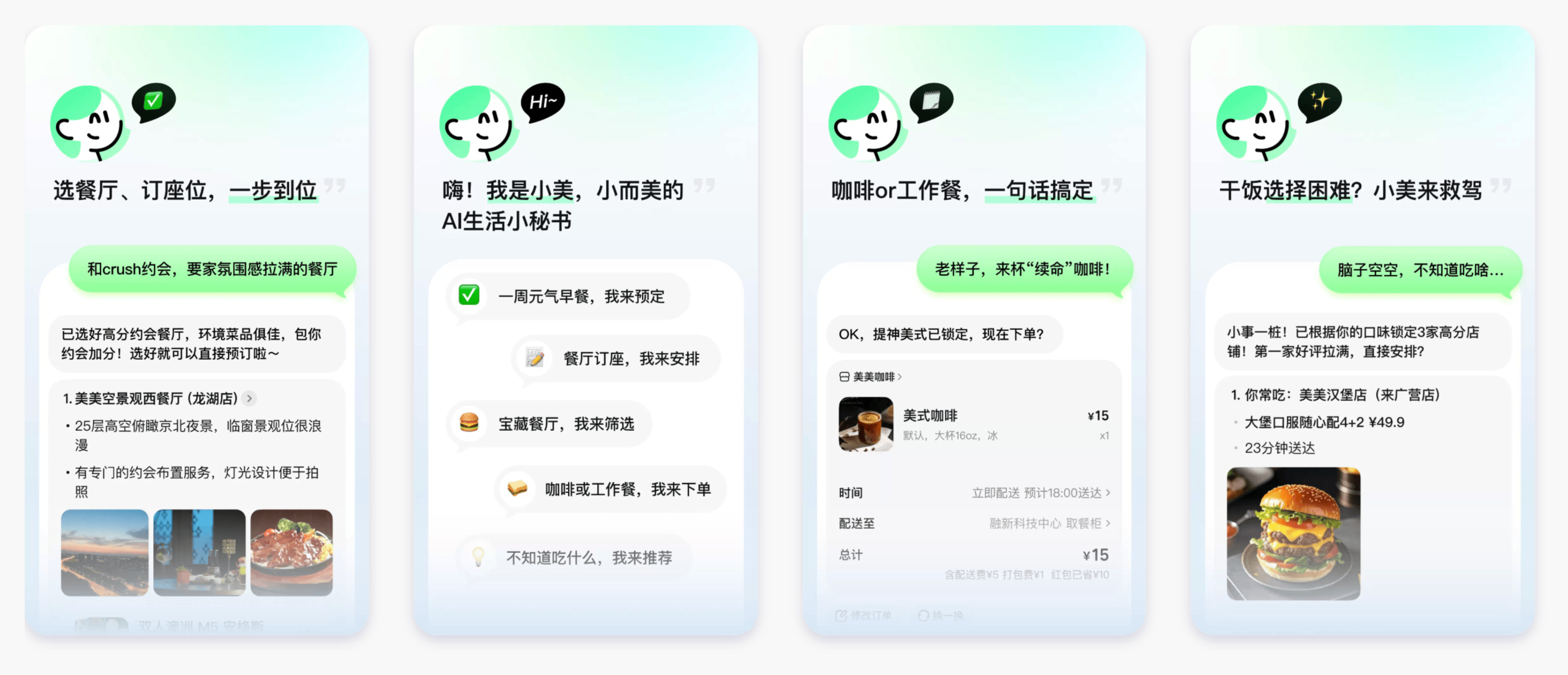
In September 2025: Xiao Mei (小美), a standalone AI agent app. Voice-first, powered by LongCat. “Find a Sichuan restaurant, book a table for tonight.” Xiao Mei makes an AI phone call to the restaurant, confirms the reservation, sends directions. Orders sync back to Meituan without switching apps. Here the test is whether commerce-specific AI agents replace super apps.
And there’s LongCat itself at longcat.ai, competing with Deepseek and ChatGPT in the general AI assistant market.

Meituan A/B testing with three apps:
Xiao Mei (小美): AI agents replace apps
Wen Xiaotuan (问小团): Super apps stay dominant, AI enhances search
LongCat: General AI assistants reign supreme
CEO Wang Xing’s stated vision is a “super AI assistant” covering all Meituan services. The interface is uncertain, that’s why they’re running three experiments. The infrastructure isn’t. Whatever app people end up talking to, someone has to fly the drone and dispatch the robot. Meituan is building that layer now.
The Competition
Are JD and Alibaba building the same thing? Not exactly.
JD announced an aggressive automation plan in October 2025: 100,000 drones, 3 million robots, and 1 million autonomous vehicles over five years. The company has made substantial humanoid robotics investments, leading funding rounds in Spirit AI, LimX Dynamics, and EngineAI. It operates roughly 400 autonomous delivery vehicles across 25+ cities. JD is serious about automation.
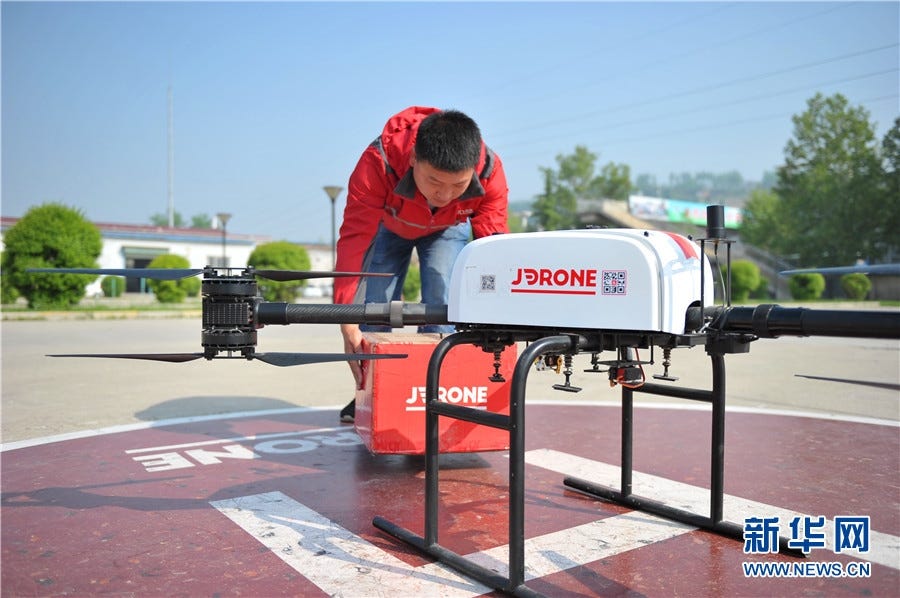
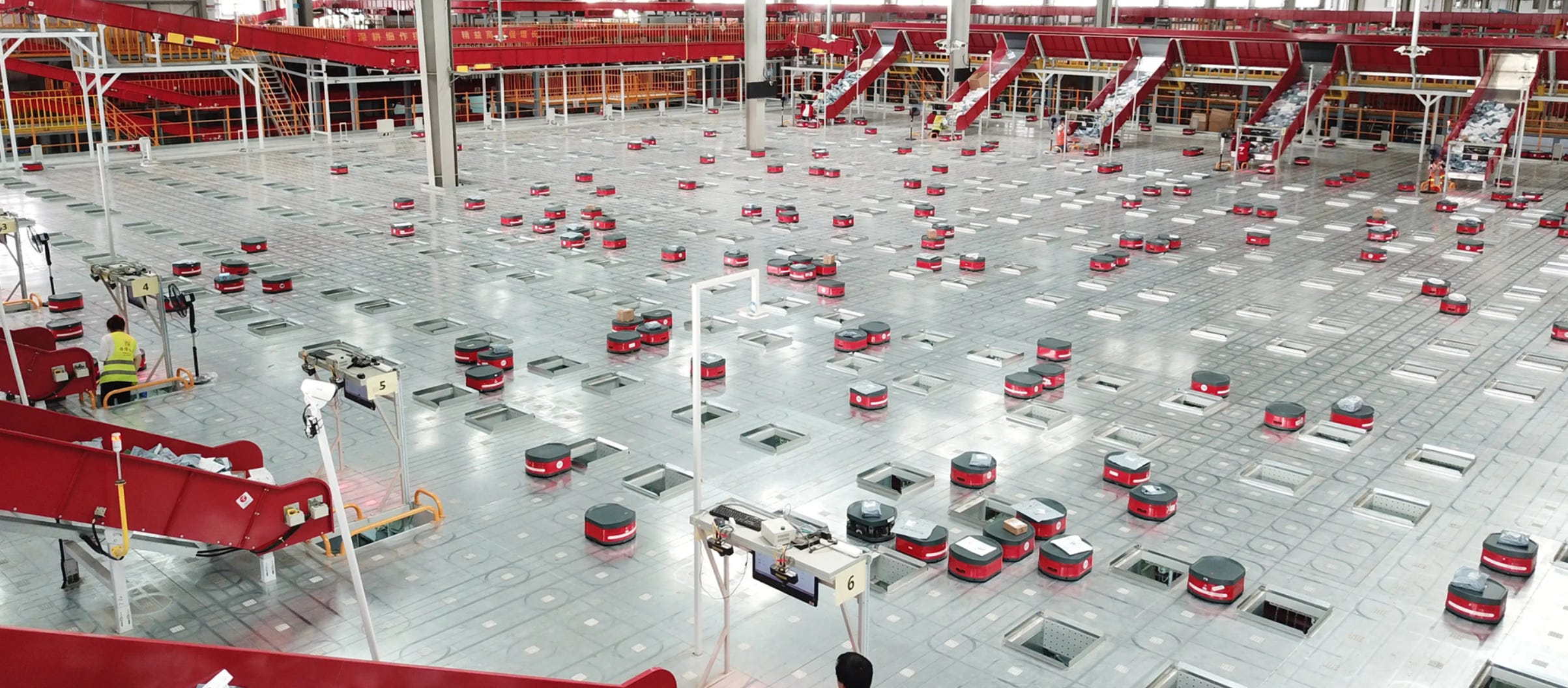
But JD’s focus is different. Its drone network targets rural and remote delivery, reducing shipping times to areas traditional logistics can’t reach efficiently. Its robotics investments concentrate on warehouse automation, e.g. the massive “Asia #1” logistics parks that can sort 4.5 million parcels per day. JD is optimizing the supply chain from factory to distribution center. Meituan is optimizing the last three kilometers from restaurant to doorstep.
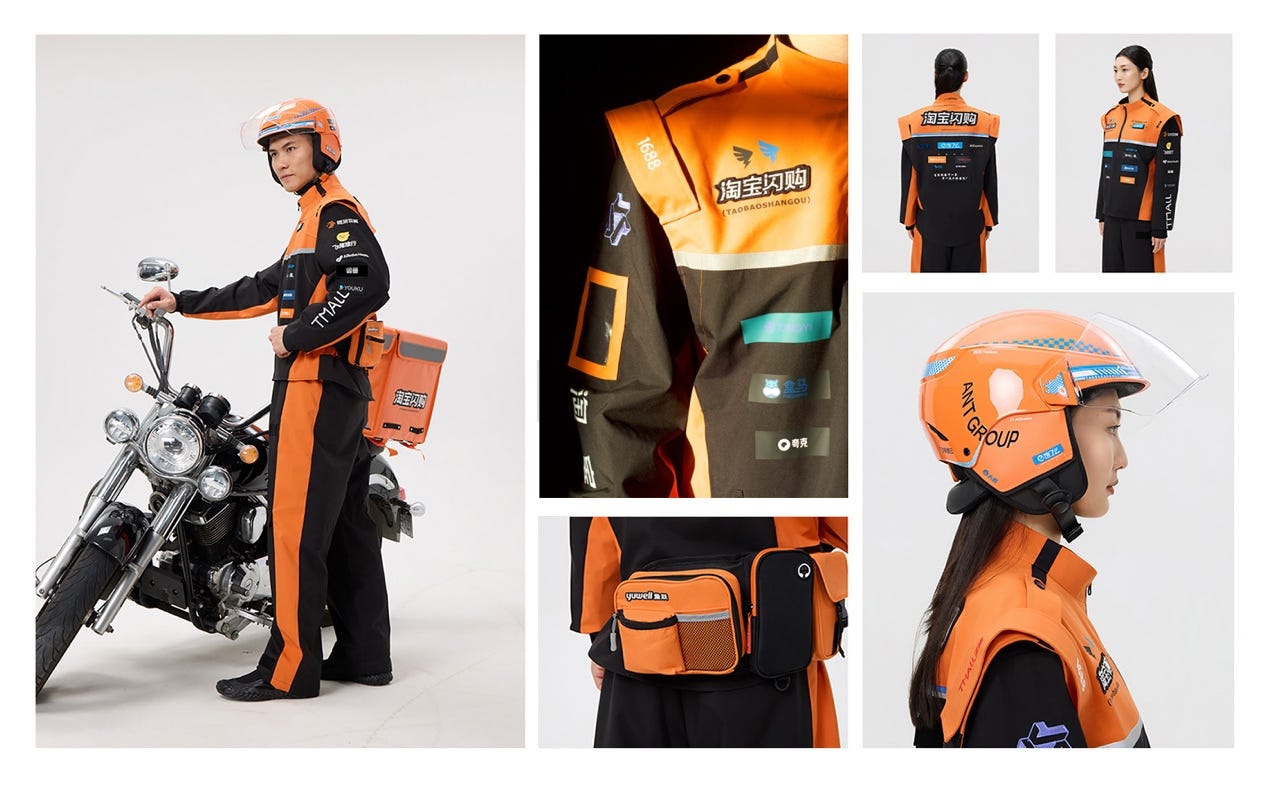
Alibaba is consolidating on the ground. In July 2025, the company committed RMB 50 billion (over $7 billion) in subsidies to Taobao Shangou (Taobao Flash Buy) and rebranded its entire rider fleet in striking Taobao orange. One unified network now delivers for all their core brands: Ele.me, Hema, Tmall Supermarket, and a growing chain of Taobao-branded convenience stores. Ele.me has drone pilots, but no nationwide certification - every new city means new permits.
Meituan has the only nationwide low-altitude logistics license and an eight-year head start on urban drone operations. If the low-altitude economy scales, JD and Alibaba will follow. The question is how much operational density Meituan builds before they do.
From Cat to Cheetah
While building infrastructure domestically, Meituan launched an international offensive under the brand name Keeta (wordplay on “cheetah”).
The company started in Hong Kong in May 2023 and reached operating profitability in October 2025, 6 months ahead of schedule, proving Meituan’s algorithmic efficiency and operational playbook can work outside mainland China, even in a market with high labor costs and established competitors like Deliveroo and Foodpanda.
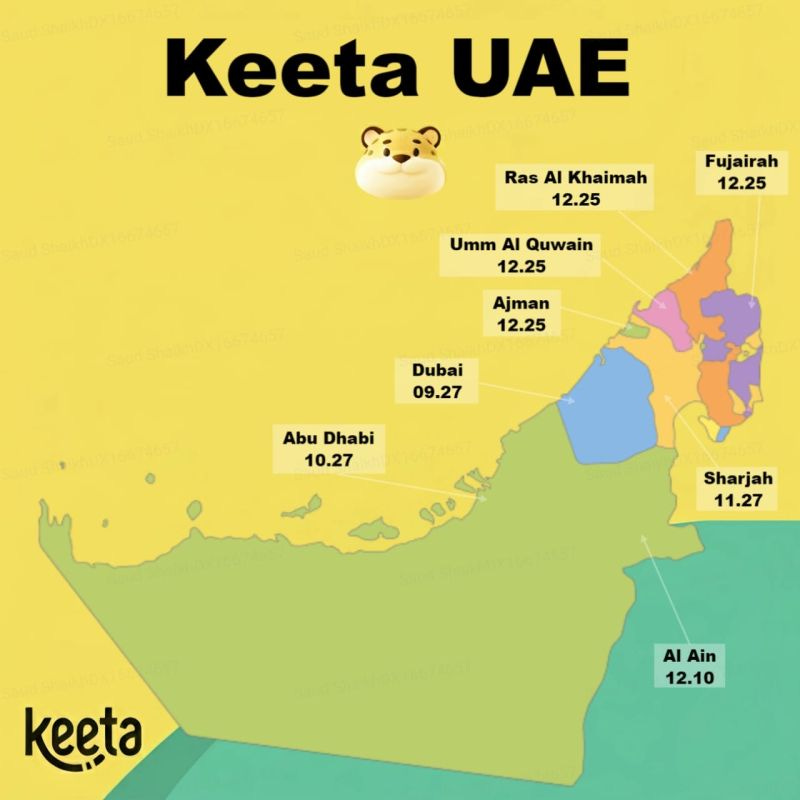
In 2025, Keeta executed an aggressive rollout across the GCC region. Saudi Arabia went from zero to 20 cities by mid-year, covering not just Riyadh, Jeddah, Makkah, and Madinah but tier-2 and tier-3 cities like Hail, Tabuk, Abha, and Al Jubail. The UAE got full coverage across all seven emirates. Also in Dubai, Meituan launched commercial drone routes, exporting the Shenzhen model to the Middle East.
The GCC strategy aligns with Saudi Arabia’s Vision 2030. Keeta onboarded 18,000 riders and partnered with 7,500 local merchants during the launch phase, positioning itself as a generator of local employment and a partner in economic digitalization. In the Middle East’s political economy, that positioning matters.
It’s not all blue skies though. Keeta is currently burning cash, subsidies for users, free delivery, no subscription fees, the standard playbook for acquiring market share from incumbents like Talabat and Jahez. But the Hong Kong success provides the roadmap: absorb the losses until market density enables positive unit economics. The GCC has high average revenue per user and populations concentrated in a handful of urban centers, characteristics that favor Meituan’s model, and reminiscent of their home town of Shenzhen.
More interesting is what happens when the infrastructure catches up. If Meituan can export not just the app but the drones and the dispatch intelligence, the “Shenzhen Model” becomes a product it sells to emerging markets globally, with the UAE as the testbed.
Putting It All Together: Drones, Robots, and a Life Secretary
This is what an Urban OS looks like when someone actually builds one.
An AI layer that processes 2.9 billion routing decisions per hour.
A drone network with the only nationwide license in China.
Ground robots in bike lanes, quadrupeds on stairs, humanoids in pharmacies.
Three different app interfaces testing three different futures.
All connected, all dispatched by the same system.
Wang Xing’s vision is a “life secretary.” You tell your phone what you need, and it handles the rest. Dinner for six, spicy, under 500 yuan, by 7pm. Medicine for your kid’s fever at 3am. Groceries restocked before you run out. The AI picks the restaurant, checks inventory, routes the order to whatever’s fastest - drone, robot, or rider - and gets it to your door in 15 minutes. No scrolling. No app-switching. No human navigating traffic in the rain.
Urban life runs smoother when an AI coordinates the logistics and machines do the moving.
I haven’t seen another company assemble this full stack. JD is automating warehouses and rural routes. Alibaba is consolidating riders. Neither is building a full-stack system for urban last-mile automation.
The economics are improving but not yet proven at scale. Drone delivery still costs more than human riders. The Low-Altitude Economy projections are mostly about manufacturing and infrastructure, not delivery savings. Social security mandates are adding costs, but not fast enough to force a crossover. Meituan is spending RMB 6.9 billion per quarter on R&D while losing RMB 18.6 billion to a price war.
But they’re building optionality. If drones scale, they’re ready. If ground robots win, they’re ready. If humanoids mature faster than expected, they’re ready. If labor costs spike, any of these paths accelerates. They don’t need to know which technology wins.
They just need one of them to work.