

The China Round — July 17, 2026
An AI diving mask from three DJI veterans, factory owners investing in their own sensor supplier, and CATL writing a solo check to a 21-year-old for open-source robots

The China Round is a weekly report tracking venture and strategic investment activity across China’s core technology sectors: AI, robotics, semiconductors, new energy and materials, aerospace and defense, and frontier tech.
The China Round is free, published weekly, and written for investors, operators, and founders tracking where China’s tech capital is moving and why it matters.
About the author: Dermot McGrath is Irish, based in Shanghai, a decade in China’s tech and investment ecosystem, fluent Mandarin. Co-founded a VC fund scaled to nine-figure AUM. Now running ZenGen Labs, a cross-border strategy studio covering AI, robotics, and deep tech.
This is quite a few days late. I appreciate your patience. And fret not, there will be two editions this week. I was busy with WAIC and, more importantly, getting married.
The World AI Conference opened in Shanghai this week with Xi Jinping delivering the keynote, calling for open-source AI cooperation and pledging 5,000 AI training places for developing countries over the next five years. Ten days earlier, at a pre-WAIC press conference, the Ministry of Industry and Information Technology gave its most concrete production target yet for humanoid robots: 100,000 units in 2026, more than four times the roughly 24,000 deployed worldwide at the end of 2025.
Where the Money Went
This week, 159 deals landed across seven sectors, and 25 of them disclosed a combined $1.02 billion (~¥7.3 billion). Most deals came without published figures, so the actual capital deployed was considerably higher. AI led in deal count with 40 transactions, followed by semiconductors (28), robotics (25), and other advanced manufacturing (24). Industrial customers, not venture funds, led several of the largest rounds this week, buying equity directly in the suppliers they need.
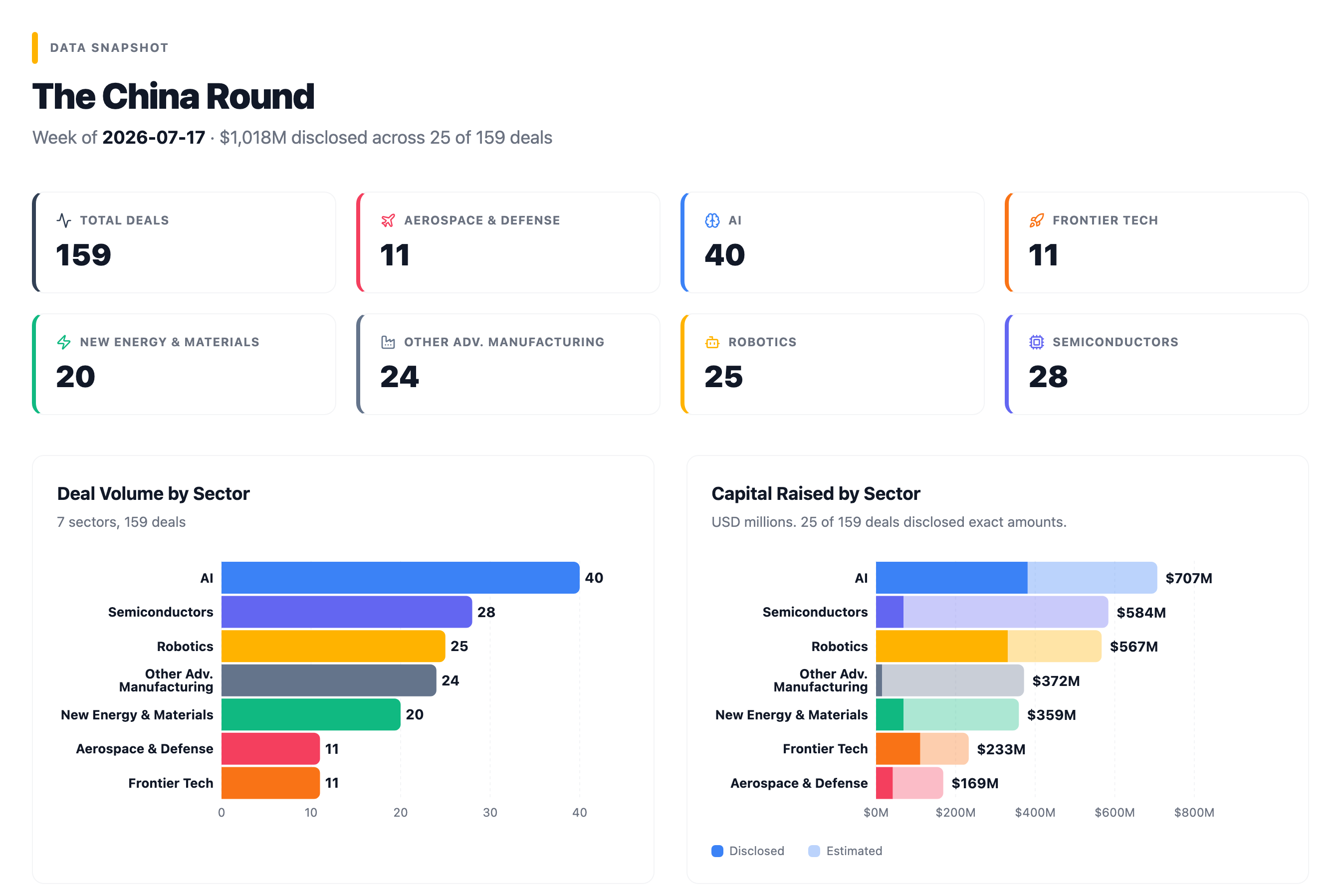
🧠 AI (40 deals)
The two largest disclosed AI rounds went to on-device models, not cloud-scale foundation models: ModelBest (面壁智能) accumulated over ¥5 billion (~$694 million) across H1 2026 for models that run on phones and cars, and AIsphere (爱诗科技) closed its C+ at ¥2.98 billion (~$414 million) with Alibaba leading. TASHAN (他山科技) closed a B round with industrial customers as investors. At the early stage, seed and angel deals skewed toward embodied intelligence, with multiple rounds backing “world models” (AI systems that simulate physical cause-and-effect so a robot can predict what happens before it acts) and vision-language-action systems (models that turn a spoken instruction directly into physical movement).
⚡ New Energy & Materials (20 deals)
Power, batteries, and the physical infrastructure beneath the AI boom. Marvel-Tech (慕帆动力) closed a Sequoia-led C round for on-site AI datacenter power generation. ENN Fusion (新奥聚变) opened its first external round at ¥10.6 billion after more than a decade of internal R&D. Ganfeng Battery (赣锋锂电) raised twice in three weeks for solid-state batteries. Linkcharging (领充新能源) raised a strategic C round with multiple automakers. Generating, storing, and delivering power is becoming its own investment category, driven by AI compute demand.
🔬 Semiconductors (28 deals)
State-capital coalitions and strategic investors dominated. Liuyuewei (六岳微) raised ¥500 million in a Series A for domestically developed digital signal processors (the chips that convert real-world signals like sound and radar into digital data), backed by a Guangdong government coalition. Cygnusemi (星思半导体) completed its third round of 2026 for satellite baseband chips (the component in a phone or terminal that decodes wireless signals), reaching ¥12 billion. Shuoguang Precision (烁光精密) attracted two listed-company strategic stakes within weeks for co-packaged optics components, the light-based interconnects replacing copper inside AI data centers. Multiple deals showed listed companies taking direct equity in their own suppliers rather than routing through venture funds.
🤖 Robotics (25 deals)
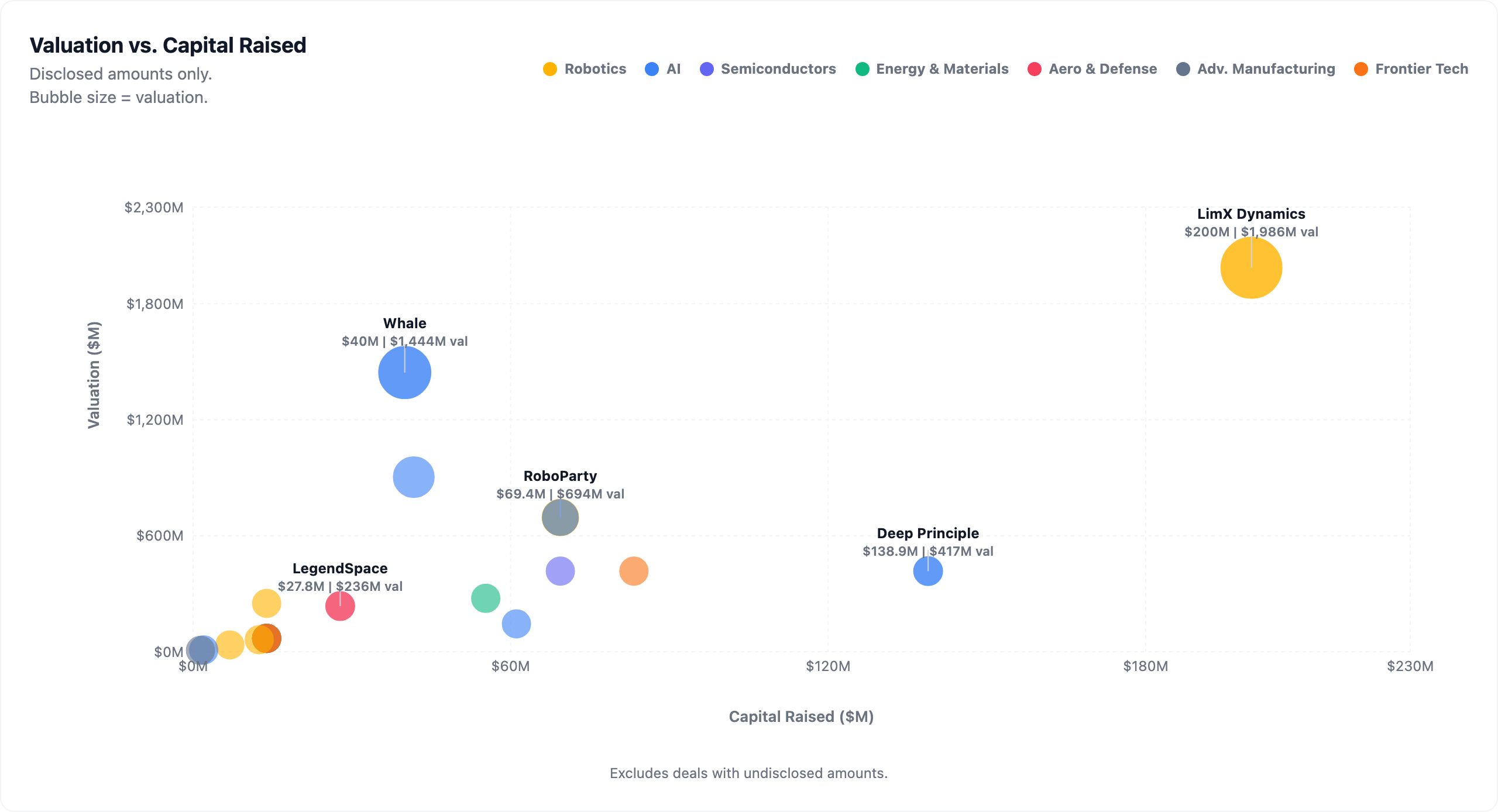
Capital came from unusual directions. LimX Dynamics (逐际动力) raised $200 million in a Pre-IPO, over 70% from overseas investors. CATL took RoboParty’s (萝博派对) entire Pre-A alone. Shanghai Electric led DexRobot’s (灵巧智能) Series A and co-founded two manufacturing joint ventures with the company. Seven of 25 deals were at the angel stage, suggesting a new wave of company formation. Industrial companies are buying equity in their future robot suppliers, locking in components before the production ramp.
💡 Frontier Tech (11 deals)
The largest round came from one of the oldest companies: Wentian Quantum (问天量子) raised ¥600 million in a Series B after 17 years in quantum communication. Bama (八匹马) raised over ¥100 million for superconducting magnets (magnets cooled to near absolute zero to generate extremely strong magnetic fields) and cryogenics serving quantum computing, fusion, and semiconductor fabrication. Shuyanjuchuang (束研聚创) raised ¥100 million at the angel stage for neutral beam injection systems (equipment that shoots high-energy particles into a fusion reactor’s plasma to heat it enough to sustain a reaction). Two of three deals are component suppliers to other frontier sectors, a sign that the infrastructure layer beneath quantum and fusion is now investable on its own.
🚀 Aerospace & Defense (11 deals)
LegendSpace (临界航天), a six-month-old startup, raised ¥200 million (~$28 million) at the angel stage for AI-accelerated liquid rocket engine development. Galactic Energy (星河动力), China’s most-launched pre-IPO commercial rocket company with 21 flights and 89 satellites delivered to orbit, took an investment from GAC Capital, Guangzhou Automobile Group’s corporate venture arm. GAC Group launched its own flying car brand earlier this year and has backed autonomous driving companies including Momenta and Pony.ai, a portfolio that puts rocket launches closer to the core business than it first appears.
⚙️ Other Adv. Manufacturing (24 deals)
Hardware teams leaving big companies to build consumer products for export. Deeplore (蓝洞探索), three former DJI engineers, raised a seed for an AI diving mask. LightMake (轻量智造), a former AnkerMake lead, raised an angel for 3D printers targeting North America and Europe. Whale (帷幄) raised $40 million from Hyundai and Japanese bank corporate venture arms, bringing its total Series C to over $100 million, more than half its revenue now international. Chinese hardware expertise built at scale inside large companies is spinning out and shipping directly to Western customers.
Spotlight
Deeplore (蓝洞探索)
Seed, Tens of millions of RMB (several million USD), Val. ¥150M (~$21M)
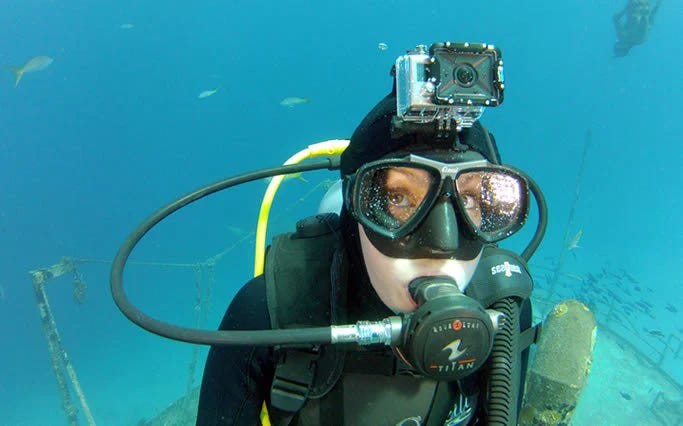
AI diving mask with a heads-up display and real-time marine species recognition.
Deeplore builds a smart diving mask that overlays data on the diver’s field of view and uses onboard AI (the recognition runs on a chip inside the mask itself, not by sending data to a remote server, since there is no internet signal underwater) to identify marine life in real time. The company was founded in June 2025 in Shenzhen by three former DJI engineers who spent years building the hardware, powering the motors, and selling the products that made DJI the world’s dominant consumer drone company, with roughly 70% of the global market. Qiu Li (丘力), the CEO, led DJI’s structural engineering and its energy business unit; he holds over 200 diving certifications, including rescue diving. Zhou Zhenhao (周震昊) spent over a decade at DJI leading powertrain development for the Phantom and Mavic drone lines. Gu Minming (顾敏明) founded Neakasa, a Chinese hardware brand that landed distribution in Best Buy and Home Depot in the United States, demonstrating the team can take Chinese consumer hardware global.
The long-term plan extends beyond diving into water sports and eventually mountaineering, building what the company calls a “nature exploration intelligent platform.” For now, the diving mask is the entry product, and three DJI resumes are the bet that the team can do for underwater hardware what DJI did for air.
Investors: 5Y Capital (五源资本) and Shunwei Capital (顺为资本).
Marvel-Tech (慕帆动力)
C Round, Combined B+C >¥500M (~$69M+), Val. ¥1.5B (~$208M)
Hydrogen-ammonia gas turbines for AI datacenter self-generation.
Marvel-Tech builds gas turbines that burn hydrogen, ammonia, and natural gas, designed to sit next to an AI data center and generate power on-site so the facility does not depend entirely on the grid. The company says its combustor can switch between all three fuels without hardware changes and claims this “tri-fuel-switchable” capability is a world first. The first unit rolled off the assembly line in September 2025 at a facility in Chifeng, Inner Mongolia, with all components, the company says, sourced domestically. The company reports letters of intent from buyers in Germany, the United States, and Australia, and plans to reach 1 gigawatt of annual production capacity by year-end.
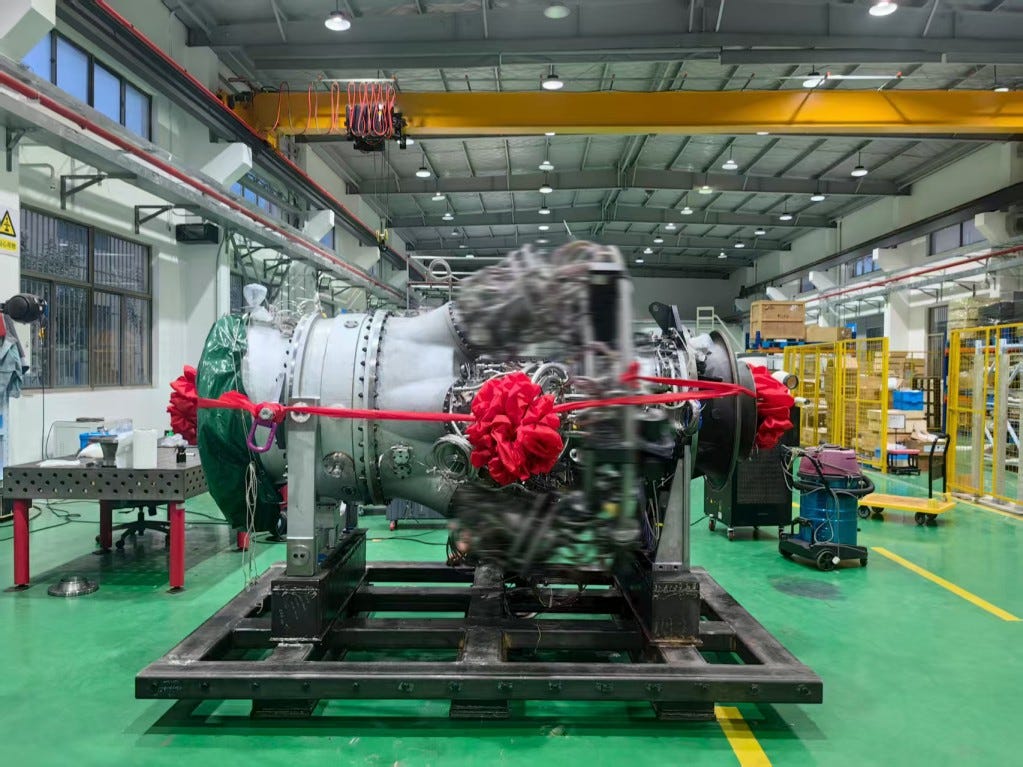
The founder, Lin Gang (林钢), studied at Tongji University and RWTH Aachen University in Germany. Sequoia China (红杉中国) led the C round, and Qiming Venture Partners (启明创投) has invested in three consecutive rounds. China’s data center power needs are projected to roughly double by 2030.
Investors: Sequoia China (红杉中国, lead), Qiming Venture Partners (启明创投), Gaorong Capital (高瓴创投), and others.
TASHAN (他山科技)
B Round, Hundreds of millions of RMB (tens of millions USD)
Tactile sensing chips for humanoid robot fingertips.
TASHAN makes sensors that give robot hands the ability to feel. The company’s chips, embedded in a robot’s fingertips, measure force down to 0.01 newtons (roughly the weight of a grain of rice), recognize materials on contact, and detect objects before touching them. The company claims over 80% of global humanoid robot fingertip sensor shipments, a figure reported by multiple Chinese outlets but sourced to the company itself rather than an independent market research firm. It sells to automakers including Mercedes-Benz, BYD, and Hongqi, appliance companies like Joyoung and Fotile, and stroller maker Goodbaby, alongside over 180 companies across the broader supply chain. Revenue exceeded ¥100 million (~$14 million) in 2024. By the end of May 2026, order volume had already reached four times the full-year 2025 level, and total revenue had surpassed all of 2025.
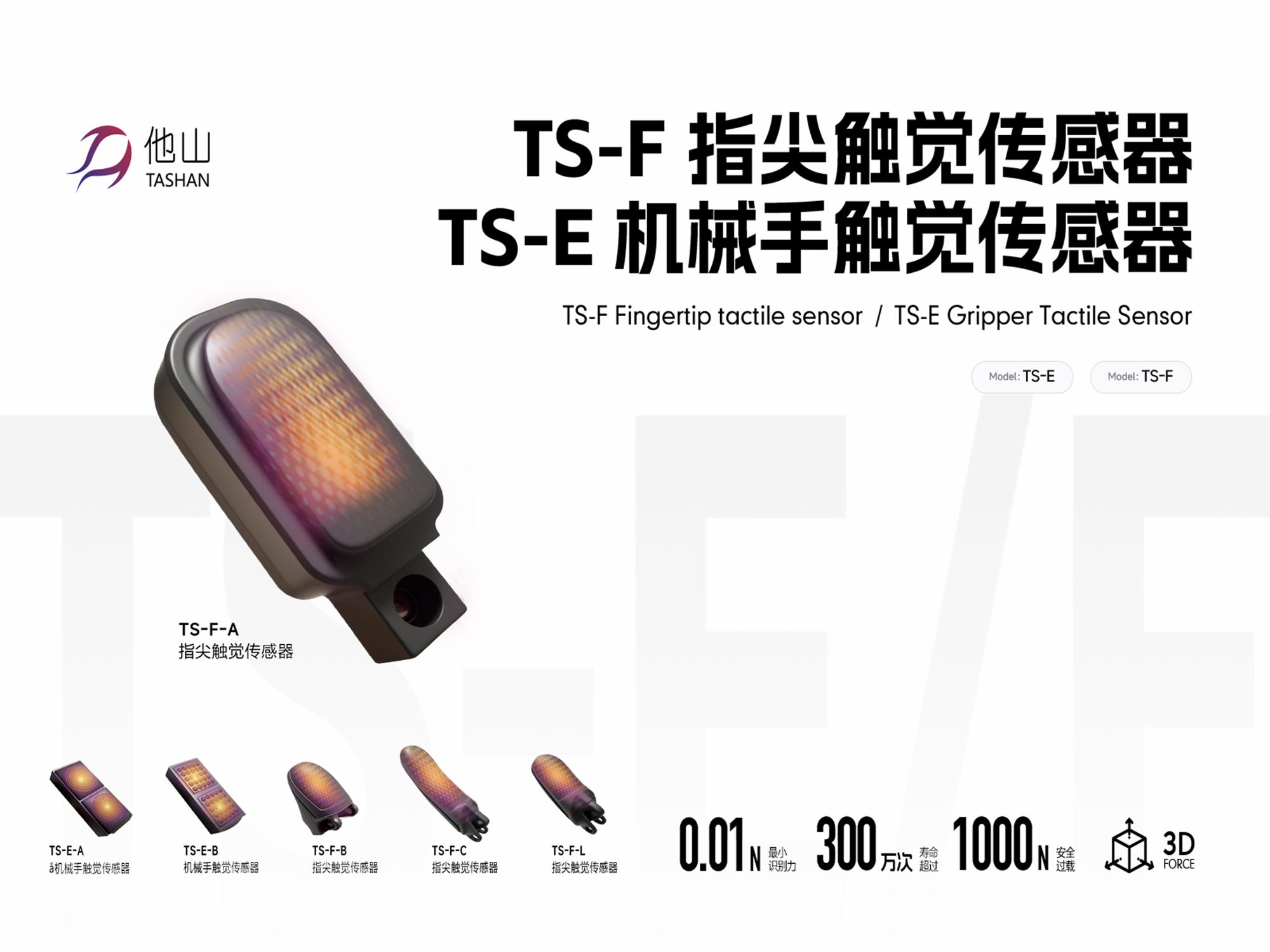
The B round was funded by an airbag conglomerate (Joyson Electronics, 均胜电子), an air conditioner manufacturer (AUX, 奥克斯), and an automotive rubber hose company (Pengling, 鹏翎), alongside financial investors. Joyson and AUX both publicly framed their investments around factory robotics: Joyson called tactile sensing “the final centimeter” of the robot-to-world interaction. Pengling, while stating publicly that it has not yet entered the robotics business, invested alongside them as it explores the opportunity. Three unrelated industries, writing checks into the same sensor company. This is the third round in approximately eight months, following two rounds closed in November 2025, a pace suggesting industrial buyers are moving to secure supply of a component they see as a chokepoint.
Investors: Taiping Innovation (太平创新), Joyson Electronics (均胜电子), AUX (奥克斯), Pengling (鹏翎股份), Lavender Hill Capital Partners (LHCP), Hongshan Capital (洪山资本). Existing shareholders Daohe Technology (道氏技术) and Binfu Capital (彬复资本) followed on.
LegendSpace (临界航天)
Angel, ¥200M (~$28M)
AI-compressed liquid rocket engine development.
LegendSpace is a six-month-old company building liquid rocket engines, and it raised ¥200 million at the angel stage, a cheque size that in most sectors would price a Series A. AI simulation and generative design, the company argues, can compress the engine development cycle from roughly a year to roughly two weeks, cutting the time from concept to test-fire by an order of magnitude. The company has one demonstrated engine, a 2.5-ton-thrust 3D-printed unit that has completed both cold and hot fire tests.
The founder, Chen Zhi (陈智), was born in 1991 and holds a PhD from Cambridge, where he received the Bernard Lewis Fellowship from the Combustion Institute, an award given biennially to a handful of early-career combustion researchers worldwide. He previously worked at Mitsubishi Heavy Industries, Lockheed Martin-Sandia National Laboratories, and Germany’s DLR aerospace research center.
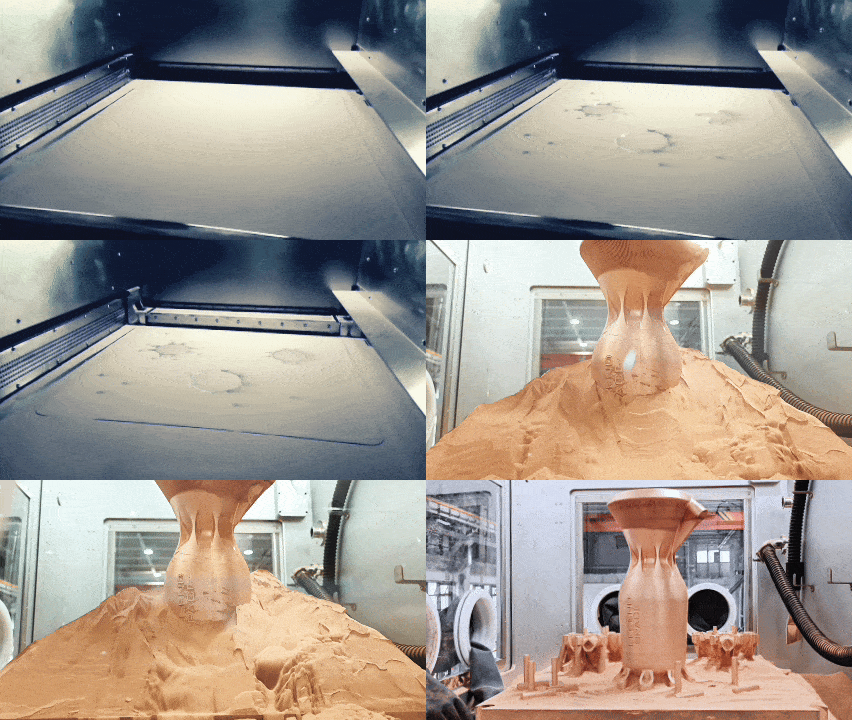
The company was incorporated in early 2026, making this angel round a bet on credentials and a demonstrated compression pipeline rather than a shipping product.
Investors: Oasis Ventures (绿洲资本/Vitalbridge), Source Code Momentum (源码律动, an early-stage vehicle distinct from Source Code Capital), and others. Financial advisor: Gaohu Capital (高鹄资本).
ModelBest (面壁智能)
Multiple Rounds H1 2026, Cumulative >¥5B (~$694M), Val. >¥20B (~$2.8B)
Small AI models that run on phones, robots, and cars instead of data centers.
ModelBest makes small, efficient AI models designed to run on devices rather than in the cloud. While China’s leading AI labs compete to build ever-larger foundation models that require massive computing clusters, ModelBest’s MiniCPM family of open-source models, downloaded over 38 million times, runs locally on smartphones, robots, and vehicles. The company was founded in August 2022 as a spinout from Tsinghua University’s Natural Language Processing Lab (Tsinghua is China’s top engineering school, the closest domestic equivalent to MIT). Its chairman and CEO, Li Dahai (李大海), is the former CTO of Zhihu (China’s Quora equivalent). Its chief scientist, Liu Zhiyuan (刘知远), is a tenured associate professor at Tsinghua. The company’s research on what it calls the “Densing Law,” a formula for how much smarter you can make a small model without making it bigger or more expensive to run, was published as a cover article in Nature Machine Intelligence in November 2025.
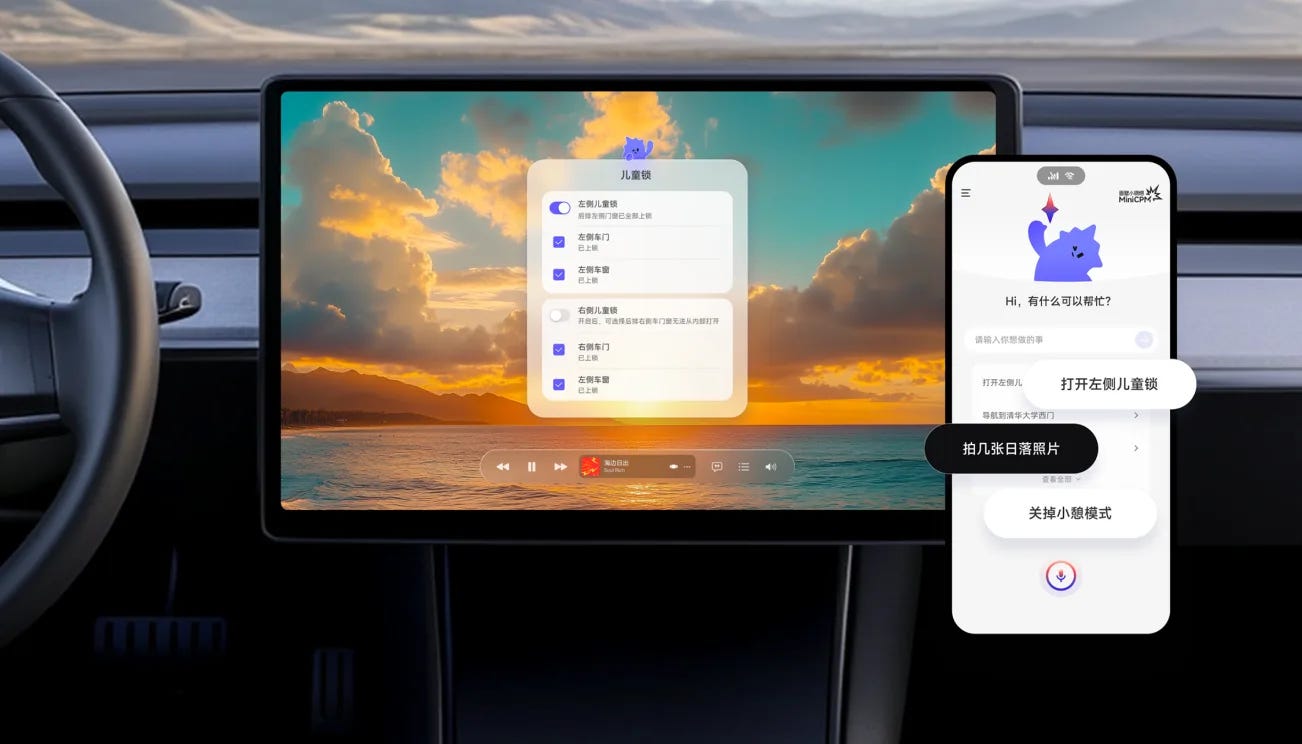
ModelBest’s SuperMate on-device AI system is targeting deployment in 300,000 vehicles by the end of 2026, with confirmed production integrations across Geely, Changan, SAIC, SAIC-Volkswagen, GAC, and Great Wall. It also signed a strategic partnership with Aptiv (安波福), a global automotive technology company, at the Beijing Auto Show in April 2026. The investor roster reads like a cross-section of Chinese state and industrial capital: China Telecom led one round, Shenzhen Capital Group and Huawei’s investment arm Hubble participated in another, and Moutai’s venture fund came in separately. Moutai, China’s state-owned luxury baijiu distillery valued at roughly ¥2 trillion (~$286 billion), has committed over ¥100 billion across two industrial funds under Beijing’s “new quality productive forces” (新质生产力) policy, the mandate for state enterprises to diversify into frontier tech.
Investors: Shenzhen Capital Group (深创投), Inovance Investment (汇川产投), China Telecom (中国电信), Huawei Hubble (华为哈勃), Moutai Fund (茅台基金), and others across multiple rounds.
RoboParty (萝博派对)
Pre-A, ~¥500M (~$69M) Combined Angel++/Pre-A
Open-source bipedal humanoid robots.
RoboParty was incorporated in February 2025, weeks before its founder Huang Yi (黄一), born in 2004, graduated early from the Harbin Institute of Technology in March. While still a 19-year-old student, he had built a bipedal robot called AlexBot in his dormitory for under ¥20,000 (~$2,800) and open-sourced the entire design.
The company open-sourced its Roboto Origin humanoid platform on January 15, 2026, releasing the full stack: hardware drawings, bill of materials, supplier lists, control software, and simulation tools.
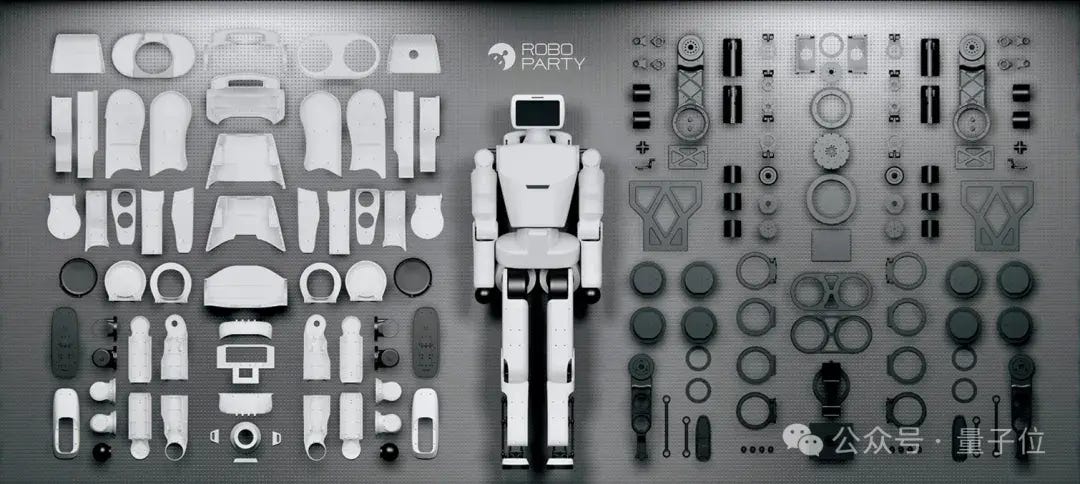
The project has over 2,000 GitHub stars and a developer community of more than 5,000 members. The robot walks at 3 meters per second, close to human jogging speed, on proprietary locomotion control software. The team placed third globally in the ICRA Reasoning to Action competition, a benchmark for how well robots can interpret instructions, reason about them, and execute physical actions. The current model, RPO, has shipped several hundred units to early adopters. A next-generation model, RP1, is in pre-order for a Q4 2026 launch.
CATL (宁德时代), the world’s largest battery maker, took the entire Pre-A tranche alone. CATL has now invested over ¥2 billion (~$278 million) cumulatively in embodied AI companies. An open-source humanoid platform maximizes the number of robots that could eventually use CATL’s batteries, the same logic that made Google give away Android to get its services onto every smartphone. Earlier investors include Xiaomi’s strategic investment arm, SenseTime, Matrix Partners China, and Shunwei Capital.
Investors (Pre-A): CATL (宁德时代, sole investor). Earlier rounds: Shunwei Capital (顺为资本), Matrix Partners China (经纬创投), Xiaomi Strategic Investment (小米战投), SenseTime (商汤国香资本).
Also on the Radar
LimX Dynamics (逐际动力) — Pre-IPO, $200M (~¥1.44B), Val. ¥14.3B (~$1.99B). Over 70% of this round came from overseas investors, including UAE-based Stone Venture. Lens Technology (蓝思科技), a major Apple supplier listed on the Shenzhen Stock Exchange, also invested. LimX is preparing an IPO with “thousands of units” in orders, more than half from international buyers.
LightMake (轻量智造) — Angel, Undisclosed. Founded, per the company, by a former AnkerMake lead. The team includes alumni from Sany, Huawei, and CreatBot. First product targets small businesses in North America and Europe.
AIsphere / PixVerse (爱诗科技) — C+, ¥2.98B (~$414M) total C round, Val. >$2B. Alibaba led. The AI video generation company has grown rapidly across 177 countries but reportedly generates a fraction of the revenue of domestic rival Kling despite a larger user base.
Ganfeng Battery (赣锋锂电) — Strategic (CMC Capital), Undisclosed. The battery subsidiary of listed lithium giant Ganfeng Lithium, raising outside capital for solid-state batteries (safer, denser cells that replace the flammable liquid electrolyte with a solid one). A separate ¥2 billion (~$278 million) round closed in late June with bank-backed investors. The company has demonstrated a cell with 420 watt-hours per kilogram of energy density (commercial lithium-ion cells in most electric vehicles today are in the 250-280 Wh/kg range) that held up when a nail was driven through it and when heated to 200 degrees Celsius, standard stress tests that simulate a crash or short circuit. Two rounds in three weeks.
Galactic Energy (星河动力) — Strategic (GAC Capital), Undisclosed. China’s most-launched pre-IPO commercial rocket company, with 21 flights and 89 satellites delivered to orbit. GAC Capital is the corporate venture arm of Guangzhou Automobile Group, which launched its own flying car brand (GOVY) earlier this year and has backed autonomous driving companies including Momenta and Pony.ai.
Shuoguang Precision (烁光精密) — Strategic, Undisclosed. Two listed companies took strategic stakes within weeks in this Shenzhen maker of laser-precision glass components used in co-packaged optics, the technology that moves data inside and between AI processors using light instead of copper. Co-packaged optics are increasingly seen as the next standard interconnect for AI data centers.
Whale (帷幄) — C3 Extension, $40M (~¥288M), cumulative Series C >$100M. An 8-year-old enterprise AI company now generating over half its revenue internationally across 45 countries. The C-round investor shift from Temasek and venture funds to Hyundai and Japanese bank corporate venture arms (SMBC, Krungsri/MUFG) suggests a pivot toward international enterprise clients.
Wentian Quantum (问天量子) — B Round, ¥600M (~$83M). A 17-year-old company, one of China’s two founding teams in quantum key distribution (a method of encrypting data using the physical properties of light particles, making the encryption theoretically impossible to intercept without detection). Seventeen years in a sector where most companies are two or three years old. Over 200 core patents.
ENN Fusion (新奥聚变) — Pre-A, Val. ¥10.6B (~$1.47B). The fusion energy subsidiary of ENN Group, a natural-gas conglomerate whose founder Wang Yusuo (王玉锁) is sometimes called China’s “gas king.” The company spent over ¥4 billion (~$556 million) and more than a decade building two generations of experimental fusion reactors internally before ever taking outside money. This first external round funds construction of a next-generation fusion device. The investor list blends chip-industry venture capital (Loongson Ventures), capital linked to the Chinese Academy of Sciences (CAS, the country’s top state research institution), and SAIC’s industrial corporate venture arm.
Bama (八匹马) — A+, >¥100M (~$14M). Superconducting magnets, cryogenic coolers, and cryogenic vacuum pumps serving quantum computing, fusion, and semiconductor fabrication, a components supplier spanning three frontier domains. Products are already in use on domestic semiconductor equipment production lines and in European instrument supply chains. Founded 2018, Kunshan.
The Bigger Picture
AI’s Power and Photon Bill
The AI compute buildout has moved past chips into the physical layers beneath. This week, Sequoia China led Marvel-Tech’s C round for hydrogen-ammonia turbines designed to generate power on-site at AI data centers. Shuoguang Precision attracted two strategic investors within weeks for laser optics used in co-packaged optical interconnects, the fiber-based links that are replacing copper inside data centers because they move data while consuming a fraction of the energy. ENN Fusion opened its first external round at a ¥10.6 billion (~$1.47 billion) valuation. Bama raised for superconducting magnets and cryogenics. Shuyanjuchuang raised for fusion heating systems.
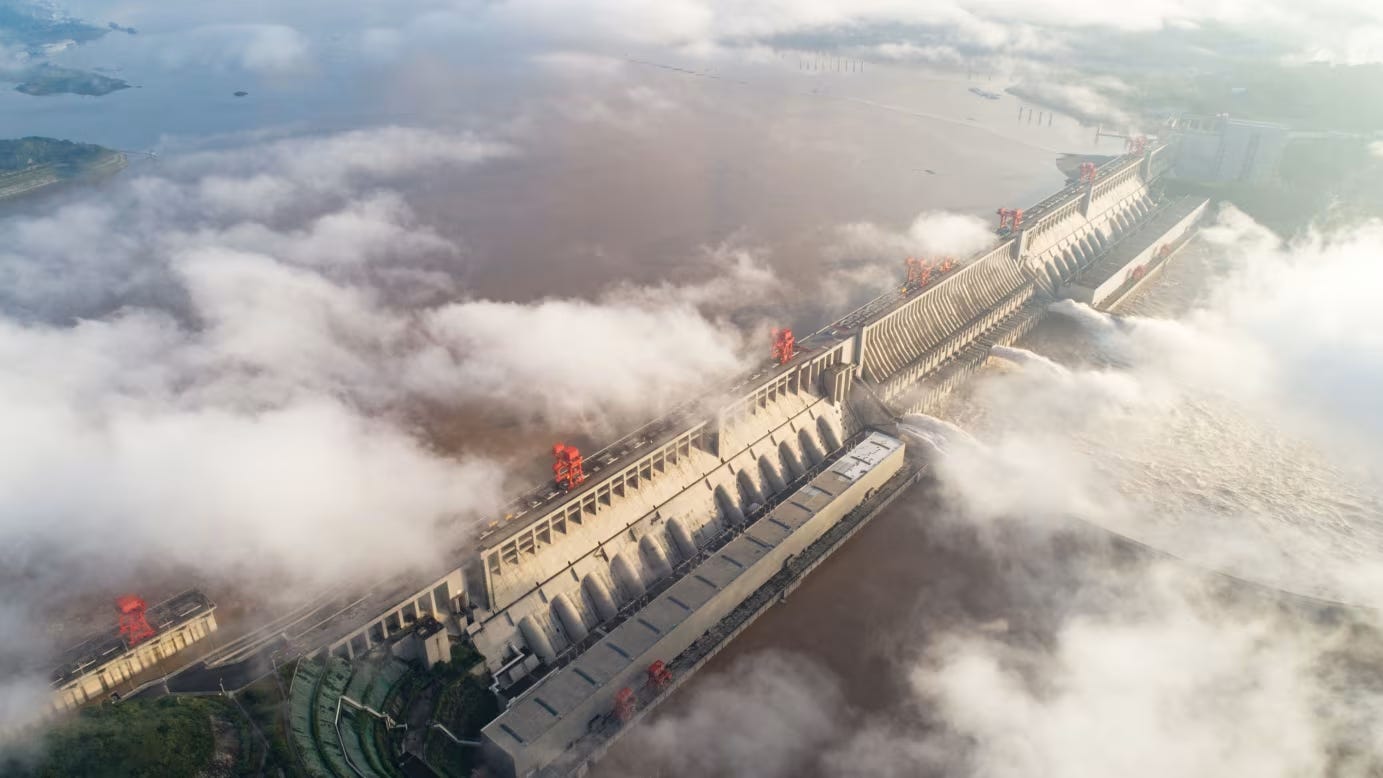
China’s data center capacity stood at 32 gigawatts at the end of 2025 and is projected to reach 60 gigawatts by 2030, roughly doubling, with annual power consumption reaching 289 terawatt-hours, roughly equivalent to Taiwan’s entire national electricity consumption or the output of three Three Gorges Dams. China’s National Development and Reform Commission (NDRC), the state agency that sets national economic and industrial priorities, is reportedly preparing a roughly ¥2 trillion (~$295 billion) plan for a nationwide AI infrastructure buildout through 2030. Co-packaged optics can cut the power needed to move data from roughly 30 watts per module to under 2 watts, making them critical to data centers already bumping against power limits.
Previous editions of The China Round tracked the sovereign compute stack: who builds the chips, the design software, the interconnects. The bottleneck for AI is increasingly kilowatt-hours and photons rather than raw computing power, and a new funding category is forming around it.
For a closer look at how China is approaching the power constraint differently, building data centers next to stranded renewable energy rather than fighting for grid connections, see my recent notes from a trip to Xinjiang:
From Turbines to Tokens

China’s westernmost region of Xinjiang is one of the country’s largest sources of energy. It has been exporting electricity for over fifteen years, delivering over 1 trillion kWh to 22 provinces across China, over 90% of it via three ultra-high-voltage DC transmission corridors that connect Xinjiang to power-hungry economic hubs from Anhui to Chongqing.…
One Round Every Ten Weeks
The conventional 18-to-24-month venture funding cycle has compressed dramatically in China’s frontier tech sectors. Chinese startups increasingly raise in small numbered increments rather than one clean round: a “Pre-A” sits between angel and Series A, an “A3” or “A4” is a follow-on tranche within the same Series A, a “C3 Extension” adds money to an existing Series C without resetting terms. The letters indicate the order of tranches, not the amount raised.
RoboParty closed at least five financing events in 17 months since incorporation. TASHAN raised three rounds in six months. Westlake Robotics (西湖机器人) raised three times in six months. 3Srobotics (昇视唯盛) closed two rounds in two months. Cygnusemi (星思半导体) completed three rounds in 2026 alone. On average, these companies raised one round roughly every ten weeks, nearly eight times faster than the conventional cycle.
Fundraising database data shows that “plus-round” financings (extensions and intermediate tranches between traditional rounds) hit 1,609 in 2025, up 78.2% from 2024. Plus-rounds now represent 17.76% of all financing events, up from 10.97% in 2021 at the peak of the electric vehicle boom.
One VC partner described a brain-computer interface deal where the valuation tripled via convertible note in two months, before the prior round even closed, meaning the price moved faster than the paperwork. Another said that “a slight delay and rounds two and three close before you’ve even entered round one.” The effect is that investors are underwriting momentum (order backlogs, customer commitments, competitive dynamics) rather than milestones demonstrated between rounds. The risk is that speed replaces diligence: if the price moves faster than the paperwork, no one has time to confirm the product works.
Three Factories, One Sensor
An airbag conglomerate, an air conditioner manufacturer, and an automotive rubber hose company all showed up on the same cap table this week. Joyson Electronics (均胜电子), AUX (奥克斯), and Pengling (鹏翎) all invested in TASHAN’s B round. Joyson called tactile sensing “the final centimeter” of the robot-to-world interaction. AUX framed embodied AI as a technology whose economic value is about to accelerate. Pengling has publicly said it has not yet entered the robotics business but is actively exploring the opportunity, and it invested anyway. Three unrelated industries, one sensor company that claims over 80% of the global supply of humanoid robot fingertip sensors (per the company’s own figures).
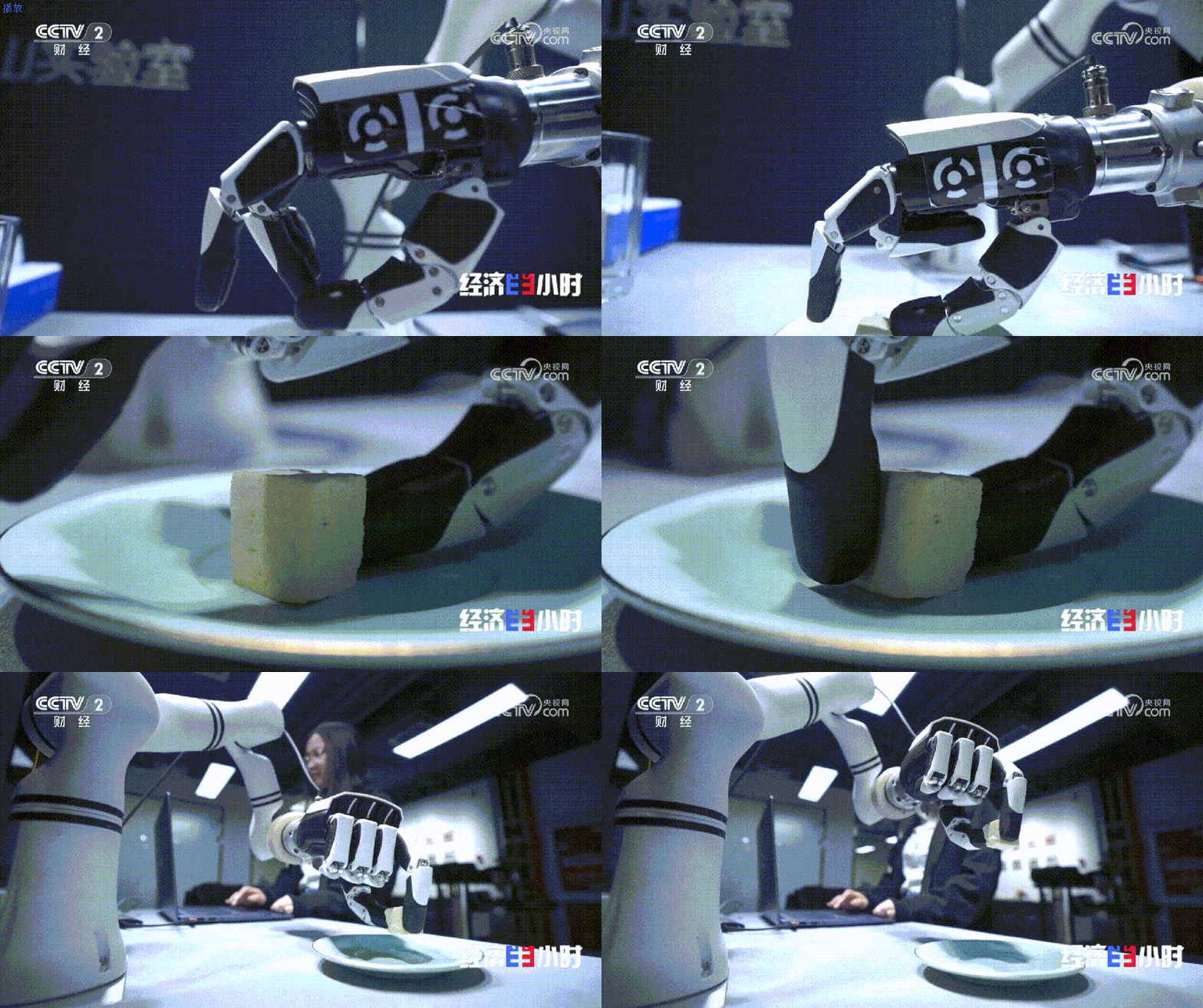
CATL took RoboParty’s entire Pre-A alone, investing in an open-source platform that maximizes the number of robots that could eventually run on CATL batteries. Shanghai Electric did not just lead DexRobot’s A round; it co-founded two manufacturing joint ventures with the company, one for component R&D and production and one for integrated solutions delivery. The investor lists across these three deals show who plans to put robots on a factory floor and which components they are locking down before the production ramp begins.
Industrial and commercial deployment still accounts for only 3-5% of humanoid robot use cases today, with other deployment categories still far larger. The 100,000-unit target is aspirational. But the companies building factories, making appliances, and supplying auto parts have already decided robots are coming, and they are securing the supply chain now.
The companies raising capital this week are building turbines, sensors, rocket engines, diving masks, and fusion reactors. The investors writing the checks are increasingly the factories and conglomerates that need the technology to function, not the venture funds that need it to exit. The AI buildout is now a power story, a manufacturing story, and a supply-chain story as much as a computing one.
Deal data compiled from Chinese corporate announcements, financial news, and investment databases. Amounts and valuations are as reported and may be incomplete. For informational purposes only. Not investment advice. Verify all figures independently before acting on them.